
Bathroom Extractor Fan Installation Cost and What the Rules Say
TopRatedElectricians.co.uk · 7 October 2026
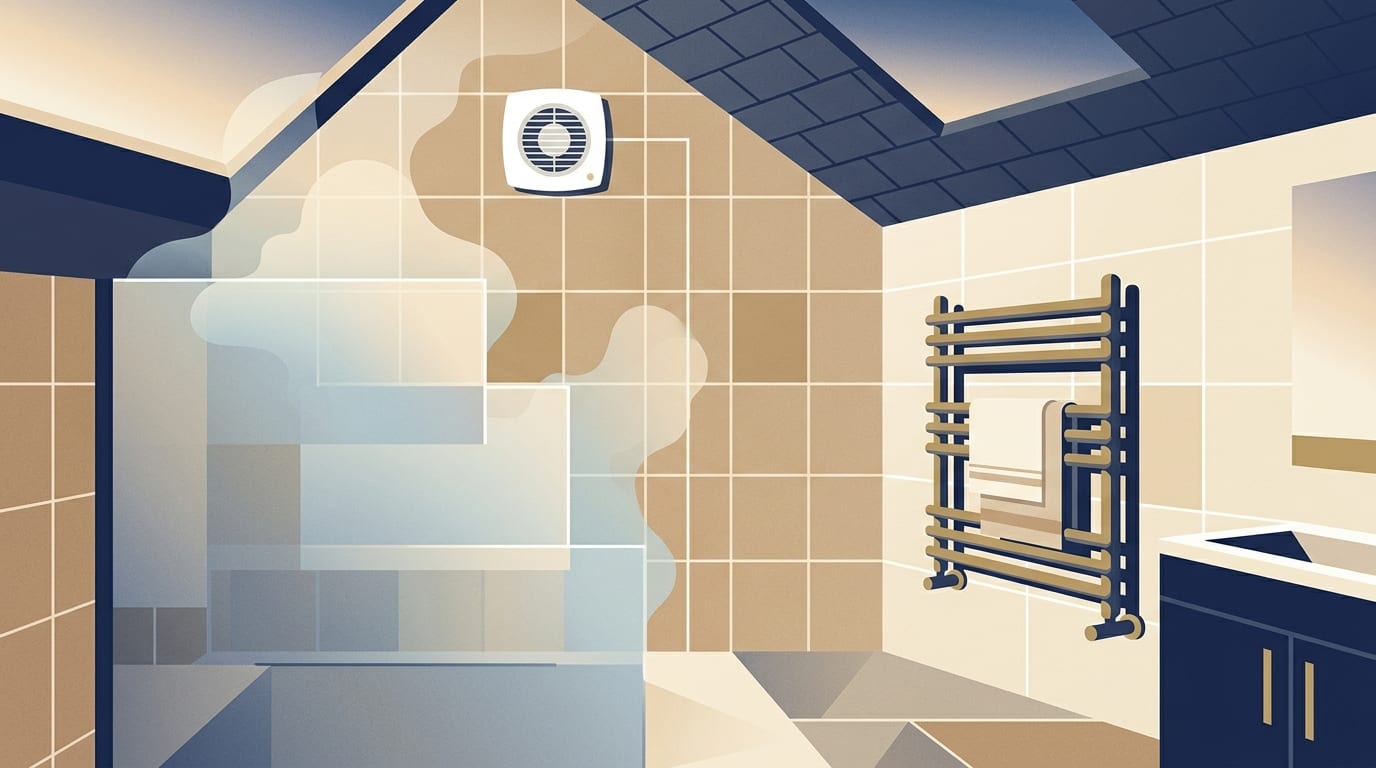
Replacing an existing bathroom extractor fan like for like typically costs £80 to £150 in 2026. A brand new fan with new ducting and wiring typically costs £120 to £600 depending on the route, and the average new installation is around £300. The total price depends heavily on whether you are simply swapping a broken unit for a similar one or asking an electrician to cut holes, run new cables and fit outside vents.
Typical cost to fit a bathroom extractor fan
The table below shows typical prices and timeframes for different types of extractor fan installation.
|
Job |
Typical time |
Typical 2026 price |
|---|---|---|
|
Replace an existing fan like for like |
1 to 2 hours |
£80 to £150 |
|
New window fan |
2 to 6 hours |
£150 to £300 |
|
New wall fan ducted through an outside wall |
4 to 8 hours |
£120 to £450 |
|
New ceiling or inline fan ducted through the loft |
up to a day |
£200 to £600 |
These are typical published prices for 2026 and your local quotes will differ based on your property.
Electricians typically charge £45 to £70 per hour for this work. You can read more in our separate guide about how much an electrician charges per hour for different household jobs. Removing an old fan usually takes 1 to 2 hours and costs about £45 to £70 in labour. The fan units themselves cost around £20 to £100 on a supply only basis.
If the job requires more extensive retiling or making good around a new fan, this can add £100 to £300 to the final bill. Making good means repairing any damaged plaster and decoration so the wall is ready to paint. If the duct exits high on an outside wall and the tradesperson needs a scaffold tower to work safely, this costs around £250 a day. You should also expect prices in London and the South East to be noticeably higher than the national average.
Replacing an old fan or fitting a new one
A like for like replacement is the most straightforward job. This is where the cabling, the isolation switch and the ducting already exist and meet current safety standards. The electrician simply removes the broken unit, connects the new one to the existing wiring and secures it to the wall or ceiling. Some electricians price this as labour plus the cost of the fan, so check whether the fan is included in the quote.
Fitting a completely new extractor fan takes much longer. The electrician must run a new power supply from an existing circuit, which often involves lifting floorboards or chasing cables into the plaster. They must also cut a hole through an external wall or the ceiling to fit the ducting that carries the moist air outside. Because this involves cutting through the wall or ceiling, new wiring and outside grilles, the labour costs are significantly higher.
Wall, window, ceiling or inline fans
Axial fans are the standard units you see mounted directly on a bathroom wall or ceiling. They suit short, direct duct runs straight through an outside wall. Supply and fit for a typical wall-mounted fan on an external wall lands around £120 to £250.
Inline and centrifugal fans are more powerful. They suit longer or more awkward duct runs, such as up through the ceiling and across a loft space to the eaves. Because the motor is housed in the loft rather than the bathroom ceiling, inline fans make the bathroom much quieter. These cost around £200 to £500 supplied and fitted with the necessary ducting.
Real-world airflow drops with long or bendy duct runs. The harder the fan has to push the air, the less moisture it actually removes from the room. For this reason, an internal bathroom with a long duct run needs a fan rated comfortably above the minimum extract rate.
Timers and humidity sensors
Many bathroom fans come with a timer. A timer fan is wired into the bathroom lighting circuit so it runs while the light is on. When you switch the light off, the fan overruns for a set period to clear the remaining steam. This overrun is typically 5 to 20 minutes and the electrician can adjust it inside the unit during installation.
A humidistat fan goes a step further by starting automatically when the humidity in the room rises. This helps with condensation because it runs when moisture builds up, even if the bathroom light has not been switched on. A humidity sensor adds around £15 to £40 to the cost of the fan unit.
If you choose an automatic control such as a humidity sensor, Approved Document F says it should have a manual override. This allows you to turn the fan on or off yourself if the sensor fails or if you want to clear odours rather than moisture.
How powerful does the fan need to be?
In England, ventilation is covered by Part F of the Building Regulations, and the guidance is set out in a document called Approved Document F. This document sets minimum intermittent extract rates for different rooms.
The minimum extract rates for intermittent fans are:
- Bathroom requires 15 litres per second
- Utility room requires 30 litres per second
- Kitchen requires 30 litres per second if using a cooker hood extracting to the outside
- Kitchen requires 60 litres per second with no cooker hood or a hood that does not extract outside
- Toilet requires 6 litres per second
These are minimum rates. For new homes ventilated with background ventilators and intermittent extract fans, Approved Document F also says a wet room with no external walls should have a fan extracting at four air changes per hour, and in a room with no openable window the fan should keep running for at least 15 minutes after the room is vacated.
The 2026 edition of Approved Document F takes effect on 24 March 2027 in England. It keeps the same extract rates, and replacing a fan on the existing cabling still does not need to be notified to building control.
When the building regulations apply
If you have an existing bathroom that has never had an extractor fan, you do not require one to be fitted. However, if you carry out a refurbishment where building work is done in a kitchen or bathroom, existing fans should be retained or replaced. The new work must not make the building less compliant than it was before.
When building work includes adding a completely new wet room to an existing dwelling, extract ventilation should be provided. This can be an intermittent extract fan at the rate for that type of room, such as 15 litres per second for a bathroom, alongside a background ventilator.
If you are simply replacing an existing extractor fan and it uses the existing cabling, this does not need to be notified to a building control body. You should be aware that Wales and Scotland have their own building regulations and building standards systems, so the exact notification rules differ depending on where you live.
Electrical safety in a bathroom
Electricity and water are a dangerous combination, making a bathroom a high risk environment for electrical work. In England and Wales, electrical safety in the home is covered by Part P of the Building Regulations. To comply, it is best to use an installer registered with a government-authorised competent person scheme, such as NICEIC or NAPIT, who can self-certify their own work.
Bathrooms contain special locations which dictate what work must be reported to building control. In England, special locations are defined as the spaces directly around baths and showers. Alterations to existing circuits within these spaces are notifiable jobs. If your installer is not registered with a scheme, a building control body or, in England only, a registered third-party certifier must be notified before the work starts, and it must then inspect, approve and certificate the work. In Wales, special locations also include kitchens and outdoors.
Any new wiring in a bathroom needs residual current device protection to meet current standards. A residual current device, or RCD, is a safety switch in your consumer unit that trips the power instantly if it detects a fault. The consumer unit is the modern term for your fuse box or fuse board.
The extractor fan and its wiring must also suit the zone it sits in. You can check these specific rules in our guide to bathroom electrical zones. Finally, the installation must include a safe means of isolation so the fan can be turned off for maintenance. This is commonly a fused spur or a triple-pole fan isolator switch outside the bathroom.
Fan not working or too noisy?
If your extractor fan suddenly stops working, there are a few common causes. The unit itself may have burnt out, the timer module inside the casing may have failed, or the isolator switch outside the room may have been turned off by mistake. If the fan has become loud or rattles, it may be worn or failing, and an electrician can check it.
Because replacement fan units are inexpensive, a failed fan is usually replaced rather than repaired. Paying an electrician for an hour of labour to fault find and repair a small internal component often costs more than simply fitting a brand new, reliable unit.
If you rent your home, report a broken fan to your landlord. In England, landlords also have legal duties to have electrical installations inspected at least every five years, which results in an Electrical Installation Condition Report being issued. For owner-occupiers, this periodic inspection is a strong recommendation rather than a legal duty.
Questions to ask before you book
Before you hire an electrician, ask a few clear questions to ensure you know exactly what you are paying for and what paperwork you will receive. A vague price given over the phone is an estimate, which can change. A quote is a fixed price that you can rely on.
You should ask the electrician:
- Are you registered with a competent person scheme such as NICEIC or NAPIT
- Does this quote include the supply of the fan unit and all ducting materials
- Does the price include VAT
- Which electrical certificate will you give me when the job is finished
- Will the final price cover making good any plaster or tiles around the new fan
- Does the fan have the correct isolation switch outside the room
Under the Consumer Rights Act 2015 a service must be carried out with reasonable care and skill. If the work is poor, the customer can ask for it to be put right at no extra cost. Services arranged at home, by phone or online usually carry a 14-day cooling-off period, but this does not automatically apply to urgent repairs you have asked for, such as an emergency call-out.
Common questions
Why is my toilet extractor fan not working?
One simple cause is that the isolator switch outside the room has been turned off. If the switch is on and the fan still does not run when the light is on, the fan or its timer may have failed. An electrician can test the supply to confirm if the unit needs replacing.
How much is a bathroom extractor fan replacement?
Replacing an existing fan like for like typically costs £80 to £150 in 2026. This price assumes the existing wiring, ducting and isolation switch are all safe and meet current standards. If the old wiring needs upgrading to include RCD protection at the consumer unit, the price will increase.
Do bathroom extractor fan regulations force me to have one?
If your bathroom has never had an extractor fan, the rules do not force you to fit one now. However, if you add a new wet room, such as a new bathroom or shower room, extract ventilation should be provided. If you are refurbishing a bathroom that already has a fan, it should be kept or replaced so the ventilation is not made worse.
Can I fit a bathroom fan myself?
Electrical work in a bathroom carries high risks because water and electricity are a lethal combination. In England, altering a circuit in the spaces around a bath or shower is notifiable work, so it must either be done by an electrician registered with a competent person scheme or be reported to building control before it starts. It is always safest to hire a registered electrician who can test the circuit, ensure it has RCD protection and issue the correct safety certificates.
What to do next
If you are ready to get your bathroom ventilation sorted, follow these simple steps to ensure the job is done safely and legally:
- Check your bathroom to see if the current fan has an isolator switch outside the door
- Decide if you want a basic timer fan or one with an automatic humidity sensor
- Ask local electricians for a fixed price quote rather than an estimate
- Confirm that the quote includes the fan unit, the labour, the certification and any making good
- Check the electrician is registered with a competent person scheme
Finding a reliable tradesperson ensures your bathroom ventilation is safe, legal and effective at stopping damp. You can find an electrician near you to get a fixed quote for your extractor fan installation.
Related Guides
Immersion Heater Not Working and What a Repair Costs
Why an immersion heater stops heating your water, which faults an electrician can fix, what a new element or thermostat typically costs in 2026 and when a new cylinder makes more sense.

Electric Cooker and Induction Hob Installation Costs
What it typically costs in 2026 to fit an electric cooker, built-in oven or induction hob, when you need a new cooker circuit, whether a hob can be plugged in and the rules that apply.

Replacing Old Storage Heaters and What It Costs
When it is worth replacing old storage heaters, what modern high heat retention models cost to buy and fit in 2026, the tariff and meter checks to make and the asbestos risk in very old units.