
Replacing Old Storage Heaters and What It Costs
TopRatedElectricians.co.uk · 7 October 2026
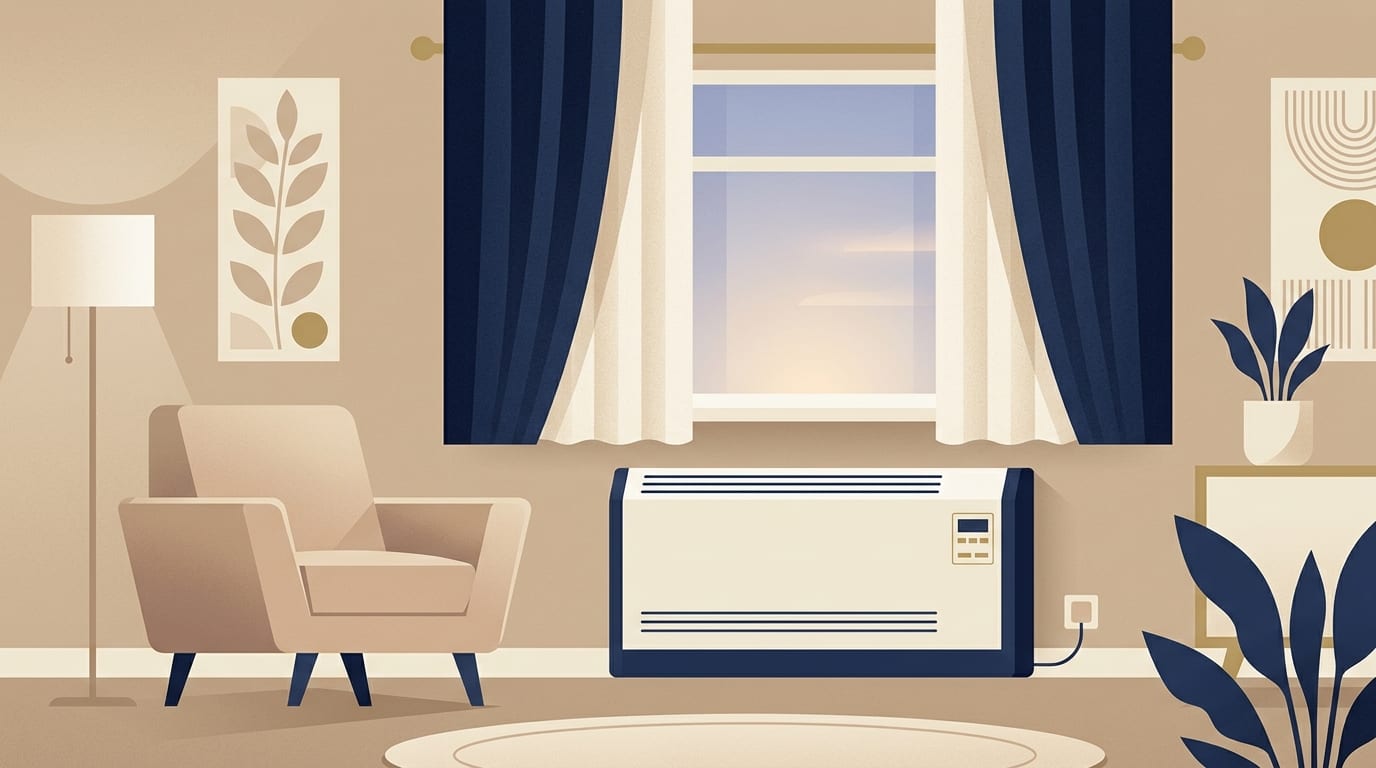
A modern high heat retention heater typically costs £400 to £900 to buy in 2026, and fitting one in place of an old heater on its existing circuit typically costs £70 to £200. If you are replacing the heating across an entire property, a whole home of four to six heaters supplied and fitted typically costs £2,500 to £5,000.
When it is worth replacing old storage heaters
Storage heaters are electric heaters designed to work with time-of-use tariffs like Economy 7. They use cheaper off-peak electricity to store heat in internal bricks during the night. They then release that heat into your rooms during the day. Economy 7 gives you a lower electrical rate for seven hours at night.
Older storage heaters feature manual input and output dials. These manual controls dictate how much heat the unit stores overnight and how quickly it lets that heat out during the day. Older storage heaters with manual controls can be less efficient and often cost more to run. Because they rely on you setting the dials correctly, they can run out of heat by the late afternoon or evening.
If your current heating leaves you cold or results in high electricity bills, a storage heater replacement is a practical step. In winter, it can cost around £46 a month to run a 1.4kW storage heater charged for seven hours overnight at off-peak rates. This figure is based on 15.43p per kWh, which was the average Economy 7 off-peak rate in January 2026. More expensive modern heaters tend to be more efficient and cheaper to run than basic models.
How modern storage heaters differ
The technology inside new storage heaters has changed significantly. Since 1 January 2018, all newly manufactured storage heaters must comply with Lot 20 of the European Ecodesign Directive. Because of these rules, manual storage heaters have been phased out. They have been replaced by more efficient automatic models.
High heat retention storage heaters are the most efficient type of storage heater. They have better insulation than older models, so they hold on to their stored heat for longer and can release it when the room needs it.
Modern storage heaters can automatically decide how much heat to store. They do this by monitoring the outside weather and tracking your daily heating patterns. They also feature built-in thermostats and timers, giving you precise control over your room temperatures. You no longer have to guess what the weather will do tomorrow and adjust input dials before you go to bed.
Typical cost to replace storage heaters
This table shows what you can expect to pay for the different elements of a storage heater installation.
|
Item |
Typical 2026 price |
|---|---|
|
Basic storage heater (supply only) |
£150 to £400 |
|
High heat retention heater (supply only) |
£400 to £900 |
|
Fitting a replacement on an existing circuit |
£70 to £200 per heater |
|
New circuit to a heater position |
£150 to £400 |
|
Consumer unit upgrade where needed |
£450 to £900 |
|
Four to six high heat retention heaters supplied and fitted |
£2,500 to £5,000 |
These figures are typical published prices for 2026, and local quotes will differ based on the size of your property and the condition of your wiring.
Basic storage heaters cost less than £400 to buy, while more advanced models can cost upwards of £700 each. Labour for installing a replacement storage heater is usually from about £70 if there is existing wiring in place. A competent electrician can usually fit four to six like-for-like heaters in a day or so. You should always ensure that storage heaters are installed by a qualified electrician.
What pushes the price up
While a simple like-for-like swap is relatively fast, several factors can increase your storage heater installation costs. You should ask your electrician to check for these issues before they provide a final quote.
- Needing new radial circuits run to a heater position if the existing wiring is unsafe or missing.
- Upgrading an old consumer unit or fuse box to handle the new electrical load safely.
- Having to install new wiring to connect the heaters to an off-peak supply if none exists.
- Making good any plasterwork and decoration after cables have been chased into the walls.
- Removing and disposing of the old units, which costs much more if very old heaters turn out to contain asbestos.
- Adding VAT and materials to a vague estimate that only quoted for labour.
Your property may have an old fuse box that cannot support modern heating. You may need to budget for a consumer unit replacement if your current setup lacks modern safety devices such as an RCD (Residual Current Device) or RCBOs (Residual Current Breaker with Overcurrent), along with a surge protection device.
Storage heaters need an off-peak supply to make economic sense. If your property is on a single-rate tariff with no off-peak circuit, you will need a suitable meter and tariff from your energy supplier, and the heaters will need to be wired to the off-peak supply. Without this, they cost much more to run.
Your tariff and meter matter
Night storage heaters are entirely dependent on your electricity tariff. A storage heater should be directly connected to the off-peak supply so it charges automatically overnight. If you do not have a time-of-use tariff, the heaters will charge at your normal rate, which costs much more.
Many homes with storage heaters rely on older meter technology. Some older Economy 7 and Economy 10 meters use Radio Teleswitch Service (RTS) technology, or are dynamically teleswitched (DTS) meters. These meters receive a long-wave radio signal that tells them when to switch between peak and off-peak rates, and when to turn your heating on and off.
Since 30 June 2025, the signal that supports them has started to be switched off. Because the radio signal is being switched off, these meters will stop working properly. Your electric heating and hot water could stop working entirely if you do not replace the meter before the signal is turned off.
You do not have to pay to fix this metering issue. Your supplier should upgrade an RTS meter to a smart meter for free. Contact your electricity provider immediately if you suspect you have an RTS meter, so they can arrange an upgrade before your heating fails.
Asbestos in very old heaters
If you are replacing storage heaters that have been in the property for decades, you must be aware of asbestos risks. Many Economy 7 storage heaters made before 1974, and some into the mid-1970s, contained asbestos. It was used as insulation around the heating elements and within the casing to reduce the risk of fire.
You cannot tell for certain by looking whether an old heater contains asbestos. Disturbing, drilling, breaking up or dismantling them can release dangerous asbestos dust and fibres into the air. You must never dismantle or break an old heater yourself.
If you are concerned an old heater contains asbestos, check the brand and model number on the data plate and contact the manufacturer. If it does contain asbestos, you must contact your local council to organise its safe removal. Removal and disposal of confirmed asbestos units is work for a licensed asbestos contractor. This specialist service adds significant cost to your heating replacement project.
Does the work need building regulations approval?
All electrical work should follow BS 7671, which is often called the wiring regulations. If you carry out electrical installation work in your home or garden in England and Wales you must comply with the building regulations. Part P of the Building Regulations covers electrical safety in dwellings. Scotland has its own building standards system and Northern Ireland differs, so these rules apply specifically to England and Wales.
Replacing a heater on its existing circuit is not notifiable work. However, some electrical jobs carry strict notification rules. Notifiable jobs include:
- The installation of a new consumer unit or fuse box.
- The installation of a complete new circuit for a storage heater, cooker, shower or immersion heater.
- Alterations to existing circuits in special locations, such as spaces around baths and showers in England, or kitchens and outdoors in Wales.
If your storage heater installation involves notifiable work, it is best to use an installer registered with a competent person scheme. Installers can join a competent person scheme to self-certify certain types of building work instead of getting building regulations approval from the local authority. Schemes authorised for installing fixed electrical installations in dwellings include BESCA, Blue Flame Certification, Certsure (trading as NICEIC), NAPIT, and OFTEC.
Installers joining an electrical scheme are included in the electrical competent person register, which is a single place for householders to find registered electricians in their area. They will issue an Electrical Installation Certificate for new work, or a Minor Works Certificate for smaller jobs. After notifiable work, the customer should receive the electrical certificate and a Building Regulations compliance certificate. You should keep both for when the property is sold. Unregistered work with no certificate is a common problem that causes major issues when selling a home. You can read more about electrical certificates and Part P rules to understand exactly what you need.
Consumer rights and landlord rules
Under the Consumer Rights Act 2015, a service must be carried out with reasonable care and skill. If an electrician leaves you with unsafe wiring or heaters that do not function correctly, you can ask for poor work to be put right at no extra cost. Services arranged at home, by phone or online usually carry a 14-day cooling-off period, but this does not automatically apply to urgent repairs you have asked for. You can consult Citizens Advice for guidance on your specific situation.
If you rent your home, your landlord is responsible for making repairs to your heating. Landlords have legal duties to have electrical installations inspected at least every five years. There are nation-specific rules and substantial penalties for landlords in England who fail to comply. An electrician will conduct testing and issue an Electrical Installation Condition Report (EICR). For owner-occupiers, this periodic inspection is a recommendation, not a legal duty.
Alternatives to storage heaters
If your old storage heaters are failing, you do not have to replace them with new electric heaters. You could get connected to the gas grid for central heating where possible. This provides responsive heating, though installing a full wet radiator system and a boiler is highly disruptive.
Another alternative is to replace them with a heat pump. A heat pump uses less electricity to generate heat, making it very efficient to run. However, a heat pump can be expensive to install.
Upgrading your heating system represents a large financial commitment. You might be able to get help with the cost of a new storage heater, a heat pump or a connection to the gas grid. You can check the Citizens Advice guidance on storage heaters to see what financial support might be available.
Safe use and clearances
Electricity is dangerous, and heating appliances require careful use to prevent fires. You must never cover a storage heater under any circumstances. Do not hang washing on it or drape towels over the casing, as the trapped heat could make it overheat.
You must leave a gap of at least 30 cm between the heater and any furniture, such as sofas or beds. If there is a window above the heater, you must keep your curtains at least 7.5 cm clear of the top of the heater. If a heater shows signs of damage, or if you notice a burning smell, switch it off at the wall if it is safe to do so, keep away from the damaged equipment, and call a qualified electrician.
Common questions
How do storage heaters work?
Storage heaters charge up at night using cheaper off-peak electricity from a time-of-use tariff like Economy 7. The electricity heats up dense internal bricks, storing the thermal energy inside the insulated casing. During the day, the heater slowly releases this stored heat to warm your rooms without drawing expensive peak electricity.
Why are my storage heaters not working?
If your storage heaters are not working, possible causes include a tripped circuit breaker, a faulty thermostat or a failed heating element. It could also mean an RTS meter has stopped receiving its radio signal and is no longer switching the off-peak supply on, in which case contact your energy supplier. Otherwise, an electrician can find the fault, and if you rent, tell your landlord.
What are high heat retention storage heaters?
High heat retention storage heaters are the most efficient type of storage heater. They have better insulation, so less heat leaks out when you do not need it, and they use automatic controls, thermostats and timers to decide how much heat to store and when to release it.
Can I choose a storage heater installation on price alone?
Choosing on price alone is a common mistake that leaves customers with poorly specified heating. Very cheap quotes often omit the cost of upgrading a consumer unit, running new circuits, making good the plasterwork, or safely disposing of the old heavy heaters. You should always compare detailed, fixed price quotes that list exactly what is included.
Next steps
Before you book an electrician to handle your storage heater replacement, make sure you have everything clear in writing. Follow this checklist to ensure the job runs smoothly.
- Check your old heaters for asbestos warnings and contact the manufacturer if you are unsure.
- Look at your electricity meter to see if it is an older RTS model that your supplier needs to upgrade.
- Ask the electrician if they are registered with a competent person scheme such as NICEIC or NAPIT.
- Request a written fixed price quote that includes VAT, materials, the removal of the old units, and making good.
- Confirm exactly what paperwork you will receive, such as an Electrical Installation Certificate for any new circuit.
- Agree a safe payment schedule that avoids large cash deposits upfront.
Taking the time to check the details and the paperwork protects you from unexpected bills and unsafe work. When you are ready to compare quotes, you can find an electrician near you to inspect your current wiring and recommend the most efficient heating for your home.
Related Guides
Immersion Heater Not Working and What a Repair Costs
Why an immersion heater stops heating your water, which faults an electrician can fix, what a new element or thermostat typically costs in 2026 and when a new cylinder makes more sense.
Bathroom Extractor Fan Installation Cost and What the Rules Say
What it typically costs to replace or fit a bathroom extractor fan in 2026, which fan suits your room, the ventilation and electrical rules that apply and what to do when a fan stops working.
Electric Cooker and Induction Hob Installation Costs
What it typically costs in 2026 to fit an electric cooker, built-in oven or induction hob, when you need a new cooker circuit, whether a hob can be plugged in and the rules that apply.