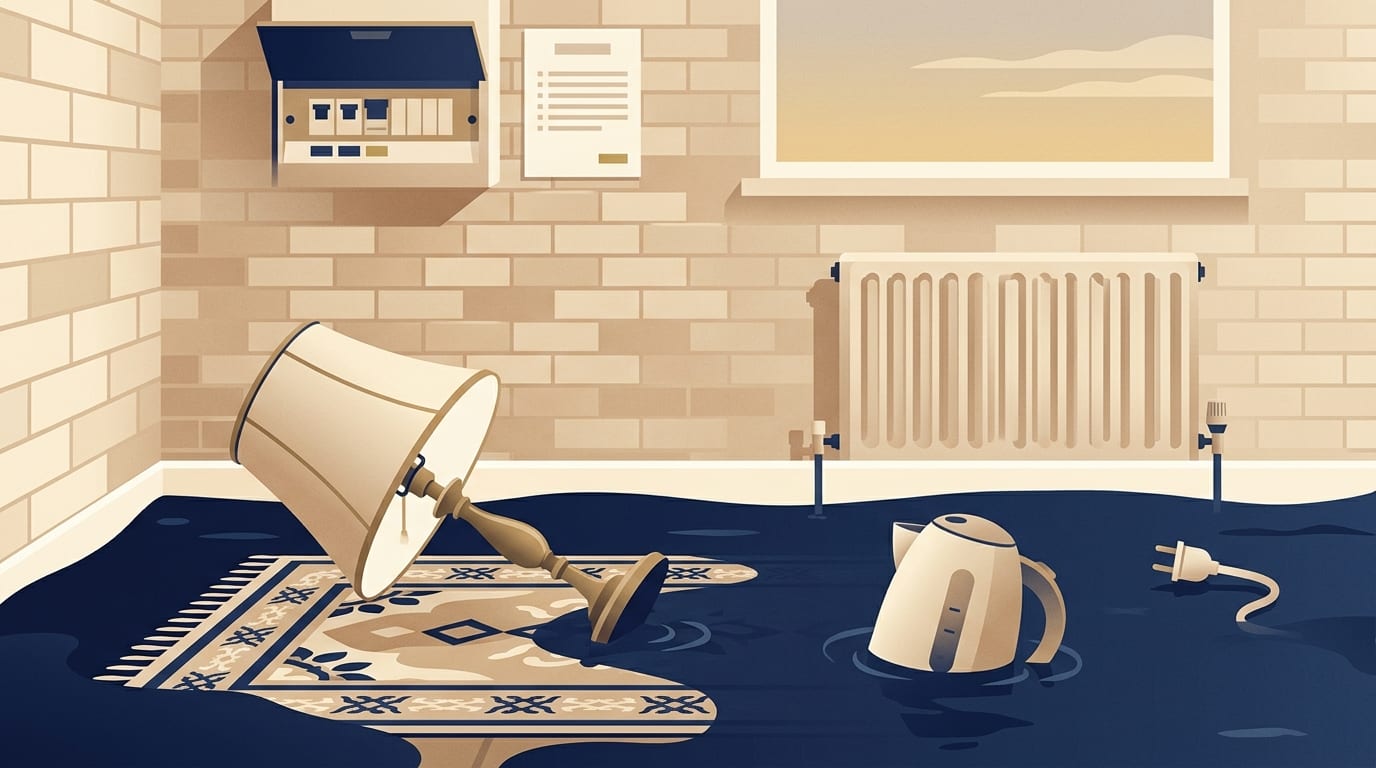
If you have experienced a flood or major water leak, the most important rule is to stay away from your electrics. Do not touch any electrical switches if you are standing in water, and only switch off the electricity supply at the consumer unit if it is completely safe and dry to do so. You must avoid using any mains powered appliance until a registered electrician advises you that it is safe.
Water and electricity do not mix
Water and electricity are a dangerous combination that can lead to severe injury or fire. Your electrical installation is designed for dry conditions, and moisture compromises the insulation that keeps you safe. When water enters sockets, light fittings or the consumer unit, the protective devices should trip to cut the power.
However, you cannot rely on this happening perfectly during a flood. Treat all submerged or wet electrical items as live and dangerous. Water acts as a conductor, meaning electricity can travel through the water to reach you. This is why you must keep your distance from any wet electrical equipment until a professional confirms the power is off.
Floodwater carries extra risks because it is dirty and unpredictable. The official advice is clear: do not walk, cycle or drive through flood water. It may contain raw sewage and hide debris, broken road surfaces or missing drain covers.
Wading through a flooded room in your home carries similar risks of hidden hazards and live electrical currents. It is always better to wait for professional help rather than taking risks with wet electrics.
What to do first
If the flood is happening now or you have just discovered a major leak, take immediate steps to keep everyone safe. Focus on removing yourself and your family from danger rather than trying to save property.
- Stay out of the floodwater and keep away from wet electrical equipment.
- Switch off the electricity supply at the consumer unit only if it is safe and dry to reach.
- Unplug damaged appliances only if it is safe to do so.
- Keep away from the area until professional help arrives.
- Call 999 if anyone is in immediate danger.
- Call 105 to report an electrical hazard on the supply side or a power cut.
- Contact your insurer for advice before starting any clear up.
These are the safest actions you can take as a homeowner or tenant. The 105 number is free to call and connects you directly to the network operator for your area, who can manage hazards on the main supply lines.
When it is safe to switch off
If you receive a flood warning, you should turn off your gas, electricity and water supplies if it is safe to do so. The main switch for your electricity is located in your consumer unit, which is also known as a fuse box or fuse board.
Flipping this main switch to the off position cuts the power to all the circuits in your home. GOV.UK advises doing this during a flood warning, but only if it is safe.
However, if water has already entered the property, you must be extremely careful. You must not touch an electrical switch if you're standing in water. Switch off the electricity supply at the consumer unit only if it is safe to do so.
If the area around the consumer unit is wet, or you have to wade through water to reach it, leave it alone. Do not attempt to isolate the supply yourself in these conditions.
Wait for professional help from the emergency services or your network operator. They have the correct training and protective equipment to isolate the power safely.
Dealing with electric shock
If someone has come into contact with live electrics in the water, you must act carefully to avoid being shocked yourself. Never touch the person receiving the electric shock while they are still in contact with the electricity source. The current can pass easily from them to you.
Call 999 immediately if the person is unconscious or in immediate danger.
The effects of an electric shock may not be obvious right away. Shocks can cause internal injuries such as deep burns, heart rhythm problems and broken bones, so get medical advice after any electric shock.
Do not use wet appliances
Water damage to electrical goods is not always visible from the outside. You must avoid using any mains-powered electrical appliances until advised by a registered electrician that it is safe.
If it is safe to do so, unplug damaged appliances and move portable ones away from the flooded area.
Do not try to dry out appliances yourself and plug them back in to see if they work. Any electrical equipment affected by the flood must be professionally checked and tested to ensure they are still safe.
This rule applies to everything plugged into your walls, including televisions, kitchen appliances, lamps and extension leads.
Why a registered electrician must check
After a flood, the wiring hidden in your walls and floors may be wet. Electricity and gas supplies should not be turned back on until professional advice says it is safe. You must hire a registered electrician to assess the condition and damage to electrical wiring, equipment, and appliances.
A registered electrician has the right testing equipment and knowledge to find hidden faults. The national wiring standard is BS 7671, often called the Wiring Regulations. An electrician tests your circuits against this standard to ensure they are safe to use.
Do not open the consumer unit or check any wiring yourself. Leave all checking and testing to the registered electrician.
In England and Wales, electrical work in homes is covered by Part P of the Building Regulations. Scotland has its own building standards system and Northern Ireland differs. Electricians registered with a government-authorised competent person scheme, such as NICEIC or NAPIT, can self-certify their work.
TopRatedElectricians.co.uk lists local electricians to help you find one, but it does not employ or vet them. You should always check their registration yourself before allowing them to start work by searching the competent person scheme website.
What the electrician checks and what you receive
When the electrician arrives, they will visually inspect the installation and run a series of tests on the circuits. You can ask them for an Electrical Installation Condition Report (EICR), which shows the condition of the wiring and equipment. If you are unsure what an EICR certificate is, it is a report on the condition of the wiring and equipment.
Your consumer unit may contain protective devices such as an RCD or RCBO. Leave any checking of these to the electrician.
The electrician decides what needs replacing based on their test results. They will explain what work is required and provide a quote.
Any new electrical work will be certified by the electrician. They will issue an Electrical Installation Certificate for major work, such as a consumer unit replacement or a rewire. For small jobs, they will issue a Minor Works Certificate.
If the work is notifiable under the Building Regulations, a registered electrician will handle the notification for you. You will then receive a Building Regulations compliance certificate. Keep all these documents safe, as you will need them when the property is sold and your insurer may ask to see them.
Gas and other services
Flooding affects all the services in your home, not just the electricity. If you have a gas supply, it must be switched off if it is safe to do so. Just like your electrics, gas supplies should not be turned back on until professional advice says it is safe.
Ask a Gas Safe registered engineer to check any gas appliances, alongside the electrician checking the wiring.
Your local council can tell you whether you can get extra help during a flood. Floodline provides flood warnings and can send them to a friend or relative on your behalf. Call 0345 988 1188 for this 24-hour service, or 0345 602 6340 by textphone.
Talking to your insurer or landlord
Before you start any major clean up or throw away damaged items, contact your insurance company. You need their advice and approval before repairs begin. Take photos of the damage to your property and belongings, and keep detailed records of everything affected.
If you rent your home, tell your landlord straight away. Landlords have legal duties to have installations inspected at least every five years, with nation specific rules and substantial penalties in England. If you are unsure of your landlord's duties after a flood, ask Citizens Advice or Shelter.
For owner-occupiers, periodic inspection is a recommendation rather than a legal duty. However, after a flood, testing the installation is essential for safety. Your insurer may ask for proof that a registered electrician has checked the wiring.
If you need to arrange the repairs yourself, remember that under the Consumer Rights Act 2015 a service must be carried out with reasonable care and skill. You have the right to ask for poor work to be put right at no extra cost.
Services arranged at home, by phone or online usually carry a 14-day cooling-off period. This does not automatically apply to urgent repairs you have specifically asked for, so check the terms before agreeing to work. Citizens Advice can provide more guidance on your specific situation.
Understanding quotes for remedial work
Once the electrician has completed their inspection, they will tell you what remedial work is needed. Small jobs and fault finding are usually charged by the hour. This often includes a call-out fee or a minimum charge that covers the first hour of their time.
Defined jobs such as a consumer unit replacement or a partial rewire are usually quoted as a fixed price. A quote is a fixed price, while an estimate is not. The price will be based on property size, the number of circuits, access and the specification of the parts.
London and the South East cost noticeably more than other parts of the UK. Out-of-hours emergency work also carries a premium. Always ask what the quote includes before you accept it so you can compare electrician quotes accurately.
Check whether the quote includes VAT, materials, certification and making good. Making good refers to patching up plaster and decoration around new fittings. Some electricians include this, while others leave it to a decorator.
When hiring an electrician after a flood, be aware of common problems customers face. Very cheap inspections are sometimes used to sell long lists of remedial work. You might find advisory items presented as failures, or be told a full rewire or a new consumer unit is compulsory with no test evidence. Always ask for a written breakdown and a proper certificate.
Burst pipes and smaller leaks
Not all water damage comes from river or surface water flooding. A burst pipe, a leaking roof or a broken appliance can cause significant water damage inside your home. The same safety principles apply to these smaller leaks.
If water is near sockets, light fittings, the ceiling rose or the consumer unit, you must stop what you are doing and keep away.
Do not touch any wet switches or appliances. Switch off the power at the consumer unit only if the unit itself is completely dry and you do not have to touch wet surfaces to reach it.
Have a registered electrician check the affected circuits before you use them again.
Common questions
Who do I call to report a power cut during a flood?
You should contact your local electricity company or call 105. This number is free to call and connects you directly to the network operator for your area.
Can I dry out my sockets and use them again?
No. You must avoid using any mains powered appliance or socket until a registered electrician advises it is safe.
How can I get flood warnings in the future?
Floodline provides flood warnings and can send them to a friend or relative on your behalf. You can call them on 0345 988 1188, which is a 24-hour service, or use the textphone number 0345 602 6340.
Does a water leak mean my house needs rewiring?
An electrician decides what needs replacing after they test the circuits. Any work on the installation is certified by the electrician.
Can I test the wiring myself if the power is off?
No, you should never attempt to test or repair the wiring yourself. A registered electrician has the right equipment and training to test the installation safely.
Next steps
If you are dealing with a flood or water leak, follow these steps to manage the electrical risks safely.
- Keep clear of floodwater and do not touch wet electrical switches.
- Call 999 if anyone is in immediate danger.
- Turn off the electricity at the consumer unit only if it is completely safe and dry to reach.
- Contact your insurer for approval before throwing anything away or starting repairs.
- Hire a registered electrician to test the installation and issue an EICR.
Dealing with water damage is stressful, but putting safety first matters. Always wait for professional advice before turning the power back on. When you are ready to have the installation checked, you can use the directory to find an electrician near you.
Find a top rated electrician near you
4,987 electricians across the UK, each ranked on their Google rating and the number of reviews behind it. Start with your county: