
Safety Guides
All 30 Safety Guides, newest first

Why Is Your Smoke Alarm Beeping and When to Call an Electrician?
A short beep every minute or so usually means a low battery or a fault. See the usual causes, what is safe to do yourself, the rules by nation and when a mains wired alarm needs an electrician.
Read guide
Home Generators and Why Your House Needs a Changeover Switch
A home generator can endanger people working on the network if it is joined to house wiring the wrong way. What a changeover switch does, why an electrician fits it and where carbon monoxide comes in.
Read guide
Why Is Your Light Not Working and When to Call an Electrician?
The usual reasons a light stops working, the safe checks Electrical Safety First describes, the warning signs that mean stop and the point at which a registered electrician should be called.
Read guide
Power Cut in My Area and What to Do If It Is Only Your House
Call 105 to report a power cut and reach your network operator. See the checks if only your home is off, the Priority Services Register and what compensation the rules give.
Read guide
Electric Shower Not Working and Not Heating Up
An electric shower that runs cold may be a safety cut out, a failed heating element or a flow problem. See the likely causes, the warning signs that mean stop using it and when to call an electrician.
Read guide
Extension Lead Safety and How Many Appliances Is Too Many
Check the rating on your lead, use one extension device per socket and never daisy chain. See how to spot an overloaded lead, the warning signs and when a registered electrician should add sockets.
Read guide
Old and New UK Wiring Colours and What They Tell You
Brown and blue replaced red and black in UK fixed wiring in the mid 2000s. Learn what each colour means, what old colours say about your home, why mixed colours matter and when to call an electrician.
Read guide
What Electrical Work Can You Legally Do Yourself?
Rules on electrical work at home depend on where you live and the job. Learn what Part P and notifiable work mean, the risks of DIY, and why a registered electrician is safer.
Read guide
Landlord Will Not Fix Electrical Faults and What Tenants Can Do
If your landlord ignores an electrical fault, there are set steps. See what landlords must do in England, Wales, Scotland and Northern Ireland and when to contact the council or tribunal.
Read guide
Electrical Safety Checks for Elderly Parents Living at Home
A few simple checks and one proper inspection can make an older relative's home safer. Learn the warning signs, which jobs need a registered electrician and what help the energy supplier may offer.
Read guide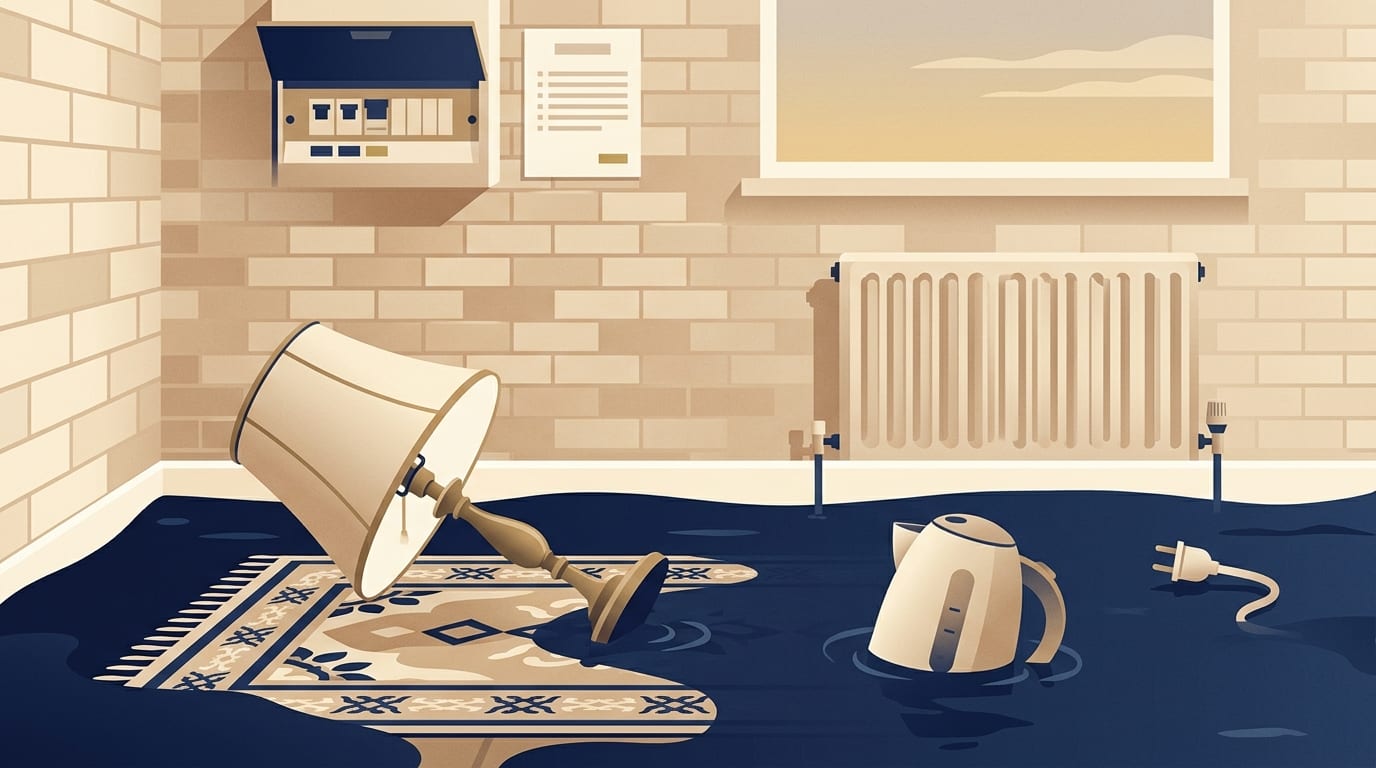
What to Do About Your Electrics After a Flood or Water Leak
After a flood or water leak, wet electrics can be dangerous. Learn when to switch off, what not to use, why a registered electrician must check the installation, and what to tell your insurer.
Read guide
How to Avoid Drilling Into Hidden Cables in Your Walls
Hitting a hidden cable can cause a shock or a damaged circuit. Learn how cables run through walls, what a cable detector can and cannot do, what to do if you hit one and when to call an electrician.
Read guide
Buying an Older House and What to Check in the Electrics
A standard survey does not cover the electrics. See what to look for in an older house, why an EICR is worth having before you commit, what a rewire typically costs and how to use the result.
Read guide
Arc Fault Detection Devices and Whether Your Home Needs Them
An AFDD detects dangerous arcing that ordinary breakers miss. See what it does, why it is a recommendation rather than a rule for most homes, what it typically costs and what to ask on a quote.
Read guide
Surge Protection Devices and Why Electricians Now Fit Them
A surge protection device guards your wiring and electronics against sudden voltage spikes. See why it is now part of most consumer unit upgrades, what it costs and what to ask on your quote.
Read guide
What Is an RCD and How to Test Yours Safely
An RCD cuts the power in a fraction of a second when current leaks, which protects you from electric shock. Learn how to spot yours, press the test button safely and what to do if it does not trip.
Read guide
Which Fire Extinguisher Should You Use on an Electrical Fire?
Never use water on an electrical fire. Learn which extinguishers fire services say are suitable, why CO2 is the usual choice, when to just get out and call 999, and what to do afterwards.
Read guide
Warning Signs Your House Needs Rewiring
The real warning signs of worn or unsafe wiring, which ones are urgent, why age alone does not decide it, and how an inspection report tells you whether you need a rewire or just repairs.
Read guide
EICR Codes C1 C2 C3 and FI Explained in Plain English
What C1, C2, C3 and FI mean on an electrical report, which codes make it unsatisfactory, how the 2026 wiring standard changed the FI code, and what landlords must do and by when.
Read guide
Damaged Electric Meter Box and Who Is Responsible for Fixing It
Who owns a meter box, who repairs it, when the network operator steps in, when to call your supplier instead, and what to do (and not do) if the cover is broken or wires are showing.
Read guide
Emergency Lighting Rules and Testing for Businesses and Landlords
Who has to provide emergency lighting, when shops, offices, HMOs and blocks of flats need it, maintained and non maintained systems explained, and how often it should be tested.
Read guide
Earth Bonding Explained and What to Do if Yours Is Missing
What earthing and bonding do, why a gas engineer or an EICR may flag missing bonding, which bonding is genuinely needed, and who should fit it and what to ask.
Read guide
Fishy or Burning Smell in Your House and When It Is Electrical
Why overheating sockets and wiring can smell of fish or burning plastic, what to do straight away, how to tell it apart from a gas smell and what an electrician will check.
Read guide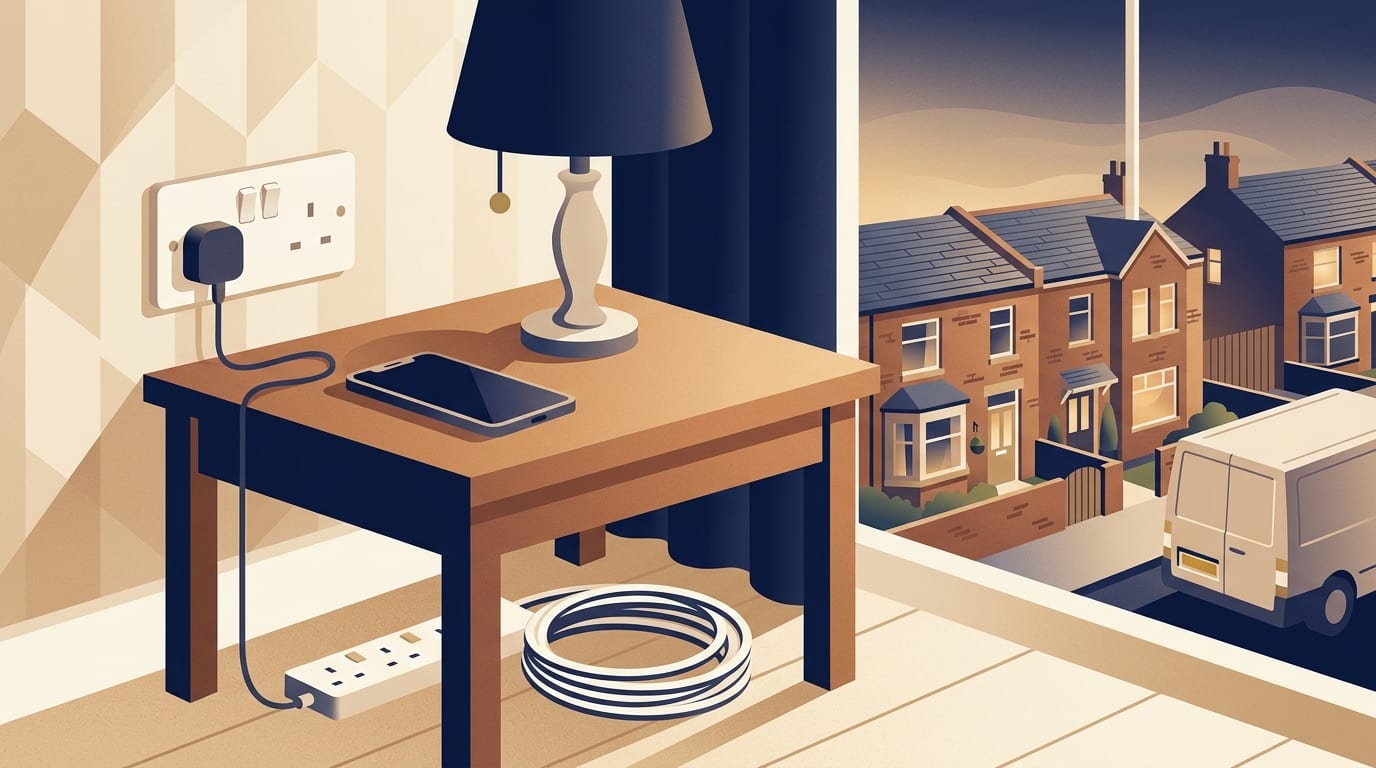
Plug Socket Not Working and When to Call an Electrician
Why a plug socket or a group of sockets stops working, the safe checks you can make first, the signs that mean stop using it now and what an electrician typically charges in 2026.
Read guide
What Is PAT Testing and Is It a Legal Requirement?
What PAT testing is, whether the law actually requires it for landlords and businesses, how often appliances should be tested and what it typically costs in the UK.
Read guide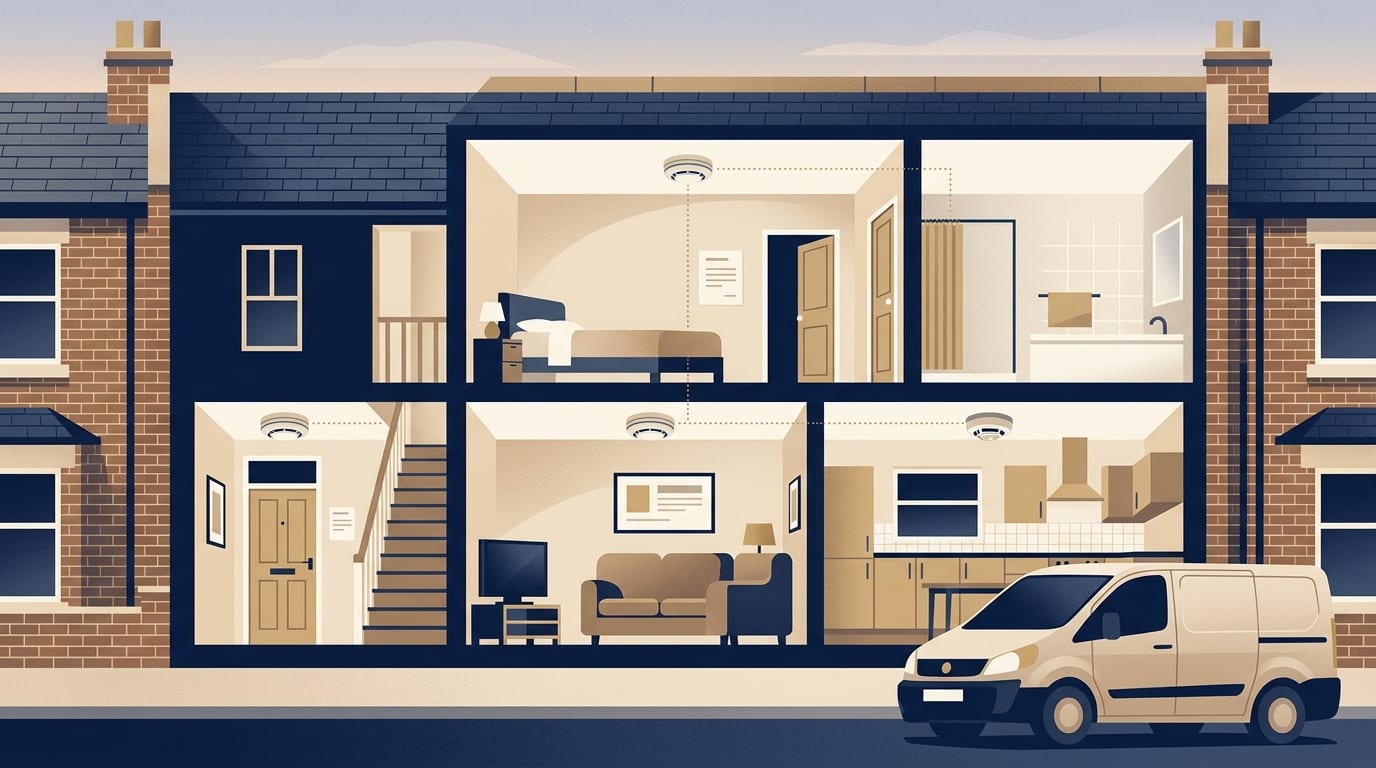
Interlinked and Mains Wired Smoke Alarms Explained
The difference between interlinked, mains wired and sealed battery smoke alarms, the rules in Scotland, England and Wales, and what an electrician charges to fit them.
Read guide
Why Are Your Lights Flickering and Should You Worry?
The common reasons lights flicker, how to tell a bulb or dimmer problem from a wiring or supply fault, and when to call an electrician or the network operator.
Read guide
Why Does Your Electricity Keep Tripping?
What makes an RCD or circuit breaker keep tripping, the safe checks you can make, when to stop resetting it and what an electrician typically charges to find the fault.
Read guide
What Is an EICR Certificate and Who Needs One?
What an EICR covers, who legally needs one, how often, what the codes mean and what it typically costs in the UK.
Read guide
When Do You Need an Emergency Electrician?
Which electrical problems cannot wait, what to do safely until help arrives, and what an out of hours call out is likely to cost.
Read guide