An AFDD (arc fault detection device) is a protective device inside your consumer unit that detects dangerous electrical arcs. Under the current UK wiring standard, fitting them in homes is a recommendation rather than a legal requirement, meaning you can choose to omit them. They typically cost in the region of £100 per device, and you should weigh this extra cost against the safety they bring.
What an electrical arc fault is
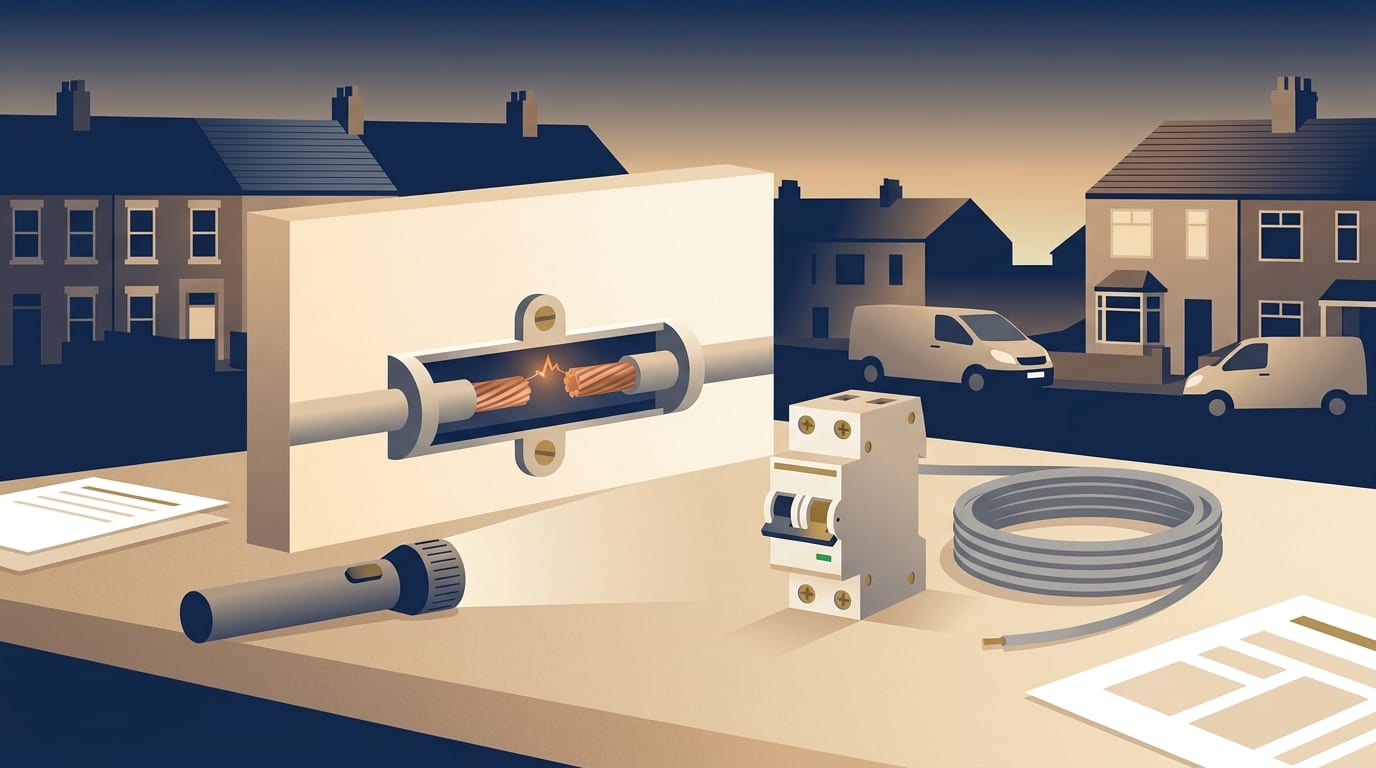
An arc is created when the electrical current jumps the gap between two conductive materials. This usually happens when the wiring in your home is compromised and the electricity arcs across the broken space to complete its circuit.
An arc can happen if:
- A hidden cable is damaged or crushed
- Wiring has degraded over time
- There is a loose connection behind a socket or a switch
When the current jumps this gap, it generates intense heat. These temperatures are sufficient to start a fire inside your walls or under your floorboards. Because the wiring is usually hidden away, you will not see this happening and the heat can build up unnoticed.
Ordinary protective devices in your home are not designed to look for this specific problem. The IET says AFDDs are far more sensitive to arcs than conventional protective devices, which is why they are offered as an extra.
What an AFDD does in your consumer unit
An AFDD is a piece of protective equipment that sits inside your consumer unit, which is also called a fuse box or fuse board. Its job is to provide protection from arc faults by constantly monitoring the circuit. AFDDs are far more sensitive to arcs than conventional circuit protective devices.
If the device detects an arc fault on the circuit it protects, it cuts the power to that circuit. Once the power is cut, you will need an electrician to find the loose connection or damaged cable that caused the arc.
They add to the overall cost of an electrical upgrade, and the IET says the decision should weigh risk and safety against installation cost.
Are AFDDs required in a UK home?
When you receive a quote for a new consumer unit, you might see AFDDs listed as an optional extra or a recommended upgrade. Under the current edition of the national wiring standard, known as BS 7671:2018 or the Wiring Regulations, it is a recommendation to install AFDDs.
Because it is a recommendation and not an absolute rule, the customer can choose to omit them. Your electrician should explain the benefits, but they cannot force you to have them fitted. The decision is yours, and it involves weighing the risk and safety against the installation cost.
The rules for electrical work differ across the UK. Part P of the Building Regulations covers electrical safety in homes in England and Wales, while Scotland and Northern Ireland have their own building standards systems. The IET guidance describes AFDDs as a recommendation under BS 7671:2018, not a mandatory requirement, and nothing here says they are mandatory anywhere.
Where AFDDs are most worth considering
While you do not have to install them, the IET lists premises with sleeping accommodation as a case to consider. This includes houses, hotels and hostels.
Weighing risk against cost is a decision to make with your installer. No figures are available here on how often AFDDs prevent fires, so treat them as one option to weigh rather than a must-have.
The electrical designer or installer is best placed to offer advice on the installation of AFDDs for your specific property, including which circuits would get one.
What an AFDD costs
The main reason people hesitate to install these devices is the price. Currently, the typical cost of an AFDD is in the region of £100 per device.
Because of this, a complete consumer unit with AFDD and other protection is a significant investment. Upgrading your fuse box is a major job that involves multiple pieces of safety equipment.
Current requirements for a new consumer unit include:
- A non-combustible enclosure
- RCD protection against electric shocks
- A recommended AFDD for arc fault protection
- A surge protection device to stop voltage spikes
When you add all these components together, typical costs for a domestic consumer unit within a domestic installation can range from £500 to £2000 including installation. The final price depends on the size of your property, the number of circuits, and whether you choose to include the recommended arc fault protection.
The table below shows how the different elements contribute to the overall cost of a consumer unit upgrade.
|
Item or service |
Typical cost |
|---|---|
|
Domestic consumer unit (including installation) |
£500 to £2000 |
|
AFDD (arc fault detection device) |
In the region of £100 per device |
These are the IET's typical figures, and your local quotes will differ based on the size of the job.
How AFDDs change your consumer unit quote
A quote for a new consumer unit should be a fixed price for the whole job. An estimate is just a rough guess and can change, so always insist on a firm quote. When you read the document, you need to check exactly what is included.
Because AFDDs cost around £100 each, your electrician should clearly state whether they are included in the total or priced as an optional extra. A vague quote that just says consumer unit upgrade is not good enough. You need to know how many circuits are being protected and what type of devices are being used.
You should also check whether the quote includes VAT, the cost of all materials, and the final certification. Replacing a consumer unit often requires making good, which means patching up any plaster or paintwork around the new box. Check if making good is included, as some electricians will leave the plastering to you.
Prices also vary by location and timing. Electricians in London and the South East cost noticeably more than in other parts of the country. If you need the work done outside normal working hours, that will carry a premium too. Small jobs and fault finding are usually charged by the hour, often with a call-out fee, but a consumer unit replacement is usually quoted as a fixed price based on property size, number of circuits, access, and specification.
Can you opt out of having AFDDs fitted?
You are perfectly entitled to opt out of having these devices fitted in your home. If you decide the cost is too high, you can tell your electrician to use standard protective devices instead. Because the wiring regulations present this as a recommendation, your electrician is not breaking any rules by leaving them out.
When the job is finished, new work is certified with an Electrical Installation Certificate, or for small jobs, a Minor Works Certificate. Ask whether your choice to omit AFDDs will be written on the certificate. After notifiable work, you should receive this electrical certificate and a Building Regulations compliance certificate, and you should keep both for when the property is sold.
Before you make your final decision, it is sensible to think about your home insurance. It is a good idea to ask your insurance company whether a claim would be paid if AFDDs were not installed as the standard recommends.
Questions to ask your electrician
When you are discussing a consumer unit upgrade, you should ask your electrician a few direct questions to understand your options. A good tradesperson will be happy to talk you through the design and explain why they have priced the job a certain way.
The table below lists the key questions to ask before you agree to the work.
|
Question to ask |
Why you need to know |
|---|---|
|
How many circuits would get an AFDD? |
To understand if they are protecting the whole house or just key areas. |
|
Which specific circuits are they for? |
To check if they cover premises with sleeping accommodation as recommended. |
|
What is the price per device and the total? |
To see exactly how much this specific recommendation adds to the final bill. |
|
Is this shown as optional on the quote? |
To ensure you have the choice to omit them and lower the cost. |
|
Will my choice be written on the certificate? |
To ensure the paperwork accurately reflects the agreed design. |
These questions help you compare quotes fairly and ensure you are not paying for work that is not needed.
What an AFDD does not replace
Adding arc fault protection to your home does not mean you can ignore other electrical safety measures. An AFDD does a very specific job and it does not replace the need for an RCD. An RCD gives you shock protection by cutting the power if electricity leaks to earth. You can learn more about what an RCD is and why it is essential for safety. Some consumer units use an RCBO, which combines an RCD and a circuit breaker, and the arc fault protection works alongside this.
Installing new devices also does not replace the need for regular testing. An EICR, or Electrical Installation Condition Report, is still the proper way to check the overall condition of your wiring. If you are a landlord, you have legal duties to have your installations inspected at least every five years, with nation specific rules and substantial penalties in England. For owner-occupiers, a periodic inspection is a recommendation, not a legal duty. You can read our guide to what an EICR certificate is to understand what the inspection involves.
Common problems customers face
When hiring an electrician for a consumer unit upgrade, customers sometimes face poor practices. One common issue is being told that a full rewire or a brand new consumer unit is legally compulsory, with no test evidence provided to prove the old one is unsafe. Very cheap inspections are sometimes used to sell long lists of remedial work, with advisory items wrongly presented as failures.
Another problem is unregistered work with no certificate and no notification to building control. If an unregistered person does notifiable work, building control must be told before it starts. Electricians registered with a government-authorised competent person scheme, for example NICEIC (run by Certsure) or NAPIT, can self-certify notifiable work. Always check their registration yourself through the scheme body.
Customers also face issues with vague quotes that leave out making good, certification, or VAT. Emergency call outs with no price given before attendance are another common trap, as are demands for large cash deposits with no paperwork. Choosing an electrician on price alone often leads to these problems. Under the Consumer Rights Act 2015, a service must be carried out with reasonable care and skill, and the customer can ask for poor work to be put right at no extra cost.
Common questions
Can I install or test an AFDD myself?
You should never attempt to install or test an AFDD yourself. Electrical work is dangerous and the only actions you should take are safe user level ones, such as pressing the RCD test button or switching off at the main switch if it is safe to reach. Never remove covers, open a consumer unit, or touch any wiring.
Will an AFDD prevent power cuts?
No, these devices are designed to detect faults in your home wiring, not to manage the incoming supply from the grid. If you experience a complete power cut in your area, you should call 105 to report it to your network operator.
Do I have a cooling-off period if I change my mind?
Services arranged at home, by phone or online usually carry a 14-day cooling-off period. However, this does not automatically apply to urgent repairs that you have specifically asked for. You can check with Citizens Advice to see how the rules apply to your own situation.
What should I do if I suspect an electrical fire?
If you smell burning, see smoke, or suspect a fire has started in your wiring, do not try to investigate it yourself. Get everyone out of the property and call 999 immediately. Keep away from any damaged equipment.
Next steps
If you are planning to upgrade your consumer unit and are deciding whether to include arc fault protection, follow these practical steps:
- Ask your electrician to explain which circuits would benefit most from arc fault protection, such as those supplying bedrooms
- Request a detailed, fixed price quote that lists the AFDDs separately so you can see exactly what they cost
- Check that the quote includes VAT, all materials, the final certification, and making good any plasterwork
- Verify that the electrician is registered with a competent person scheme like NICEIC or NAPIT so they can self-certify the work
- Contact your home insurance provider to check if omitting the recommended protection will affect your policy
This site lists local tradespeople and ranks them by their Google reviews, though we do not employ, vet, certify, or guarantee anyone. When you are ready to get a quote for a new consumer unit, you can find an electrician near you to discuss the best options for your home.
Find a top rated electrician near you
4,987 electricians across the UK, each ranked on their Google rating and the number of reviews behind it. Start with your county: