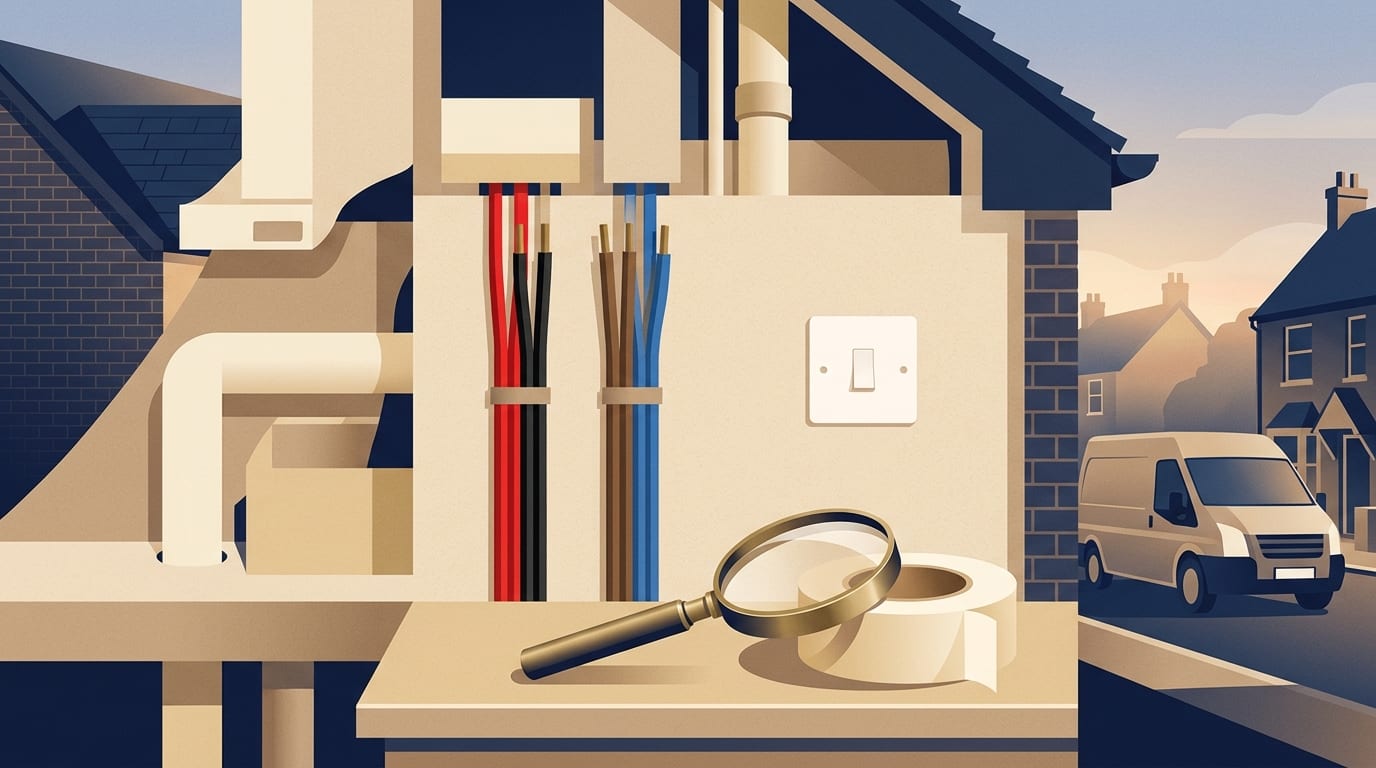
Your landlord is always responsible for repairs to the electrical wiring in your rented home. If they ignore a dangerous fault, your next step is to report the problem to the environmental health department at your local council, which must take action if the problem could harm you. You should keep paying your rent while you wait for the repair to be sorted out.
First make sure you are safe
If an electrical fault has caused a fire or someone has had a serious electric shock, call 999 immediately. For less urgent faults that could still damage health, report the problem to your landlord straight away. Stop using the affected item or socket to reduce the risk of a fire or shock.
If it is safe to reach your consumer unit, which is also called a fuse box or fuse board, you can switch off at the main switch or unplug the affected appliance. You can also press the test button on your RCD. An RCD is a residual current device designed to switch off the power if there is a fault. Do not try to diagnose or repair a circuit that keeps tripping. Report it to your landlord.
Keep away from any damaged equipment and never try to carry out your own electrical repairs. Electricity is dangerous, and touching exposed wiring can be fatal.
What your landlord must do in England
Landlords in England must have the electrics checked at least every 5 years by a properly qualified person. They must give you written proof that the electrical installation was inspected, tested and checked. When an inspection happens during your tenancy, the landlord must give you the report within 28 days of the inspection and test.
If the report specifies that remedial work is needed, this must be completed within 28 days, or sooner if the report demands it. The landlord must then send written confirmation of the completed work to you and to the local council within 28 days. If your landlord ignores these rules, local councils may impose a financial penalty of up to £40,000.
Where a council believes a landlord is in breach, it must serve a remedial notice. If the landlord still refuses to comply, the council can carry out the work themselves and recover the costs from the landlord.
These regulations also apply to the social rented sector. They come into force on 1 November 2025 for social tenancies granted after 1 December 2025. For older social tenancies, they take effect on 1 May 2026, with the first inspections and checks due by 1 November 2026. Social tenants who are dissatisfied with a landlord response can complain to the Housing Ombudsman.
How the rules differ in Wales
The law on electrical safety is different in Wales. Your landlord must ensure that an electrical safety inspection is done at least every five years. You must be provided a copy of this report so you can see the condition of the wiring for yourself.
If you have an electrical fault and the landlord disagrees that the property is unfit to live in, it is for the court to decide. The Welsh Government warns that withholding your rent could potentially create a ground for possession. If you are struggling to get repairs done in Wales, you can contact Shelter Cymru or Citizens Advice for guidance on your tenancy.
Scotland and the repairing standard
In Scotland, the electrical system must be safe, working and in reasonable condition. It must also have a residual current device installed to protect against shocks. Landlords must arrange a safety inspection by a registered electrician at intervals of no more than 5 years.
You should receive a copy of the most recent electrical installation condition report, known as an EICR, before your tenancy starts and after any inspection carried out while you live there. If the report identifies a danger present, which is coded C1, or a potentially dangerous issue, which is coded C2, the landlord must have it rectified to comply with the Repairing Standard.
If the landlord fails to meet these standards and ignores your requests for repairs, you can take them to a housing tribunal.
Northern Ireland and the council route
In Northern Ireland, you can contact your local council environmental health department if your landlord fails to carry out necessary repairs you have reported. The council has the power to investigate and prosecute a landlord who fails to comply with electrical safety requirements.
The Department for Communities lists the commencement date for the Electrical Safety Standards Regulations under the Private Tenancies Act (Northern Ireland) 2022 as 1 April 2025. For the details, contact your council environmental health department.
Summary of landlord duties across the UK
The following table outlines the main electrical inspection duties and enforcement routes for private landlords across the four nations.
|
Nation |
Inspection duty |
Enforcement route |
|---|---|---|
|
England |
At least every 5 years |
Local council environmental health |
|
Wales |
At least every five years |
Shelter Cymru or Citizens Advice |
|
Scotland |
No more than 5 years |
Housing tribunal |
|
Northern Ireland |
Regulations commence 1 April 2025 |
Local council environmental health |
Rules differ by nation, so check the section for your own nation above.
Understanding the electrical paperwork
When an electrician inspects a property, they test the circuits against the national wiring standard, known as BS 7671 or the Wiring Regulations. The results are recorded on an EICR. This document tells the landlord exactly what needs fixing and what is safe to leave alone.
When you receive your copy of the report, you can read what the codes mean to understand how dangerous the faults are. A C1 code means danger is present and immediate action is required. A C2 code means the fault is potentially dangerous. If the electrician finds an issue but needs to investigate further, they will use an FI code.
If new work is done to fix a fault, it must be certified. You should expect the landlord to receive an Electrical Installation Certificate, or a Minor Works Certificate for smaller jobs. In England and Wales, Part P of the Building Regulations covers electrical work in homes. Scotland has its own building standards system and Northern Ireland differs, so never assume English rules apply UK wide.
Common electrical faults you should report
You cannot judge electrical work yourself, but you can spot the warning signs that something is wrong. Report these issues to your landlord immediately.
- Plugs or sockets that feel hot to the touch.
- Sockets that spark when you plug an appliance in.
- A fishy or burning smell near switches or the consumer unit.
- A circuit breaker or RCD that trips repeatedly.
- Exposed copper wiring on pendants or wall fittings.
- Flickering lights across multiple rooms in the house.
If you notice a strange odour and want to know when a smell is electrical, stop using the item and report it to your landlord in writing.
How electrical repairs are usually priced
It can help to know how electricians price their work. Small jobs and fault finding are usually charged by the hour, often with a call-out fee or minimum charge that covers the first hour.
For larger jobs, such as a consumer unit replacement or a full rewire, the electrician will usually quote a fixed price based on the property size, the number of circuits, access and the specification. London and the South East cost noticeably more, and out-of-hours work carries a premium. Quotes may or may not include VAT, materials, certification and making good plaster and decoration, and an estimate is not a fixed price.
Very cheap inspections are sometimes used to sell long lists of remedial work, and advisory items are sometimes presented as failures. If a landlord is told that a full rewire is compulsory with no test evidence, a second opinion is sensible, but any dangerous fault still needs a registered electrician.
Signs your landlord is using an unregistered worker
Sometimes a landlord will agree to fix a fault but send a handyperson instead of a registered electrician. You cannot judge electrical work yourself, but you can look out for red flags.
- The worker refuses to show proof of their competent person scheme registration.
- They cannot explain what an EICR is or how they will test the circuit.
- They leave the job without providing a Minor Works Certificate.
- They leave exposed wiring or fail to make good the plaster around the new fitting.
If you suspect the worker is unqualified, ask them which scheme they belong to. You can check registration bodies like NICEIC or NAPIT online to confirm their credentials. If an unregistered person does notifiable work, building control must be told before it starts.
Steps to report an electrical fault
When you spot a problem with your electrics, you need to create a clear paper trail. This proves you told the landlord and gives them a fair chance to fix it before you escalate the complaint. Follow these steps in order.
- Report the fault to your landlord or letting agent in writing as soon as it appears.
- Keep a copy of your email or letter along with photographs of the damaged fitting if it is safe to take them.
- Ask for a duplicate copy of the electrical installation condition report if you do not already have one.
- Give the landlord a reasonable amount of time to respond, so keep a written record of when you reported the fault.
- Contact your local council, or the housing tribunal if you rent in Scotland, if the landlord refuses or ignores your request.
When the landlord still does nothing
If you rent privately in England and your landlord will not fix the fault, contact the environmental health department at your local council. They will check whether the landlord is meeting their obligations and can take enforcement action. If your home is unsafe, you can also contact the council housing department, which carries out a Housing Health and Safety Rating System assessment.
You should keep paying rent while you wait for the repairs, unless a housing adviser tells you otherwise. Organisations such as Shelter and Citizens Advice can offer specific guidance for your tenancy type.
If you are a social tenant in England and your housing association or council landlord is ignoring the problem, you should follow their internal complaints process first. If that fails, you can escalate the matter to the Housing Ombudsman.
What not to do yourself
Living with a broken socket or tripping power is frustrating, but you must not attempt to fix the wiring yourself. Electricity is dangerous and a poor repair can easily start a hidden fire or leave metal casings live. Never try to carry out your own electrical repairs, no matter how simple the job looks.
Speak to Shelter or Citizens Advice before arranging your own electrician or deducting any cost from your rent. The rules on electrical work in homes are set out in the guide on electrical work you can do yourself, and Electrical Safety First says tenants should never try to carry out their own electrical repairs.
Common questions
Can I stop paying rent until the electrics are fixed?
You should keep paying rent while you wait for your landlord to fix an electrical fault. GOV.UK says to keep paying rent while you wait for repairs, and the Welsh Government warns that withholding rent could potentially create a ground for possession. Speak to a housing charity like Shelter or Citizens Advice before making any decisions about your rent payments.
How long does a landlord have to fix an electrical fault?
In England, if an electrical report specifies that remedial work is needed, the landlord must complete it within 28 days, or sooner if the report demands it. For faults that appear between inspections, report them straight away and in writing, and ask your council environmental health department if you are unsure what to expect.
What happens if my landlord does not have an electrical certificate?
If your private landlord in England does not have a valid electrical report, the council must serve a remedial notice where it believes the landlord is in breach. If the landlord does not comply, the council can carry out the work and recover the costs, and local councils may impose a financial penalty of up to £40,000. You can ask your landlord or letting agent for a copy of the report.
Are housing associations bound by the same electrical rules?
In England, the rules requiring five year electrical checks also apply to the social rented sector. These regulations come into force on 1 November 2025 for new social tenancies granted after 1 December 2025. For older social tenancies, they take effect on 1 May 2026.
How can I check if the electrician my landlord sends is qualified?
Electricians registered with a government-authorised competent person scheme can self-certify notifiable work. You can check the scheme websites to confirm the firm is registered. Registration is one way to check, but you should still ask for the paperwork after the work.
Your next steps
If you are dealing with a landlord who will not fix an electrical fault, use this checklist to move things forward safely.
- Stop using the faulty socket or appliance immediately.
- Write to your landlord to report the fault and keep a copy of the message.
- Ask your landlord for a copy of the latest electrical safety report.
- Keep paying your rent unless a housing adviser tells you otherwise.
- Contact your local council environmental health department if the landlord ignores you.
This site lists local electricians and ranks them by their customer reviews, but it does not employ, vet, certify or guarantee anyone. If you are a landlord who needs to book an inspection or complete remedial work, you can use the directory to find an electrician near you.
Find a top rated electrician near you
4,987 electricians across the UK, each ranked on their Google rating and the number of reviews behind it. Start with your county: