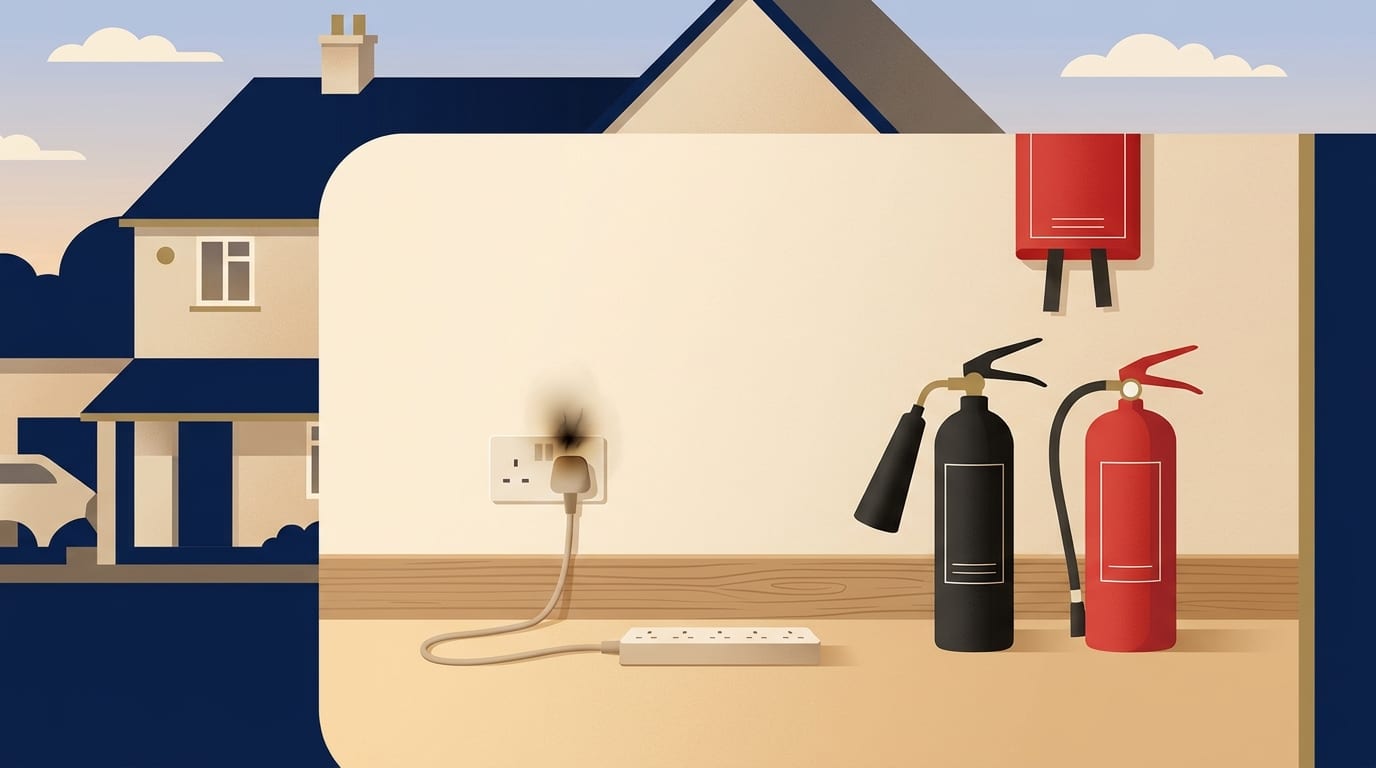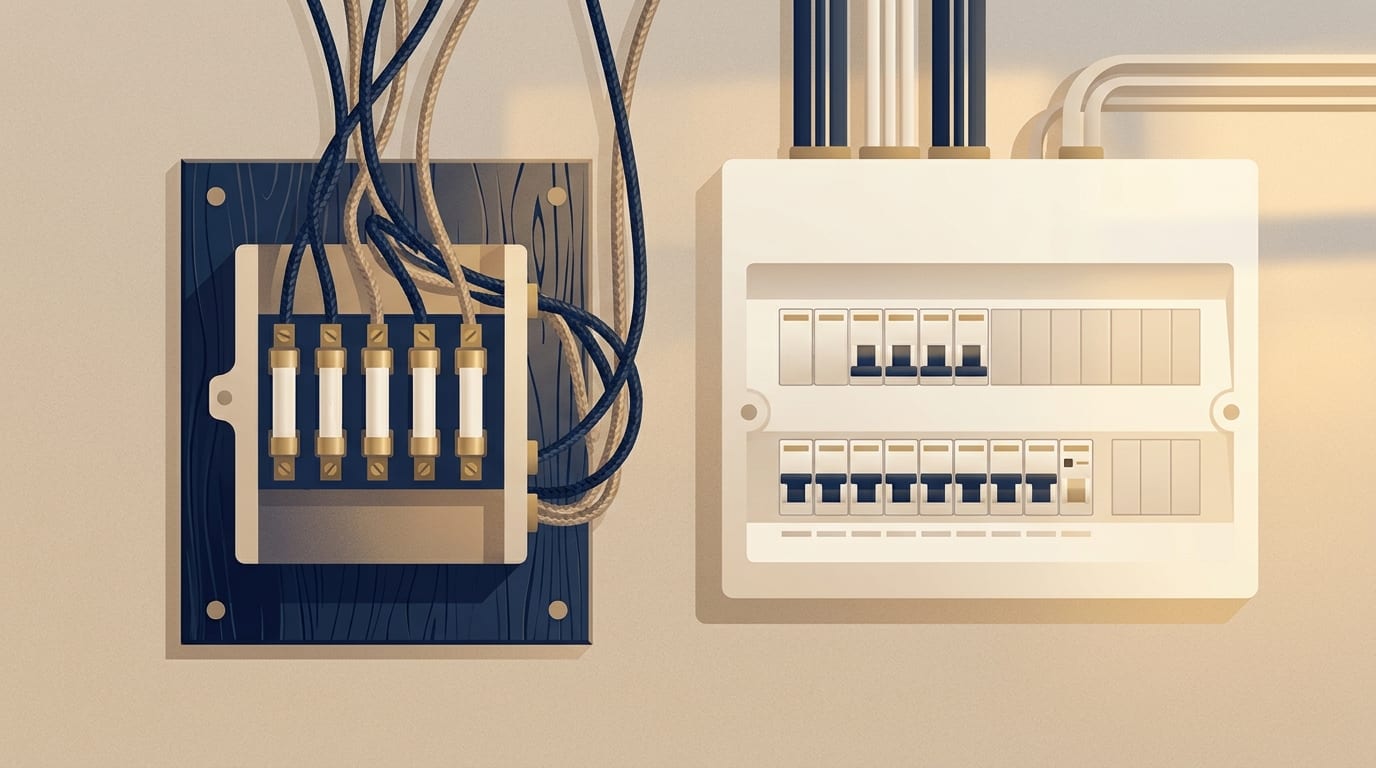
EICR codes tell you the exact safety condition of your electrics. C1 and C2 are the serious faults that make the report unsatisfactory. C3 is an improvement recommendation and does not fail the report. FI means further investigation is advised, and since the 2026 amendment to the wiring rules, its effect on the final result has changed.
What the codes on an EICR are for
An Electrical Installation Condition Report, or EICR, is a deep check of your home wiring. The electrician inspects your consumer unit, which is also called a fuse box or fuse board. They test the circuits running through your walls, the sockets, the light switches, and the earthing and bonding connections on your gas and water pipes.
They compare your setup against the national wiring standard, known as BS 7671 or the Wiring Regulations. Whenever they find something that falls short of this standard, they record it as an observation. Each observation gets a specific code to tell you how severe the problem is.
This table shows the four codes used on an electrical report and what they mean for the final result.
|
Code |
Meaning |
Effect on the overall result |
|---|---|---|
|
C1 |
Danger present, immediate risk of injury |
Unsatisfactory |
|
C2 |
Potentially dangerous, urgent remedial action required |
Unsatisfactory |
|
C3 |
Improvement recommended, no immediate or potential danger |
Can remain satisfactory |
|
FI |
Further investigation advised, a potential issue cannot be classified until it is investigated |
See the note |
These meanings follow Electrical Safety First and a trade news article published in August 2026. The FI code is explained below.
C1 danger present
This is the most serious observation an electrician can make on your electrics. It means danger is present and there is an immediate risk of injury. If your report contains even one of these faults, the overall result is automatically unsatisfactory and immediate remedial action is required.
The inspector decides the code for each observation, so ask them to explain why an item has been given C1.
If an electrician spots this level of danger, they will warn you straight away. They will explain what needs doing next. You should keep away from the damaged equipment until it is properly repaired.
C2 potentially dangerous
When a fault could give rise to danger under the right conditions, the inspector uses this classification. It means the condition is potentially dangerous and urgent remedial action is required. Like the more severe code, this makes the overall result of the report unsatisfactory.
The difference between the two top codes is the immediate risk. A C1 fault is dangerous right now. A C2 fault is not immediately dangerous to touch, but it would become dangerous if a separate fault occurs or if the system is put under stress. Earthing and bonding faults are one kind of problem an inspector may code this way, depending on the case. You can read more about earth bonding explained to understand why this safety feature matters.
The exact code for any fault is the inspector's judgement, so ask them to explain each C1 and C2 item.
C3 improvement recommended
Some observations identify parts of your system that are not dangerous, but would benefit from an upgrade. This code means improvement is recommended. No immediate or potential danger has been identified, but an upgrade would enhance the safety of your home. Crucially, this code does not fail the inspection, and your report can remain satisfactory.
Wiring regulations update frequently to include new safety technology. An installation that was perfectly safe and compliant twenty years ago will not meet the latest rules today. An older installation may lack protection that newer rules call for, and the electrician may note this as an improvement.
This code is a recommendation only. While ideally you should look into following the advice, it is not a requirement. Very cheap reports are sometimes used to generate long lists of these advisory items, which are then presented as urgent failures to sell unnecessary upgrades. Advisory items are not failures. If you receive a cheap report followed by a huge quote for extra work, a second opinion is a sensible move.
FI further investigation and the 2026 change
Electricians use this classification when they spot a potential issue but cannot make a final ruling during the standard test. It means further investigation is advised because they do not have enough information to classify the fault.
The rules on how this code affects your final result changed recently. The current edition of the Wiring Regulations is BS 7671:2018+A4:2026, which was published on 15 April 2026. Under this 2026 amendment, the improvement and investigation codes are decoupled from the dangerous ones. The model form for the report now makes the overall assessment unsatisfactory only where an observation is coded C1 or C2. An FI code does not by itself make the report unsatisfactory.
This is a major shift. Under the previous edition of the regulations, this code meant further investigation was required without delay, and it made the report unsatisfactory. That previous edition, known as BS 7671:2018+A2:2022+A3:2024, remained valid until 15 October 2026, so reports written before then may still follow it.
Because of this changeover, older reports and older web pages may still treat an investigation code as a fail. For example, the Electrical Safety First FAQ still lists the code as F1 and describes it as further investigation required. You should ask your electrician which form the report is on to understand exactly where you stand. Even though it does not automatically fail a new report, it still needs to be followed up to ensure there are no hidden dangers.
What satisfactory and unsatisfactory mean
When the inspection is finished, the electrician grades the whole installation to tell you whether the property is safe to use.
If the inspector finds something dangerous or potentially dangerous, the installation is declared unsatisfactory. This means your electrics do not meet the minimum safety standard and remedial work is needed promptly. The inspector will issue the EICR detailing the exact problems found.
If the report is satisfactory, the installation is deemed safe for continued use. A satisfactory report means there are no dangerous faults present. You might still have a list of recommendations, but you have passed the safety check. You do not have to upgrade your wiring just because the rules have updated, provided the existing setup remains safe.
What landlords in England must do and by when
Landlords have strict legal duties regarding electrical safety. The rules differ across the UK, and Scotland, Wales and Northern Ireland have their own systems. The following rules apply specifically to landlords in England.
Under the Electrical Safety Standards in the Private Rented Sector (England) Regulations 2020, landlords must follow these specific timelines:
- Inspect and test electrical installations at intervals of no more than 5 years, or sooner if the latest report requires it.
- Give a copy of the report to existing tenants within 28 days of the test.
- Supply the report to the local authority within 7 days of receiving a written request.
- Complete any required remedial work within 28 days, or within the period specified in the report if that is less than 28 days.
- Provide written confirmation of the repairs to tenants and the local authority within 28 days of completion.
Under the regulations, a financial penalty must not exceed £30,000 for landlords who fail to comply.
What to do with your report
For owner-occupiers, the rules are different. Periodic inspection is recommended at least every 10 years for a private home. This is a recommendation for your safety, not a legal duty.
If you are buying a house, a surveyor might suggest an electrical test. If the report comes back as unsatisfactory, you know exactly what needs fixing before you move in. You can ask the seller to drop the price to cover the repairs, or ask them to fix the faults before completion.
When you arrange remedial work, you do not have to use the electrician who did the test. You can take your report to other registered electricians and ask them to quote for the specific urgent items. Once the repairs are done, the electrician will issue an Electrical Installation Certificate for large jobs, or a Minor Works Certificate for smaller fixes. Keep this new certificate with your original EICR. A landlord in England also needs written confirmation that the required work has been done, as set out above.
Any electrical work in homes in England and Wales is covered by Part P of the Building Regulations. Electricians registered with a government-authorised competent person scheme, such as NICEIC, which is run by Certsure, or NAPIT, can self-certify their notifiable work. If an unregistered person does notifiable work, building control must be told before it starts. After the job, you should receive your electrical certificate and a Building Regulations compliance certificate.
What an EICR typically costs
In 2026, indicative UK domestic EICR costs are commonly around £100 to £300. There is no prescribed EICR fee, so prices vary depending on the firm you choose and the building they are testing.
Defined jobs such as an EICR, a consumer unit replacement, a rewire or an EV charger are usually quoted as a fixed price. Small jobs and fault finding are usually charged by the hour, often with a call-out fee or minimum charge that covers the first hour. If you want an idea of these rates, you can read about how much does an electrician charge for hourly work.
Several factors move the price of an inspection up or down:
- The size of the property and the number of rooms being tested.
- The number of circuits on your consumer unit.
- The location of the property, with London and the South East costing noticeably more.
- The time of the appointment, as out-of-hours work carries a premium.
- The inclusion of the final written report and VAT in the quoted price.
Remember that a quote is a fixed price. An estimate is not, and the final bill could be higher. Make sure you get a quote that includes the paperwork.
Common questions
Does an unsatisfactory report mean I need a full rewire?
Not always. An unsatisfactory report simply means there are specific faults that need fixing. What work is needed depends on what the report finds, and you should always ask to see the test evidence if someone tells you a rewire is compulsory.
Can I ignore a C3 code?
A C3 code is a recommendation only and it is not a requirement to fix it. It means an improvement would enhance safety, but there is no immediate or potential danger. You do not have to fix it to get a satisfactory report, but it is wise to consider the advice when you plan future home improvements.
What happens if an electrician finds a C1 fault?
This code means danger is present and there is an immediate risk of injury. The electrician will inform you straight away. They will likely ask to switch off the affected circuit or make it safe temporarily, and you should keep away from the damaged equipment until it is properly repaired.
Who is allowed to carry out an EICR?
Inspection should be carried out only by electrically competent persons, such as registered electricians. You can check if an electrician is registered with a government-authorised competent person scheme before they start the test.
What rights do I have if the testing is done poorly?
Under the Consumer Rights Act 2015 a service must be carried out with reasonable care and skill. If the work is poor, you can ask for it to be put right at no extra cost. Services arranged at home, by phone or online usually carry a 14-day cooling-off period, but this does not automatically apply to urgent repairs you have specifically asked for. You can contact Citizens Advice for guidance on your own situation.
Your next steps
Before you book an electrician to test your home or fix a coded fault, follow these steps to protect yourself.
- Check the electrician is registered with a competent person scheme before they arrive.
- Ask which version of the wiring regulations their report uses, especially regarding the FI code and the 2026 changes.
- Get a fixed price quote for the inspection and confirm it includes the written report and VAT.
- Read the report carefully when it arrives and check whether items are coded for urgent action or for advice.
- If the report is unsatisfactory, get a clear, written quote for the remedial work.
- Check if the repair quote includes making good any damaged plaster and decoration.
- Do not pay large cash deposits without receiving proper paperwork first.
- Pay safely in stages for larger repair jobs.
Understanding EICR codes helps you protect your property and avoid paying for work that is not needed. Whether you are a landlord meeting your legal duties or a homeowner checking a new property, getting an accurate report is the first step. When you are ready to book an inspection or get a second opinion on a list of faults, you can find an electrician near you to test your home safely.