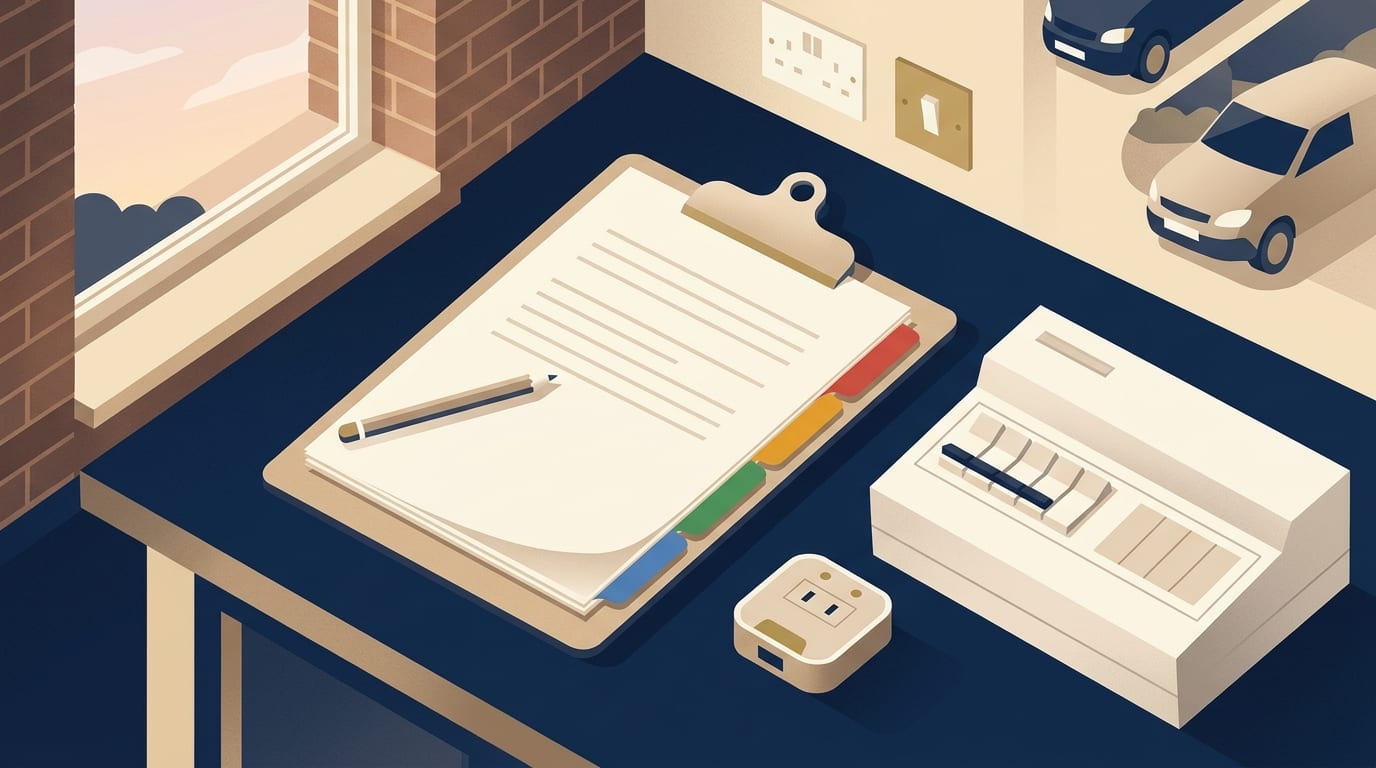
No single sign proves you need a rewire, and age alone is not the test. The only way to find out for certain is to have an inspection and testing report carried out by a registered electrician. This report is called an Electrical Installation Condition Report, or EICR for short. It is a thorough check of your home against the national wiring standard, known as BS 7671 or the Wiring Regulations.
Why age alone does not decide it
People often ask at what age a property must be rewired. There is no legal age limit for electrical wiring in a home you own. Instead, it comes down to condition and safety. All electrical installations deteriorate with age and use. The materials break down over decades, and older systems were not designed for the number of appliances we plug in today.
Electrical Safety First states that if the electrics in a home are more than 50 years old, they should be checked and updated. Similarly, NICEIC points out that if your property is over 30 years old and still has its original wiring, it likely will need updating.
These ages are prompts to get your electrics inspected, rather than strict rules that force you to rip out the wiring. A property built 40 years ago might have been perfectly maintained, or it might have been altered poorly by previous owners. Age gives you a clue, but only a proper inspection gives you firm evidence.
Warning signs you can see or notice
While you should never remove covers or touch wiring to check its condition, there are visual clues around your home that suggest the electrics are outdated. If you spot these, it is time to think about booking an inspection.
One clear sign is finding socket-outlets mounted in skirting boards. Electrical Safety First lists this as a sign of old wiring.
You should also look closely at your light fittings. Curled labels, discolouration or scorch marks on light fittings suggest they have been overheating. This often happens when older fittings are subjected to modern usage or when heat builds up over many years.
Check your plugs and socket-outlets for visible damage. Cracks or broken plastic are best looked at by an electrician rather than ignored. These signs of wear do not automatically mean a full rewire is required, but they do show that the installation is ageing and needs a professional eye.
Signs that need an electrician quickly
Some warning signs are more serious than general wear and tear. If you notice any of these, you should stop using the affected item, unplug appliances if it is safe to do so, leave the area alone, and contact an electrician immediately.
An unexplained burning smell is a strong warning. If you can smell burning but you cannot tell where it is coming from, it may be a sign of an electrical fault hiding behind a wall or under a floorboard.
Listen out for crackling sounds coming from light switches, light fittings or socket-outlets. Electricity should operate silently. A crackling noise can point to a fault that needs checking quickly.
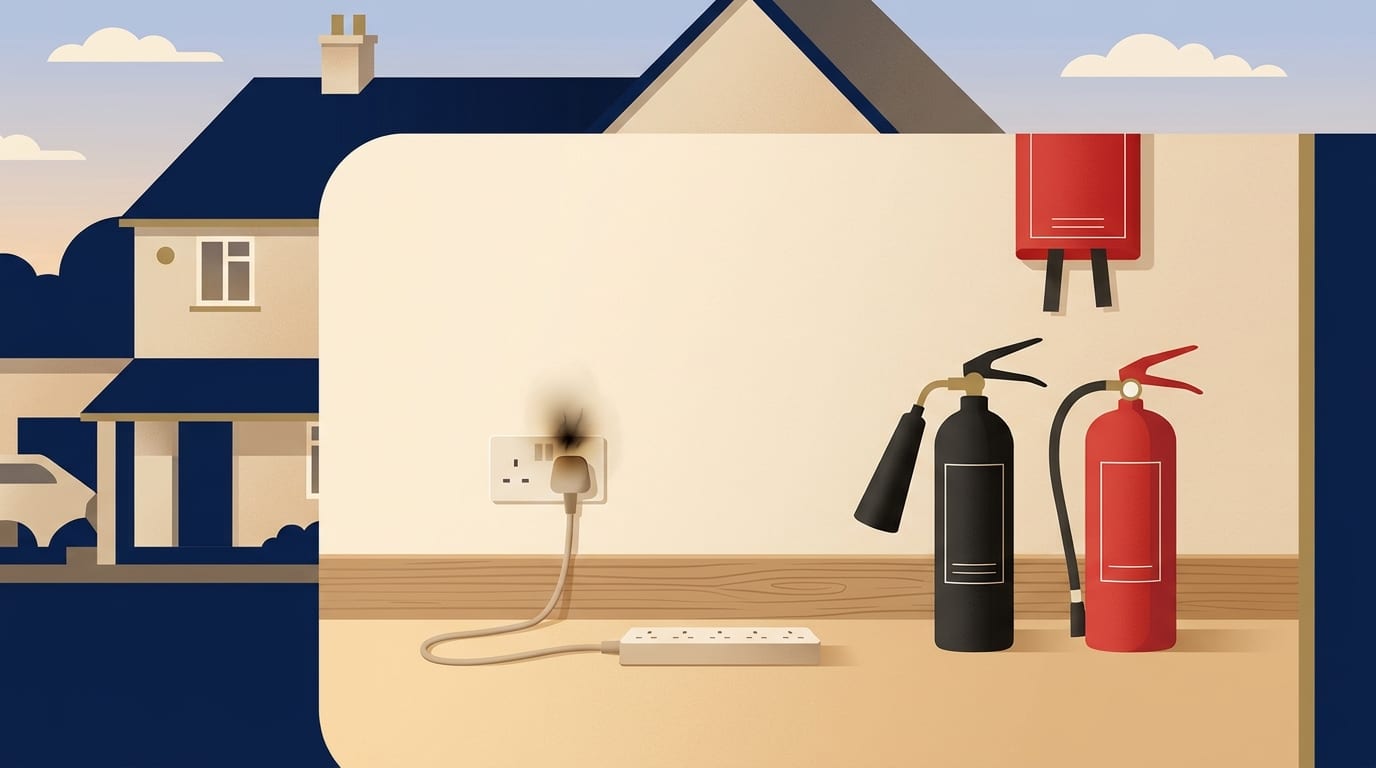
Visible burn marks or scorch marks on plugs and socket-outlets are another red flag. These marks suggest the fitting has overheated.
Finally, look at your consumer unit, which is the modern term for a fuse box or fuse board. This unit controls the circuits that carry power around your home. If you see any physical damage, thermal damage or discoloration on the casing, you have a serious problem. Never touch a damaged consumer unit. Switch off the main power only if the main switch is completely safe to reach, and call an emergency electrician.
Older wiring and fittings that point to a rewire
Sometimes the materials used in your home tell you exactly how old the system is. If you have very old materials, get the installation inspected promptly.
Look only at cables you can see without opening or touching anything. Cables coated in black rubber were phased out in the 1960s. If your home still has black rubber cables, ask a registered electrician to inspect the installation.
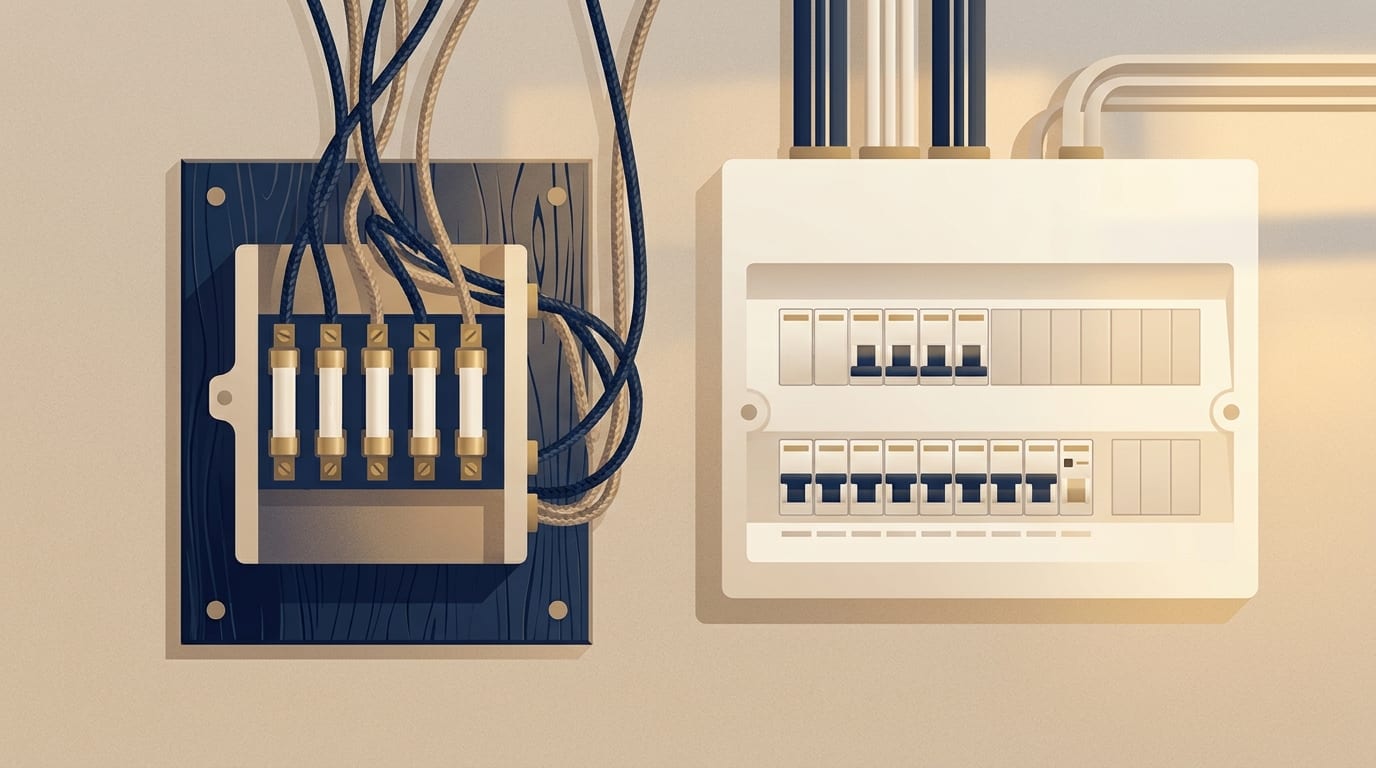
The consumer unit itself is a major clue. An old fusebox with a wooden back, cast-iron switches, or a mixture of both will need replacing. Modern consumer units are made of non-combustible materials and contain advanced safety devices. These include an RCD (Residual Current Device) or RCBO (Residual Current Breaker with Overcurrent), which trip the power instantly to prevent fatal shocks, and a surge protection device to protect your electronics from power spikes. Wooden backed fuse boxes offer none of this protection.
Earthing and bonding is the safety wiring that connects metal pipes and radiators to the ground, stopping them from becoming live during a fault. Only an inspection can confirm whether it is in place and adequate. Remember that you do not need to open the fusebox or pull at cables to check any of this. Visible wood, cast iron or black rubber cables are good reasons to book an inspection, but only an inspection and testing report (an EICR) can show the real condition of the installation.
Rewire, partial rewire or repair
Many homeowners worry that calling an electrician for an old socket will automatically lead to a massive rewiring bill. This is a common fear, but a full rewire is not always the only option.
A full rewire involves replacing all the cables, sockets, switches and the consumer unit. This is a major job. Sometimes, the wiring itself is in acceptable condition, but the consumer unit is obsolete. In that case, you might only need a consumer unit replacement. This updates the safety devices without ripping out the walls.
In other cases, an electrician might suggest a partial rewire. This means replacing the wiring in one specific area, such as a kitchen that is being modernised, or adding new circuits for heavy appliances while leaving the rest of the safe wiring alone.
If an electrician tells you a full rewire is compulsory without showing you any test evidence, you should be cautious. Very cheap visual inspections are sometimes used to sell long lists of remedial work. The best way to protect yourself from paying for work you do not need is to insist on a formal, written inspection report.
How an inspection report settles the question
An Electrical Installation Condition Report is the only reliable way to know if your house needs rewiring. According to Electrical Safety First, this report will either confirm that the installation is safe or highlight any hazards that need to be fixed.
Inspection and testing should be carried out only by electrically competent persons, such as registered electricians. During the test, the electrician will check the consumer unit, carry out tests on the circuits and inspect the installation.
If the inspector finds something dangerous or potentially dangerous, the installation is declared unsatisfactory and remedial work is needed promptly. The report uses specific codes to grade the problems. You can read more about what the codes mean to understand exactly what needs fixing. An advisory item might be marked as needing improvement, but it does not mean the system has failed.
For an owner-occupied home, electrics should be inspected and tested every 10 years. For a rented home, the recommended interval is every 5 years. You should also get an inspection when a property is prepared for letting, or before selling or buying a previously occupied property.
What a rewire involves and how long it takes
If the report confirms that the wiring is no longer safe, you will need to plan for a rewire. This is a disruptive process because cables run through walls, under floors and across ceilings.
The work happens in two main stages. First fix involves lifting floorboards, cutting channels into the plaster (known as chasing), and running all the new cables. Second fix happens after any plastering is dry. The electrician returns to fit the faceplates on the sockets and switches, install the new consumer unit, and test the entire new system.
A rewire can take anything from a few days to a week or two depending on the size and complexity of the project. You will need to move furniture and roll up carpets to give the electrician access.
The price varies widely based on the size of your property, the condition of the walls, and the specification of the sockets and switches you choose. Typical published prices show the broad range you can expect.
Typical published prices for home rewiring in the UK.
|
Job size |
Typical cost (2026) |
|---|---|
|
Smaller projects |
A couple of thousand pounds |
|
Larger, more complex rewires |
£10,000 or more |
These figures are typical published prices for 2026. Local quotes will differ based on your specific property and what is included in the cost to rewire a house.
Certificates and building rules
Electrical work is strictly regulated to keep you safe. In England and Wales, a home rewire counts as notifiable work under Part P of the Building Regulations. This means the local authority building control department must be informed about the work.
Electricians registered with a government-authorised competent person scheme, such as NICEIC or NAPIT, can self-certify this notifiable work. If an unregistered person does the work, building control must be told before it starts. Scotland operates differently and requires a building warrant instead.
When the rewire is finished, your electrician will issue an Electrical Installation Certificate to prove the new system meets the national wiring standard. For smaller repairs or adding a single socket, you would receive a Minor Works Certificate instead. You should also receive a Building Regulations compliance certificate. Failing to obtain the correct certificates could cause problems when you sell the house, so keep both documents safe.
You also have protections under the Consumer Rights Act 2015. This law states that a service must be carried out with reasonable care and skill. If the work is poor, you can ask for it to be put right at no extra cost. Services arranged at home, by phone or online usually carry a 14-day cooling-off period. However, this cooling-off period does not automatically apply to urgent repairs you have specifically asked the electrician to carry out.
Buying an older home
If you are buying an older property, you might assume the electrics have been checked as part of the buying process. Lots of house buyers believe electrical checks are included in the standard home survey report, but this is not the case. Do not rely on the survey for electrical safety.
To protect yourself from buying a house that needs an expensive rewire, you must ask the right questions. Check whether a recent EICR has been done. Ask the seller or estate agent whether the electrics have been fully checked in the past ten years and request a copy of any EICR.
If there is no recent report, it is highly recommended that you pay for an EICR before you exchange contracts. This small upfront cost tells you exactly what condition the wiring is in and gives you the evidence you need to negotiate the purchase price if major work is required.
Questions to ask before agreeing to a rewire
When you are ready to gather prices for a rewire, knowing what to ask separates the good tradespeople from the unreliable ones. Never choose on price alone. Vague quotes often lead to unexpected bills later.
Ask these questions to make sure the quote is comprehensive:
- Is this a fixed price quote or just an estimate?
- Does the total price include VAT?
- Are all materials, sockets and the new consumer unit included?
- Does the price include making good the plaster and decoration where walls are chased?
- Will you issue the Electrical Installation Certificate and handle the building control notification?
- How much disruption will there be, and do I need to clear the rooms entirely?
- What is the payment schedule, and can I pay safely in stages?
A professional quote will be clear about all these points. Be very wary of tradespeople who demand large cash deposits upfront or who cannot explain how they will certify the work. It is sensible to get three written quotes so you can compare exactly what is being offered.
Common questions
Do I have to rewire a 50-year old house?
There is no law stating a house must be rewired at a certain age. However, electrical installations deteriorate with age and use. If the electrics are more than 50 years old, they should be checked and updated. An inspection report will tell you if a rewire is actually needed.
How often should electrics be checked?
Electrics should be inspected and tested every 10 years for an owner-occupied home. For a rented home, the recommended interval is every 5 years. Inspections are also recommended when a property is prepared for letting or before selling or buying a previously occupied property.
Will a rewire ruin my plaster?
A full rewire requires cables to be sunk into the walls, which involves cutting channels into the plaster. This will cause damage to your current decoration. You must check whether your electrician's quote includes making good, which means patching the plaster afterwards, or whether you will need to hire a plasterer separately.
Can I stay in the house during a rewire?
Living in a house during a full rewire is very difficult. The power will be off for long periods, floorboards will be up, and there will be significant dust and noise. A rewire can take anything from a few days to a week or two depending on the size and complexity of the project.
Next steps
If you have noticed warning signs or simply know your wiring is decades old, taking action now keeps your home safe. Start by gathering information about your specific property.
- Look for visual signs of damage like scorch marks, crackling sounds or black rubber cables, but do not touch the wiring.
- If you see physical damage to the consumer unit or smell unexplained burning, stop using the affected circuits and call an electrician quickly.
- If you are buying a home, ask the seller for a copy of a recent EICR.
- Book an inspection and testing report with a registered electrician to find out the true condition of your electrics.
- If remedial work is needed, ask for a detailed, fixed price quote that includes certification and making good.
Old wiring is a common worry, but a professional inspection removes the guesswork and stops you paying for work you do not need. When you are ready to book an inspection or get a quote, take your time, check their registration, and find an electrician near you who can explain the process clearly.