A standard meter cabinet is treated as part of the building, so the building owner normally owns and maintains it. However, if the damage puts the network equipment at risk or the public in danger, the network operator may repair it, and they may charge you for the work.
Who owns the meter box
Finding the right person to fix a broken electrical meter box depends on exactly which part is damaged. An electrical supply involves three different parties, and each is responsible for a different piece of equipment.
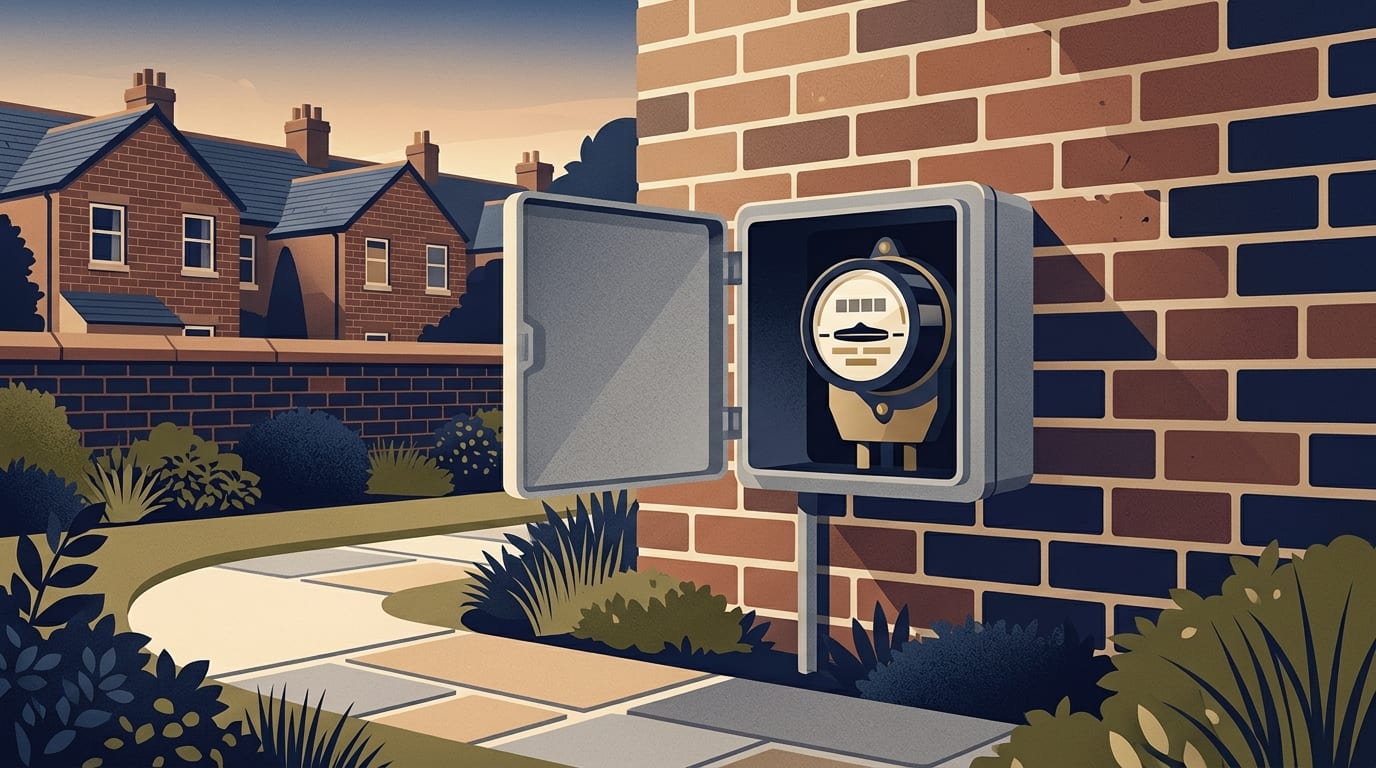
The physical box or cabinet on the outside of your wall belongs to the building owner. According to the Health and Safety Executive, meter cabinets manufactured to a suitable industry standard are deemed part of the fabric of the building. They are therefore owned and maintained by the customer, which means the property owner.
The energy supplier is the company that bills you for your electricity. They are responsible for the meter itself, which sits inside the box and records how much power you use.
The network operator is the company that owns and manages the heavy cables bringing power from the street to your property. They are responsible for the cables and equipment that bring power to your property.
What counts as damage
Meter cabinets are exposed to the weather all year round. Over time, weather, accidental bumps and vandalism can all damage a box. Damage can range from a small crack in the plastic to a completely shattered casing.
Common problems include missing doors, broken hinges, snapped latches, or cabinets that have pulled away from the exterior brickwork. A cabinet that will not close properly is also classed as damaged because it leaves the sensitive electrical equipment inside exposed to rain, dirt and tampering.
You cannot judge electrical work or safety risks yourself. If the casing is broken enough to show the wiring inside, you must treat it as a serious safety issue rather than just a cosmetic repair.
What to do straight away
Electricity is dangerous, so your first priority is keeping everyone safe. If you find a damaged meter box, keep children and pets well away from it. Do not touch exposed wires, and do not try to close, tape, prop or repair anything yourself. Do not open the box or remove anything inside.
If wires or equipment are exposed, or if you think there is an immediate fire or shock risk, call 999 and ask for the fire service or ambulance for serious injury.
If the power has gone off entirely, call 105. This is a free national number that connects you directly to your local network operator for unplanned power cuts.
If you suspect the meter itself has caused the loss of supply, you should contact your energy supplier's 24-hour helpline straight away.
The table below shows typical problems and who you need to contact to resolve them. Local quotes and specific responsibilities will differ based on the exact damage.
|
Problem |
Who to contact |
|---|---|
|
Box or door cracked or missing |
Building owner or landlord, and the network operator if there is danger |
|
Meter faulty or prepayment meter error |
Energy supplier |
|
Power cut |
105 |
|
Wiring after the meter |
Registered electrician |
When the network operator steps in
The network operator manages the physical infrastructure of the electricity grid. As noted by the Health and Safety Executive, where damage to the meter box or meter box door puts the network equipment at risk or the public at danger, the damage may be repaired by the network operator.
If your box is frequently targeted by vandals, the network operator may be able to provide steel vandal-resistant replacement covers or doors where required. Keep in mind that they may make a charge for repairs or replacements.
If you experience a power cut, dialling 105 puts you in touch with your electricity network operator. According to Citizens Advice, the network operator fixes power cuts and pays compensation, and this company is not your energy supplier. If a faulty meter cuts off your supply, you must contact your energy supplier instead of the network operator.
When your supplier is the right call
Your energy supplier is the company you pay for your electricity usage. Citizens Advice states that your supplier is responsible for making sure your meter works properly.
If you have a prepayment meter that is showing an error message, you must tell the supplier straight away.
If you suspect your meter is recording your usage incorrectly, you can ask for a meter test. A test is free, but if the meter proves accurate the supplier will charge you for removing the meter and installing a replacement. Citizens Advice notes this replacement charge might be around £200. A supplier-run test could also cost around £200, so you should check their fees before arranging one.
Where an electrician fits in
A private electrician handles the electrical installation inside your home. Their responsibility begins at the consumer unit, which is also called a fuse box or fuse board. They deal with the circuits that carry power to your sockets and lights, but they should not interfere with the electricity company's equipment, such as the main supply cable, the main fuse or the meter.
If a damaged meter box has let water into your household wiring, you will need a registered electrician to check your system. They work to the national wiring standard known as BS 7671, which is often called the Wiring Regulations. They will check your earthing and bonding, which is the essential safety wiring that connects metal parts of your plumbing and structure to the ground.
During their checks, they will inspect your consumer unit components. This includes the circuit breakers, which are switches that automatically interrupt power during a fault, and the RCD. An RCD is a residual current device that trips the power instantly to prevent fatal shocks. Modern homes often use an RCBO, which is a combined RCD and circuit breaker for individual circuits. They will also check your surge protection device, which protects sensitive electronics from sudden voltage spikes.
If the electrician finds faults, they will quote for remedial work to fix them. If the water damage is severe, they might recommend a consumer unit replacement or even a partial rewire. Rewiring involves a first fix, which is the hidden wiring installed before walls are plastered, and a second fix, which is fitting the sockets and switches afterwards. A good electrician will also explain their approach to making good, which means repairing the plaster and decoration around their work.
If you rent or live in a flat
Tenants have different responsibilities to owner-occupiers. The advice from Citizens Advice is that if you rent and your landlord pays the bills, you should tell the landlord about the faulty meter or broken box, and they should contact the supplier.
Landlords have strict legal duties regarding electrical safety. In England, landlords must have the electrical installation inspected and tested at least every five years, and there are substantial financial penalties for failing to do so. Scotland and Wales have their own nation specific rules for rented properties. For owner-occupiers, this periodic inspection is a strong recommendation for safety, but it is not a legal duty.
If you live in a block of flats, the meter boxes might be located in a communal hallway or an external utility room. Ask your landlord, freeholder or building management company who is responsible, and report any cabinet damage to them.
Who pays
Because the meter box is part of the fabric of the building, the property owner is usually responsible for paying to repair or replace the plastic cabinet or door. Prices depend heavily on the extent of the damage, the type of box, and whether the internal backboard needs replacing, so you will need to get a quote from a specialist or a builder.
If the network operator steps in to fit a steel vandal-resistant door, they may charge you for that replacement. If you request a meter test from your energy supplier and the meter proves accurate, you face charges that might be around £200 for the removal and replacement, or around £200 for a supplier-run test.
When you hire an electrician for private work inside your home, small jobs and fault finding are usually charged by the hour. This often includes a call-out fee or a minimum charge that covers the first hour of their time. Defined jobs such as fitting a new consumer unit or conducting an EICR, which is an Electrical Installation Condition Report, are usually quoted as a fixed price based on property size, number of circuits, access and specification.
Always ask if a price is a quote or an estimate. A quote is a fixed price, whereas an estimate is a rough guess that can go up. Check whether the quote includes VAT, materials, certification, and making good. Be aware that electricians in London and the South East cost noticeably more, and any emergency out-of-hours work carries a premium.
Do not interfere with the equipment
The equipment inside the meter box belongs to the network operator and the energy supplier, and it carries live electricity from the street supply. The Health and Safety Executive states clearly that you must not interfere with the electricity company's equipment.
This means you must never attempt to remove the main fuse, bypass the meter, or break any security seals on the equipment. Even if a broken door is flapping in the wind, trying to wedge it shut or tape it up can be dangerous. Leave the internal equipment strictly alone and wait for the responsible company to make it safe.
Questions to ask before anyone starts work
When you are trying to resolve a damaged meter box, ask the following questions to make sure the right person is doing the job:
- Is the fault located before or after the meter?
- Do you need to contact the network operator to make the supply safe first?
- What exactly will it cost, and is this a fixed quote?
- Does the price include VAT, materials and making good the surrounding brickwork?
- Will I receive a formal certificate for any electrical work completed?
- Are you registered with a government-authorised competent person scheme?
Checking an electrician's registration is vital. Part P of the Building Regulations covers electrical work in homes in England and Wales. Scotland has its own building standards system and Northern Ireland differs, so rules vary depending on where you live. Electricians registered with a competent person scheme, for example NICEIC or NAPIT, can self-certify their notifiable work. If an unregistered person does notifiable work, building control must be told before it starts.
After notifiable work is finished, the customer should receive an Electrical Installation Certificate and a Building Regulations compliance certificate. For smaller jobs, they will issue a Minor Works Certificate. You should keep these documents safe for when the property is sold.
You also have consumer protections. Under the Consumer Rights Act 2015, a service must be carried out with reasonable care and skill. If the work is poor, the customer can ask for it to be put right at no extra cost. Services arranged at home, by phone or online usually carry a 14-day cooling-off period, but this does not automatically apply to urgent repairs the customer has asked for. You can check with Citizens Advice for guidance on your specific situation.
Finally, a reliable tradesperson will tell you what is normal for timescales and disruption. They will not demand large cash deposits without providing proper paperwork, and they will allow you to pay safely in stages for larger jobs. If you feel pressured or if a tradesperson tells you a full rewire is compulsory without showing you test evidence, getting a second opinion is always sensible.
Common questions
Can I replace my electrical meter box door myself?
No. Do not try to close, tape, prop or repair a damaged meter box or door, and do not open it or touch anything inside. The cabinet belongs to the building owner, who should arrange the repair, and the network operator may step in if the damage puts its equipment at risk or the public in danger.
Do I call an electrician for a broken meter box?
An electrician should not interfere with the supplier's meter or the network operator's equipment. You only need an electrician if the damage has affected your consumer unit or the private wiring inside your home.
Who do I report a damaged meter box to?
If you own the property, you are responsible for repairing the physical box. If the damage puts the network equipment at risk or the public in danger, the network operator may repair it. Call 105 if the power has gone off. If the meter itself is broken, report it to your energy supplier.
Can the network operator force me to fix my meter box?
The box is part of your property, so the owner normally maintains it. Where damage puts the network equipment at risk or the public in danger, the network operator may repair it, and it may make a charge.
What to do next
Dealing with a broken meter cabinet is much easier once you know who is responsible for each part. Follow these practical steps to get the problem sorted:
- Keep everyone away from the damaged cabinet and do not touch any exposed wiring.
- Call 999 if there is a fire or an immediate risk of a serious electric shock.
- Call 105 if the damage has caused a power cut.
- Contact your energy supplier if the meter itself is faulty or displaying an error.
- Ask a specialist or a builder for a fixed quote to repair the plastic casing or door.
- Ask a registered electrician to check your internal wiring if water has reached your consumer unit.
If you need someone to inspect the wiring inside your home after a leak or physical damage, you can find an electrician near you to test your circuits and ensure your property remains safe.