Never use water on an electrical fire. The safest first move is to cut the power only if it is safe to do so, then get everyone out and call 999 rather than taking risks. Using water on live electrics risks a serious electric shock.
Why you must never use water on an electrical fire
Throwing water over flames is a natural instinct for most people. When electricity is involved, this instinct is highly dangerous. Water conducts electricity so care must be taken with exposed power cables and live equipment. If you throw water onto a burning plug socket or consumer unit, the electric current can travel up the stream of water straight into your body.
This risk of severe electric shock remains until the main power is completely isolated. Even if a specific appliance appears to be the only thing burning, the wiring hidden inside your walls is still carrying live voltage. This is why standard water extinguishers are strictly prohibited for these emergencies.
Cutting the power as your safest first move
Before you even think about fire extinguishers, your priority is to remove the electricity feeding the fault. If an appliance catches fire, you should pull the plug out, or switch off the power at the fuse box if it is safe to do so. Removing the electrical source removes the energy driving the fault, and sometimes this can stop the fire immediately.
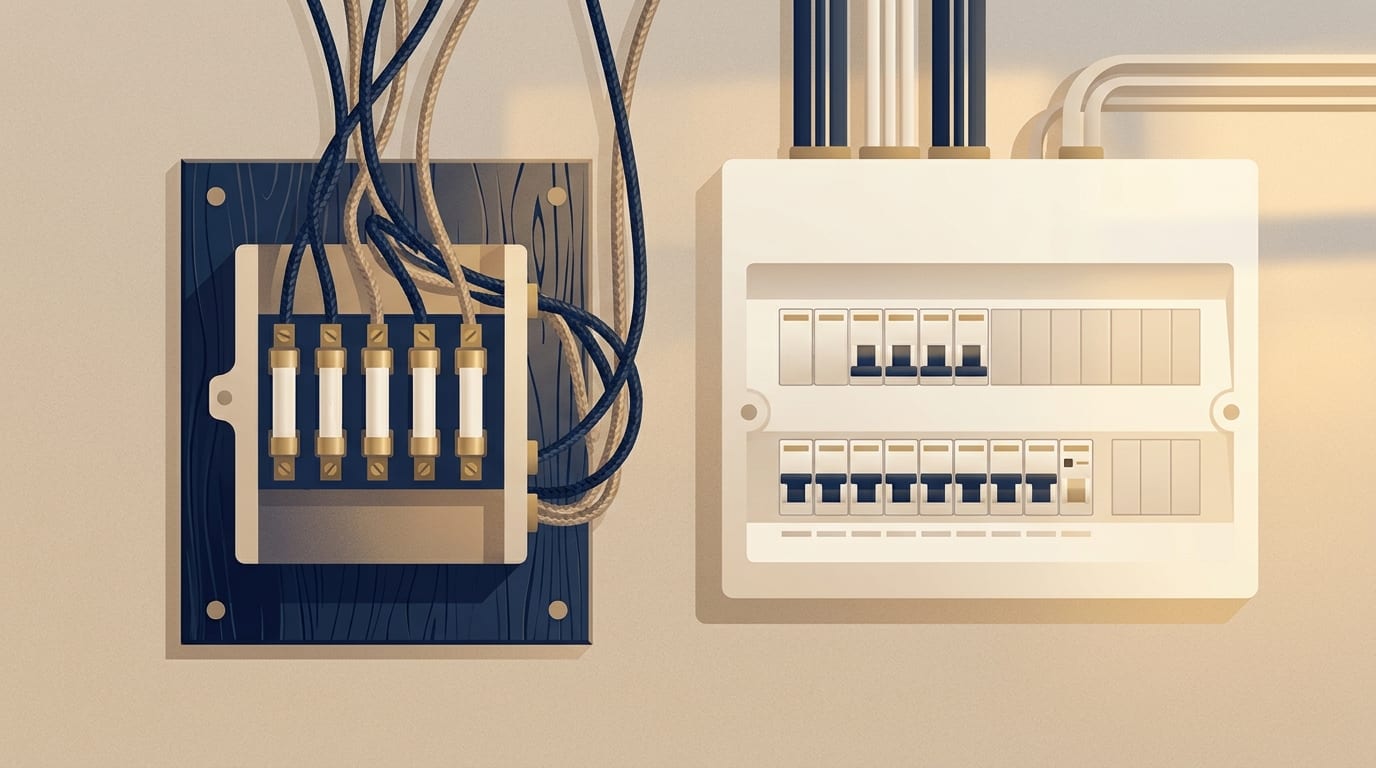
Your fuse box, known in the trade as a consumer unit, houses the main switch for your property. Switching off the power at the fuse box is the safest first move, but only if you can reach it without any risk. If you cannot, get out and call 999.
You must only attempt to switch off the power or pull a plug if you can reach it safely. Never reach through smoke or flames, and never touch melting plastic. If the consumer unit itself is smoking or sparking, keep well away from it.
Which extinguisher types are safe on electrical fires
There are several classifications of fire safety equipment, but only a very specific few are safe to use around live voltage. This table shows the main fire extinguisher types, their label colours, and whether they are safe for electrical fires.
|
Type |
Label colour |
Electrical fires |
|---|---|---|
|
Carbon dioxide |
Black |
Mainly used for electrical fire risks |
|
Dry powder |
Not stated |
Up to 1000 volts only |
|
Water |
Bright red |
Do not use |
|
Foam |
Cream |
Do not use |
Why carbon dioxide is the usual choice
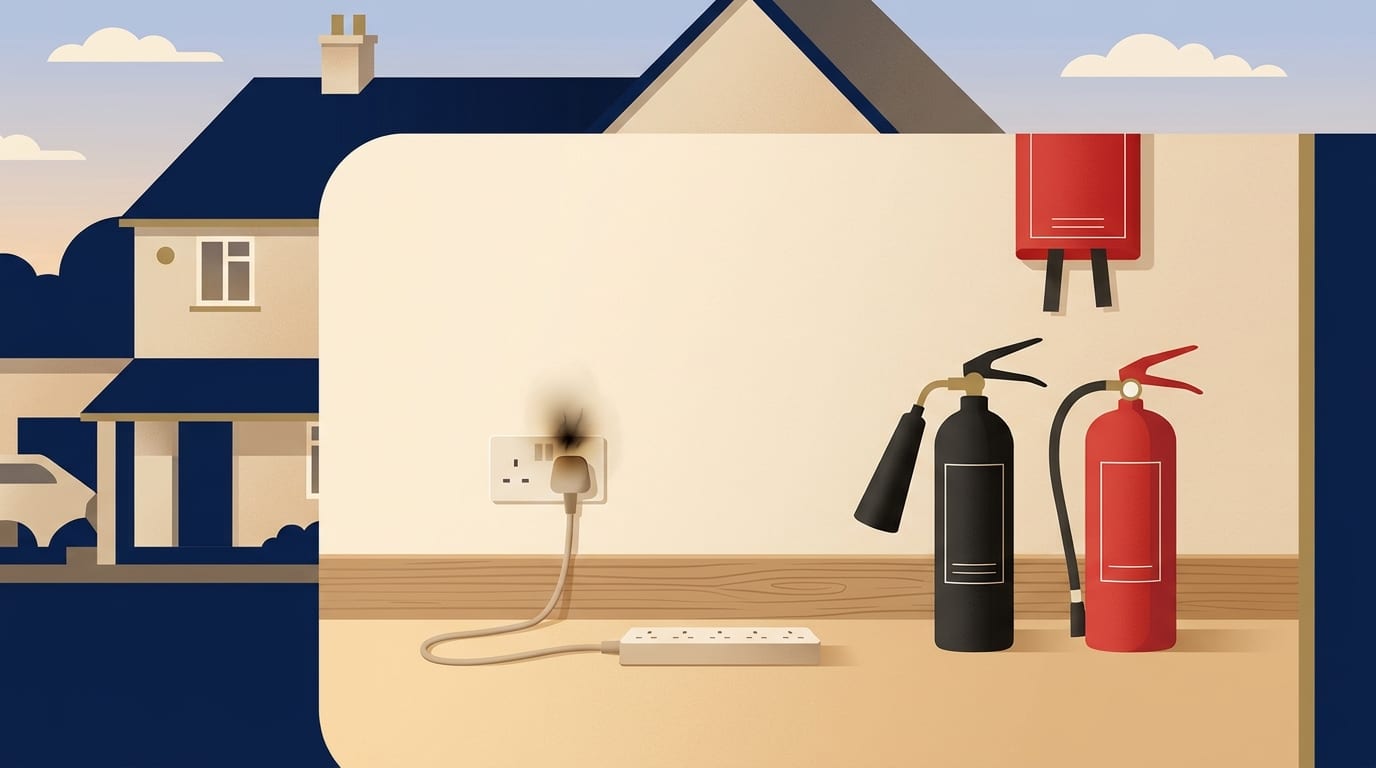
Carbon dioxide works by displacing the oxygen that the fire needs to burn. CO2 extinguishers are mainly used for electrical fire risks and are easily identified by their black label. Warwickshire County Council describes carbon dioxide as a good solution for fires involving computer equipment and other electrical appliances.
There is a significant drawback to keep in mind. Carbon dioxide starves the flames of oxygen. The fire may reignite once the gas dissipates if the surrounding materials are still hot. You must remain vigilant even after the flames appear to be out.
How dry powder compares to foam and water
Dry powder extinguishers can also be used on fires involving electrical equipment up to 1000 volts. The standard domestic electricity supply in the UK is 230 volts, which falls safely within this limit. You should not use dry powder on fires involving electrical equipment over 1000 volts.
Just like carbon dioxide, dry powder does not cool the fire well. This means reignition is entirely possible once the powder settles.
Other common types are highly dangerous around electricity. Water extinguishers carry a bright red label and are mostly for Class A risks like wood and paper. Foam extinguishers carry a cream coloured label and are common for Class B fires involving flammable liquids. Neither water extinguishers nor foam extinguishers are to be used on fires that involve electrical equipment.
Fire blankets and small fires at home
Fire blankets are a useful fire safety feature for the home. They work by smothering the flames and completely cutting off the oxygen supply. They are commonly kept in kitchens to deal with small incidents like a burning toaster or a pan fire.
However, you should not use fire blankets when a large fire breaks out. They require you to get very close to the flames to drape the blanket over the source. If the fire has spread beyond a single small appliance, a blanket will not protect you from the heat or the toxic smoke.
Electric bikes and lithium ion battery fires
Lithium-ion batteries found in electric bikes and electric scooters present a completely different level of danger. Fires involving these batteries can be dangerous and hard to control.
For these specific incidents, do not attempt to extinguish the fire. Get out, stay out and call 999 immediately.
When to get out and call the emergency services
Electricity is unpredictable and household fires spread much faster than most people anticipate. Don't take any risks with your safety. If you do not have the correct extinguisher to hand, or if you feel unsafe at any point, abandon the attempt to fight it.
Get everyone out of the property, stay out, and dial 999. Answer the emergency operator's questions and follow their instructions.
Getting the wiring checked afterwards
Once the fire service has dealt with the emergency, do not assume your electrical installation is safe to use. Never switch the power back on yourself, even if the damage looks minor. You must have the installation inspected by a registered electrician before you attempt to use any part of the system again.
The electrician will carry out an Electrical Installation Condition Report, commonly known as an EICR. This is a formal inspection where they test the circuits for hidden thermal damage, melted wire insulation, and compromised earthing and bonding. Earthing and bonding are the safety connections that direct stray electrical current safely into the ground to prevent shocks.
Based on the EICR results, you may need remedial work to make the property safe again. TopRatedElectricians.co.uk is a directory that lists local electricians and ranks them using their Google reviews to help you find local tradespeople. The site does not employ, vet, certify or guarantee anyone.
Understanding quotes and electrical repairs
When you hire an electrician to fix fire damage, it helps to understand how the trade prices its work. Small jobs and fault finding are usually charged by the hour. You will often pay a call-out fee or a minimum charge that covers the first hour of their time. If the fire happened at night and you need someone immediately, out-of-hours work carries a premium.
Defined jobs are usually quoted as a fixed price based on property size, the number of circuits, access difficulties and the specification of the parts. Examples of defined jobs include an EICR, a complete consumer unit replacement, a house rewire or fitting an EV charger. A quote is a fixed price that the electrician commits to. An estimate is not fixed and the final bill may be higher.
Prices vary heavily depending on where you live. London and the South East cost noticeably more than other regions. When you receive a written quote, you should check exactly what is included to avoid surprise costs later.
A proper written quote should clearly state:
- The total fixed price for the defined job
- Whether VAT is included in the final figure
- All materials required to complete the installation
- The cost of issuing the correct electrical certification
- Any making good to damaged plaster and decoration
Rules and protections for electrical work
The national wiring standard is BS 7671, often called the Wiring Regulations. In England and Wales, Part P of the Building Regulations covers electrical work in homes. Scotland has its own building standards system and Northern Ireland differs, so rules are not identical across the UK.
Electricians registered with a government-authorised competent person scheme, for example NICEIC, run by Certsure, or NAPIT, can self-certify notifiable work. If an unregistered person does notifiable work, building control must be told before it starts. After notifiable work you should receive an Electrical Installation Certificate, or a Minor Works Certificate for smaller jobs, alongside a Building Regulations compliance certificate. You should keep both for when the property is sold.
Landlords have legal duties to have installations inspected at least every five years. There are nation specific rules for rented properties and substantial penalties apply in England for landlords who ignore them. For owner-occupiers, periodic inspection is a strong recommendation for safety, not a strict legal duty.
When you hire a tradesperson, you are protected by the Consumer Rights Act 2015. This law states that a service must be carried out with reasonable care and skill. If the work is substandard, you can ask for poor work to be put right at no extra cost. Services arranged at home, by phone or online usually carry a 14-day cooling-off period. This does not automatically apply to urgent repairs you have explicitly asked for. You can contact Citizens Advice for guidance on your specific situation.
Warning signs that lead to electrical fires
You might notice a fishy or burning smell in your house, which is often the scent of plastic plug sockets or switches slowly melting from excessive heat. Ignoring these early signs allows the heat to build up until the plastic ignites.
If you find yourself wondering why does your electricity keep tripping, it is usually because a circuit breaker or an RCD is doing its job. An RCD is a sensitive safety device in your consumer unit that cuts the power instantly when it detects a fault that could cause a shock or fire. If it trips repeatedly, there may be a fault that needs finding, so do not just keep resetting it.
Unfortunately, some customers face poor practices when trying to investigate these signs. Very cheap inspections are sometimes used to sell long lists of remedial work, with minor advisory items presented as dangerous failures. If an electrician tells you a full rewire or a new consumer unit is compulsory but provides no test evidence to prove it, getting a second opinion is a sensible move.
Watch out for these common warning signs of an electrical fault:
- A fishy or burning plastic smell near sockets or switches
- Lights flickering when high energy appliances are turned on
- Circuit breakers or RCDs tripping frequently without an obvious cause
- Scorch marks or brown stains on the faceplates of plug sockets
- A crackling or buzzing sound coming from behind the wall
Common questions
What fire extinguisher is for electrical fires?
Carbon dioxide extinguishers are mainly used for electrical fire risks. They carry a black label and work by displacing the oxygen the fire needs to burn.
Can you use a dry powder extinguisher on an electrical fire?
Dry powder is safe to use on electrical equipment up to 1000 volts, which easily covers the standard 230 volt domestic supply in the UK. Because it does not cool the fire well, the materials can reignite once the powder settles.
What fire extinguisher should you use on a plug socket?
Carbon dioxide extinguishers are mainly used for electrical fire risks, but your immediate action should be to cut the power to the socket. If you can safely reach the main switch on your consumer unit, turning it off stops the electricity feeding the fire.
Are fire extinguishers a legal requirement in UK homes?
This guide does not cover what the law requires for extinguishers in homes or rented properties. Ask your local fire and rescue service or check official guidance for your nation.
Next steps to protect your home
Knowing what to do in an emergency saves lives, but preventing the fire in the first place is always the better option. You can take simple actions today to check the safety of your home wiring.
- Check your plug sockets for scorch marks or melting plastic
- Press the test button on your RCD to check the safety trips are working
- Learn exactly where your consumer unit is and how to turn off the main switch
- Keep away from any damaged equipment and do not switch it back on
- Hire a registered electrician to test the circuits if you suspect a fault
If you have experienced a small electrical fire, or if you are worried about scorch marks and tripping circuits, do not take chances with your safety. You can use our directory to find an electrician near you who can inspect your wiring and put things right.