Making an older relative's home safer is a common worry for families, but improving electrical safety is usually straightforward. Most improvements are small, and a full rewire is rarely the first step. You can spot many warning signs yourself without touching any wiring, and a registered professional can handle the rest.
Why electrical safety matters for older homes
Homes age, and so does the wiring hidden inside the walls. The national wiring standard is BS 7671, often called the Wiring Regulations, and it is updated regularly to improve safety. An installation that was perfectly safe thirty years ago may now lack modern protections. The main protection in a modern home is an RCD, which stands for residual current device. An RCD is a life-saving device that cuts the power when it detects a fault.
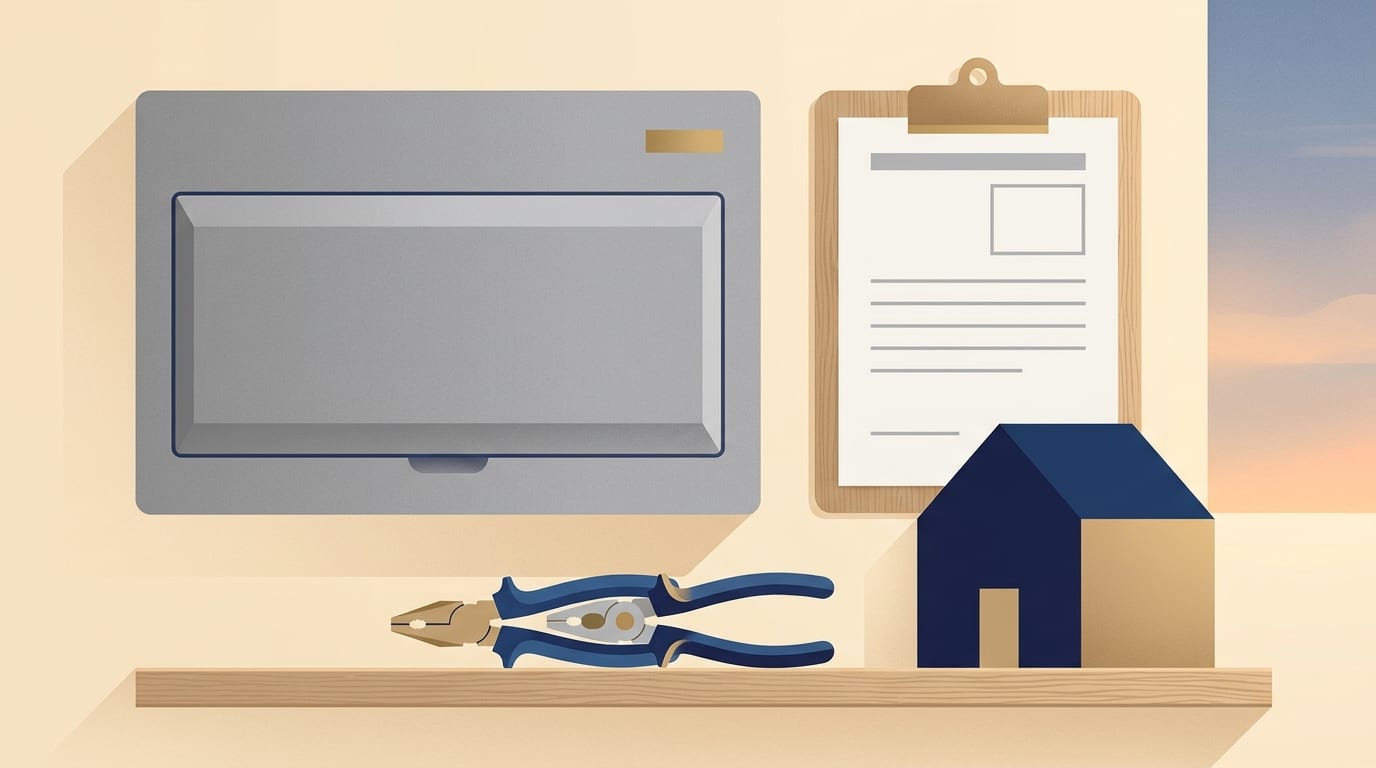
You can identify an RCD by looking at the consumer unit, also called a fuse box or fuse board, and checking for a switch with a "Test" or "T" button. If the home has no RCD, or it is not working, you should use plug-in RCDs for all sockets to provide immediate protection. Electrics over 50 years old should be checked and updated.
In the UK, electrical work is strictly regulated to keep homes safe. Part P of the Building Regulations covers electrical work in homes in England and Wales. Scotland has its own building standards system and Northern Ireland differs, so rules depend on where the property is. The recommended periodic inspection for owner-occupied homes is at least every ten years. For tenanted properties, the recommended inspection is every 5 years or at each change of occupancy, whichever is sooner. Landlords also have legal duties to have installations inspected at least every five years, with nation specific rules.
Simple checks a relative can look at
If you are worried about someone else's home, you can carry out several simple visual checks yourself. You do not need any technical knowledge to spot these issues. Never remove covers, open a consumer unit or touch any wiring during your checks. Electricity is dangerous, so stick to looking at the visible fittings.
The table below shows what warning signs you may notice and what action you should take.
|
What you may notice |
What it means |
What to do next |
|---|---|---|
|
Circuit breakers that keep tripping or fuses that blow regularly |
A possible fault that needs investigating |
Get a registered electrician to investigate |
|
Light fittings showing cracking or burn marks |
Possible heat damage |
Stop using the fitting and have it checked |
|
Round-pin sockets or sockets in skirting boards |
A sign the electrics may be old and need checking |
Stop using them and call a professional |
|
Braided flex on ceiling lights |
A sign the wiring may be old and need checking |
Stop using the light and call a professional |
|
Burn marks, crackling sounds or excessive heat |
A possible fault that needs checking |
Stop using the socket and call a professional |
If you notice any of these signs, you must bring in a professional. Electrical Safety First advises using a registered electrician to carry out any work. Electricians registered with a government-authorised competent person scheme, for example NICEIC or NAPIT, can self-certify notifiable work. If an unregistered person does notifiable work, building control must be told before it starts.
Warning signs that need a professional
Beyond the simple visual checks, there are operational signs that the electrical system is struggling. Blown fuses, tripping circuit breakers and flickering lights also signal a problem. If the electricity keeps cutting out, a circuit breaker or an RCBO may be responding to a fault. An RCBO is a device that combines the functions of a circuit breaker and an RCD in one unit.
Do not ignore these warning signs your house needs rewiring or try to force a switch to stay on. Finding the cause requires technical knowledge and specialist test equipment. Electrical fault finding is usually charged by the hour, and out-of-hours work carries a premium. Emergency call outs with no price given before attendance are a common problem, so always ask for the hourly rate and the minimum charge before the electrician sets off.
When work is finished, it must come with the right paperwork. New work is certified with an Electrical Installation Certificate or, for small jobs, a Minor Works Certificate. After notifiable work in England and Wales, the customer should receive the electrical certificate and a Building Regulations compliance certificate. You should keep both for when the property is sold.
Plugs, sockets and extension leads
Older homes often have fewer sockets than modern life requires, which leads to a heavy reliance on extension leads. Government fire safety guidance says you should try and keep to one plug per socket. An extension lead will have a limit to how many amps it can take, so you must avoid overloading it.
Certain appliances, such as washing machines, should have a single plug to themselves, as they are high powered. Plugging heavy appliances into an extension lead can cause the lead to overheat and catch fire. Look for signs of dangerous or loose wiring such as scorch marks, hot plugs and hot sockets. If you find these, unplug the appliance immediately if it is safe to reach the plug.
Any cables or extension leads should be in good condition with no signs of damage, cracking or splitting. Avoid trailing cables across the floor or under carpets and rugs. If the home needs more wall sockets to remove the need for extension leads, ask a registered electrician what is possible.
Electric blankets and smoke alarms
Electric blankets are a common way for older people to stay warm, but they require careful handling. Cornwall Fire and Rescue Service states you should replace your electric blanket at least every ten years. Make sure your blanket is tested by an expert at least every three years.
You must unplug blankets before you get into bed, unless it has a thermostat control for safe all-night use. If a blanket gets wet, never switch it on to dry it. The correct way to store an electric blanket is to keep it flat or rolled rather than folded.
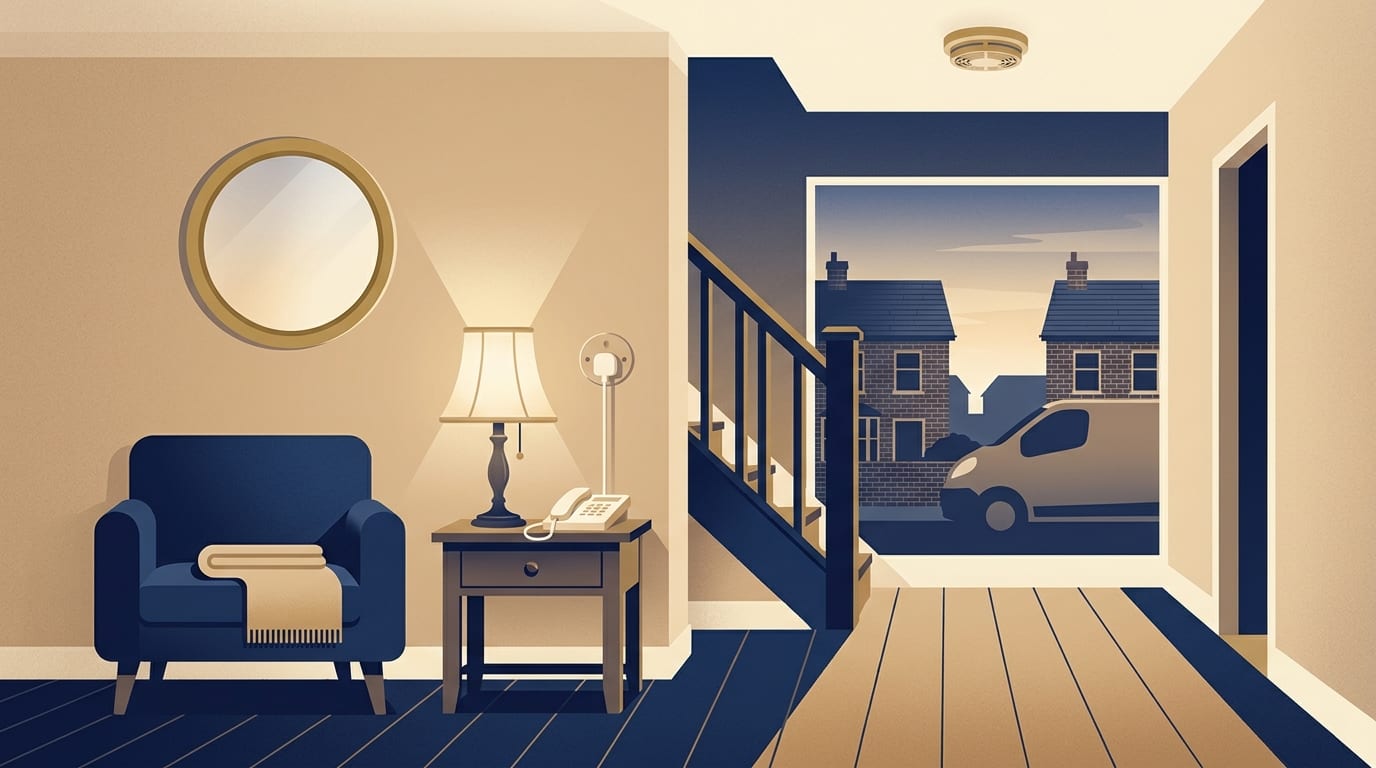
Smoke alarms give early warning of a fire. You should fit at least one smoke alarm on every level of your home and test your smoke alarms at least monthly. If fitting alarms yourself is difficult, contact your local fire and rescue service for help, and use the online home fire safety check at ohfsc.co.uk. If a fire starts, switch off at the fuse box only if it is safe to reach. Never use water on an electrical fire and do not take any risks. Get everyone out and dial 999.
Getting a full electrical check
The best way to know a home is safe is to arrange a full electrical check at least every ten years from a registered electrician. After testing the installation, the electrician will provide an Electrical Installation Condition Report, commonly known as an EICR. This document details the condition of the consumer unit, the circuits, and the earthing and bonding. Earthing and bonding connect metal pipes and the electrical system to the ground to prevent electric shocks.
If the electrician finds dangerous faults, they will list them as remedial work that needs to be done. Defined jobs such as an EICR or a consumer unit replacement are usually quoted as a fixed price based on property size, the number of circuits, access and specification. Prices vary across the UK, and London and the South East cost noticeably more. If you are unsure what an EICR certificate is, it is essentially a health check for the home's wiring.
A proper quote is a fixed price, whereas an estimate is not a fixed price. When reviewing a quote for remedial work, you should check that it includes:
- The total cost including VAT.
- All necessary materials and replacement parts.
- The correct certification and notification to building control.
- Making good the plaster and decoration around any new fittings.
- The removal and safe disposal of old equipment.
Help from the energy supplier
Older people can get extra support directly from their utility companies. You should check your energy provider's priority register. Being on this register can offer tailored billing, free meter readings, and alternative cooking and heating if something goes wrong.
Eligibility and what is offered depends on the supplier, so check with them directly. If there is a power cut, you can call 105 to report it and get updates.
How to raise it kindly
It is not always easy to talk to an older parent about safety in their own home. They may worry about the cost, the disruption, or feel that their independence is being questioned. Approach the conversation practically and calmly, focusing on small fixes first like replacing an old extension lead.
Offer to help with booking and comparing quotes if they would like that. Under the Consumer Rights Act 2015, a service must be carried out with reasonable care and skill, and the customer can ask for poor work to be put right at no extra cost. Services arranged at home, by phone or online usually carry a 14-day cooling-off period, but this does not automatically apply to urgent repairs the customer has asked for.
Be aware of common problems customers face when hiring an electrician:
- Very cheap inspections used to sell long lists of remedial work.
- Advisory items presented as failures to pressure you into paying for upgrades.
- Being told a full rewire or a new consumer unit is compulsory with no test evidence.
- Unregistered work leaving you with no certificate and no notification.
- Tradespeople demanding large cash deposits before any materials arrive.
- Choosing a firm on price alone and receiving poor quality work.
Common questions
Why are the lights flickering in an older house?
GOV.UK lists flickering lights as a sign of a problem. Do not ignore it, and ask a registered electrician to investigate.
What happens if an appliance catches fire?
If a fire starts, you should switch off the power at the fuse box only if it is safe to do so. Never use water on an electrical fire and do not take any risks trying to fight it. Get everyone out of the property immediately and dial 999.
Why does the electricity keep tripping?
Tripping circuit breakers or blowing fuses mean a safety device has detected a fault and cut the power to prevent a fire or shock. Electrical Safety First says to get a registered electrician to investigate if circuit breakers trip or fuses blow regularly. You can read more on why your electricity keeps tripping.
Do I need a certificate when an electrician finishes work?
New electrical work is certified. You should receive an Electrical Installation Certificate for new circuits or a Minor Works Certificate for smaller additions. If the work is notifiable under the Building Regulations, you should also get a compliance certificate.
What to do next
Improving electrical safety in an older relative's home starts with a few practical steps. Use this checklist to get started safely:
- Check the condition of all visible plugs, sockets and extension leads.
- Ensure high-powered appliances like washing machines have their own wall socket.
- Replace any electric blanket that is more than ten years old.
- Test the smoke alarms on every level of the property.
- Check if the homeowner is on their energy supplier's priority register.
- Arrange an EICR with a registered electrician if the electrics are over 50 years old or have not been tested in a decade.
This directory lists local electrical businesses and ranks them using their customer reviews, but it does not employ, vet or guarantee anyone. When you are ready to book a safety check or get a fault investigated, you can find an electrician near you to ask for a fixed quote.
Find a top rated electrician near you
4,987 electricians across the UK, each ranked on their Google rating and the number of reviews behind it. Start with your county: