An SPD protects your electrical installation from power surges known as transient overvoltages. It also shields sensitive equipment such as computers, televisions and fire alarm circuits. Electricians now include them on consumer unit quotes because the UK wiring standard requires them for most homes unless a risk assessment is carried out. An SPD may cost as little as a few hundred pounds, according to the IET, but the final decision on whether to buy one is entirely in your hands.
What a power surge is
A power surge is a sudden and brief spike in electrical voltage. In the electrical trade, these spikes are known as transient overvoltages. They happen very quickly, often lasting only a fraction of a second, but they carry enough energy to damage sensitive electronic components hidden inside your household appliances.
These surges can originate from several different sources both inside and outside your property. Common causes of transient overvoltages include:
- Grid switching operations carried out by the local power network
- Lightning strikes on or near the external electricity supply cables
- Large industrial machinery operating in your local area
- Motors inside your own household appliances switching on and off
Modern homes contain far more electronics than they used to. A typical house now relies on smart televisions, desktop computers, game consoles and smart heating controls. All of these contain delicate microprocessors that are easily overwhelmed by a sudden increase in voltage.
What a surge protection device does
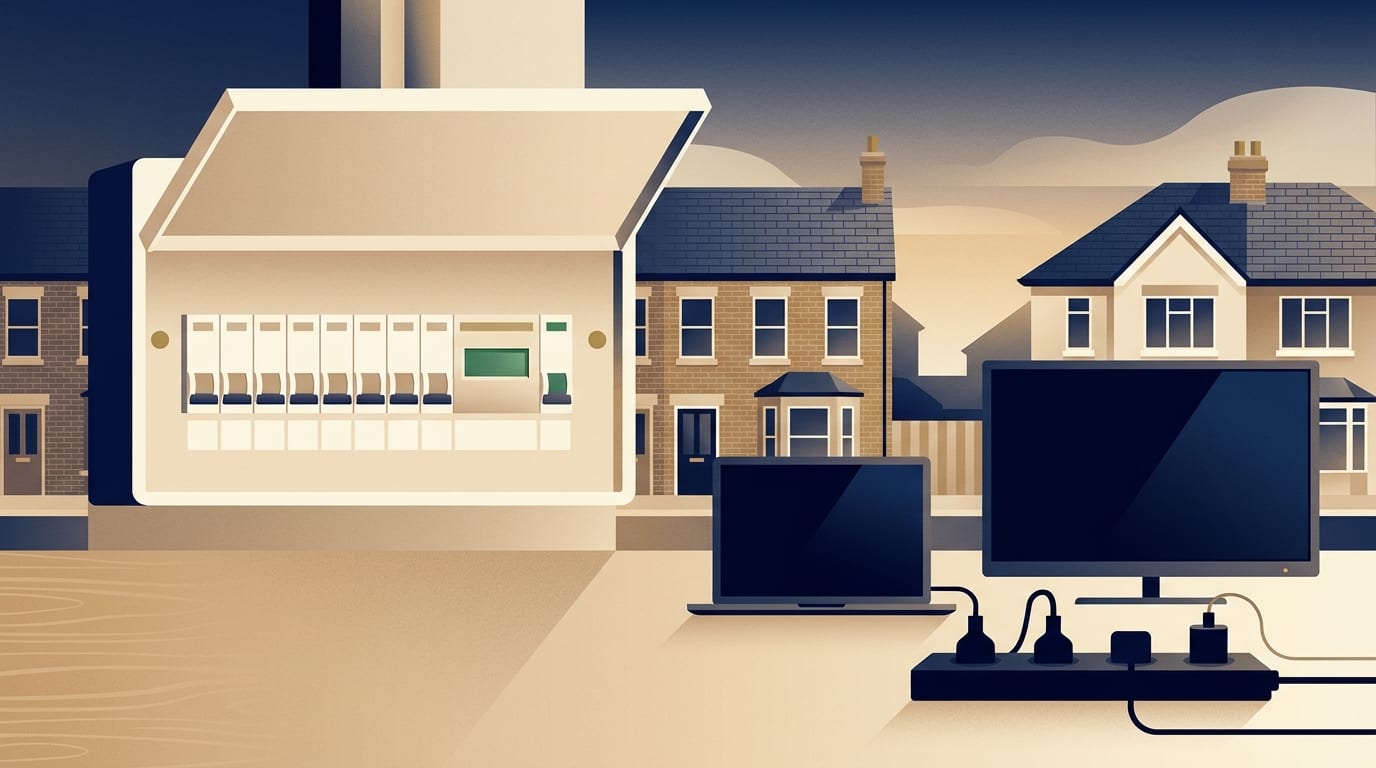
A surge protection device sits near the start of your electrical installation, usually inside the consumer unit. Its primary job is to monitor the incoming voltage from the national grid. When it detects a transient overvoltage, it acts instantly to divert the excess electrical energy away from your household circuits.
It takes the harmful spike and sends it safely down the earthing system. This prevents the high voltage from travelling through your fixed wiring and reaching the sockets where your devices are plugged in.
By stopping the spike at the source, the device protects the fixed wiring hidden inside your walls. It also shields sensitive equipment such as computers and televisions from burning out. This protection extends to important safety systems, including fire alarm circuits and emergency lighting, which rely on electronic components to function correctly during an emergency.
Ask your electrician how you can tell the device is still working and when it would need replacing.
Why electricians now include one
Electricians work to a national wiring standard called BS 7671, which is often referred to as the Wiring Regulations. The 2018 edition of this standard introduced stricter rules regarding transient overvoltages. Because electricians must follow these rules to sign off their work, they now include surge protection as standard when quoting for new installations.
The standard says that unless a risk assessment is carried out, protection against transient overvoltage must be provided in specific circumstances. These include any situation where an overvoltage could cause serious injury or loss of life. It also applies where a surge could result in service disruption or a commercial interruption.
In the past, there was an exemption for some homes. The older exemption for some homes, such as those with underground supplies, has now been removed from the standard.
The rule is now a requirement for all types of premises, including single dwelling units. This applies to all new build properties and any existing properties being rewired. Current requirements for a new consumer unit include surge protection, which is why the device appears on your quote.
Is it a legal requirement
It is important to understand the difference between a national standard and a legal statute. BS 7671 is a standard, not an Act of Parliament, so it is not a direct law that forces every homeowner to fit a surge protection device. However, electrical work in homes in England and Wales is covered by Part P of the Building Regulations, which is a legal requirement.
To comply with Building Regulations, electricians use BS 7671 as the framework for safe design. Electricians registered with a government-authorised competent person scheme, for example NICEIC (run by Certsure) or NAPIT, can self-certify their own notifiable work to prove this compliance.
The IET says the decision on whether to purchase surge protection devices is in the hands of the customer, who should receive enough information to make an informed choice. That decision is yours once the electrician has explained the risks.
An electrician may record your decision, so ask how it will be noted. If an electrician insists an SPD is a strict legal requirement without offering a risk assessment, getting a second opinion is a sensible step.
What it adds to a consumer unit quote
The IET says typical costs for a domestic consumer unit can range from £500 to £2,000 including installation. That is the cost of the whole unit and its installation, not a separate fitting price for an SPD, and no separate fitting price is given here.
Current requirements for a new consumer unit include a non-combustible enclosure and RCD protection to prevent electric shocks. They also include a recommended arc fault detection device and the surge protection device itself. The IET says surge protection may cost as little as a few hundred pounds.
You can weigh the cost against the value of the equipment in your home. You can read more about what drives the overall price in our guide to consumer unit replacement cost.
A consumer unit job can involve other work, so ask the electrician whether anything beyond the unit itself is likely to be needed and whether it is in the quote.
Can you say no
You have the right to decline surge protection. IET guidance says the decision on whether to buy surge protection is in the hands of the customer. An electrician should never use scare tactics or claim that you will be prosecuted for refusing one.
Before you decide, the electrician should explain the risks clearly. They will ask you to consider the value of the electronic equipment plugged into your circuits. Think about the value of the equipment on your circuits when you decide.
If you decide to say no, the electrician may record your decision. Check your insurance policy before you do, as covered below.
If you already have a modern consumer unit and just want to add protection, this is also entirely possible. Surge protection could be installed in an existing consumer unit if appropriate physical space is available on the internal mounting rail. If there is no spare capacity inside the metal box, the electrician can fit it in a small external enclosure right beside the main unit.
What it does not protect against
While an SPD is a valuable safety feature, it is not a cure for all electrical problems. It is designed to do one specific job, and it is important to understand its limitations so you do not expect it to fix underlying wiring faults in your home.
It does not protect people from electric shocks. That is the job of a residual current device (RCD) or an RCBO. It also does not detect loose wiring connections or the sparking faults that cause electrical fires. You can learn more about how those specific risks are managed in our guide to arc fault detection devices.
A surge device will not stop your electricity from tripping if you overload a socket, and it will not keep your lights on during a neighbourhood power cut. A device does not make a lightning strike harmless, and a strike on your property may still cause damage.
The table below shows what a surge protection device is designed to do and what falls outside its capabilities.
|
What a surge protection device does |
What it does not do |
|---|---|
|
Protects wiring and connected equipment from surges |
Does not stop a power cut |
|
Shields sensitive equipment such as computers and televisions |
Does not replace an RCD |
|
Shields fire alarm circuits and emergency lighting |
Does not make a lightning strike harmless |
Local quotes and specific products will differ, so ask your electrician what a particular device does.
Insurance and your policy
Your home insurance policy may heavily influence your decision to accept the device.
Some policies may state that equipment must be covered with an SPD or they will not pay out in the event of a claim. If you are unsure what your policy requires, ask your insurer.
Before you reject the device on a consumer unit quote, check the fine print of your buildings and contents insurance. Look for clauses related to electrical faults, power surges or lightning strikes. If you are unsure whether your policy demands one, contact your provider and ask them directly, or read our general guide to whether home insurance covers electrical faults.
If you are a landlord, check your landlord insurance policy wording in the same way.
Questions to ask your electrician
Before you agree to a consumer unit upgrade or a standalone surge protection installation, it is wise to ask a few clear questions. This ensures you understand exactly what you are paying for and what paperwork you will receive at the end of the job.
- Is the cost of the surge protection device fully included in your fixed quote?
- Do you have space to fit it inside my current consumer unit, or will it need a separate external enclosure?
- Does the quote include VAT, all materials and the final electrical certificate?
- Will you notify building control about the work, and will I receive a Building Regulations compliance certificate?
- Are you registered with a competent person scheme so I can check your credentials online?
- Does the quote include making good any plasterwork or decoration damaged around the fuse board?
- How long will the power be switched off while you do the installation work?
- How will I know if the device needs replacing in future?
Common questions
Will a surge protector stop my electricity from tripping?
No. Electricity trips when a circuit breaker or RCD detects an overload, a short circuit or an earth fault. A surge protection device only monitors for incoming voltage spikes. If your power keeps tripping, you need an electrician to trace the underlying fault on the circuit.
Do I need one if I live in a flat?
The current wiring standard applies to all types of premises, including single dwelling units like flats. The requirement is based on protecting the equipment inside the property and preventing service disruption. Your electrician will advise if a risk assessment suggests it can be safely omitted, but it is generally recommended.
Can I fit a surge protection device myself?
No. Installing any component inside a consumer unit involves working with live terminals and requires professional testing to ensure the earthing is safe. Electrical work must be carried out with reasonable care and skill, and opening a consumer unit is highly dangerous. You must hire a qualified, registered electrician.
How long does a surge protection device last?
No lifespan figure is given here. Ask your electrician how the device is checked and when it should be replaced.
Do plug-in surge protectors do the same job?
Plug-in extension leads with basic surge protection only shield the specific items plugged directly into them. A device in the consumer unit protects the installation, which is a different job.
What to do next
If you are ready to upgrade your consumer unit or add surge protection to your home, follow these sensible steps to protect yourself and your property.
- Check your home insurance policy to see if a surge protection device is required for a successful claim.
- Calculate the rough replacement value of your computers, televisions and smart devices to help you make an informed choice.
- Ask three local electricians to provide a fixed quote that includes the device, VAT, certification and making good.
- Verify their registration by searching the NICEIC or NAPIT online registers before you agree to a start date.
TopRatedElectricians.co.uk lists local electricians based on their customer reviews, but we do not employ, vet or guarantee them. When you are ready to proceed, you can find an electrician near you to request a fixed quote.
Find a top rated electrician near you
4,987 electricians across the UK, each ranked on their Google rating and the number of reviews behind it. Start with your county: