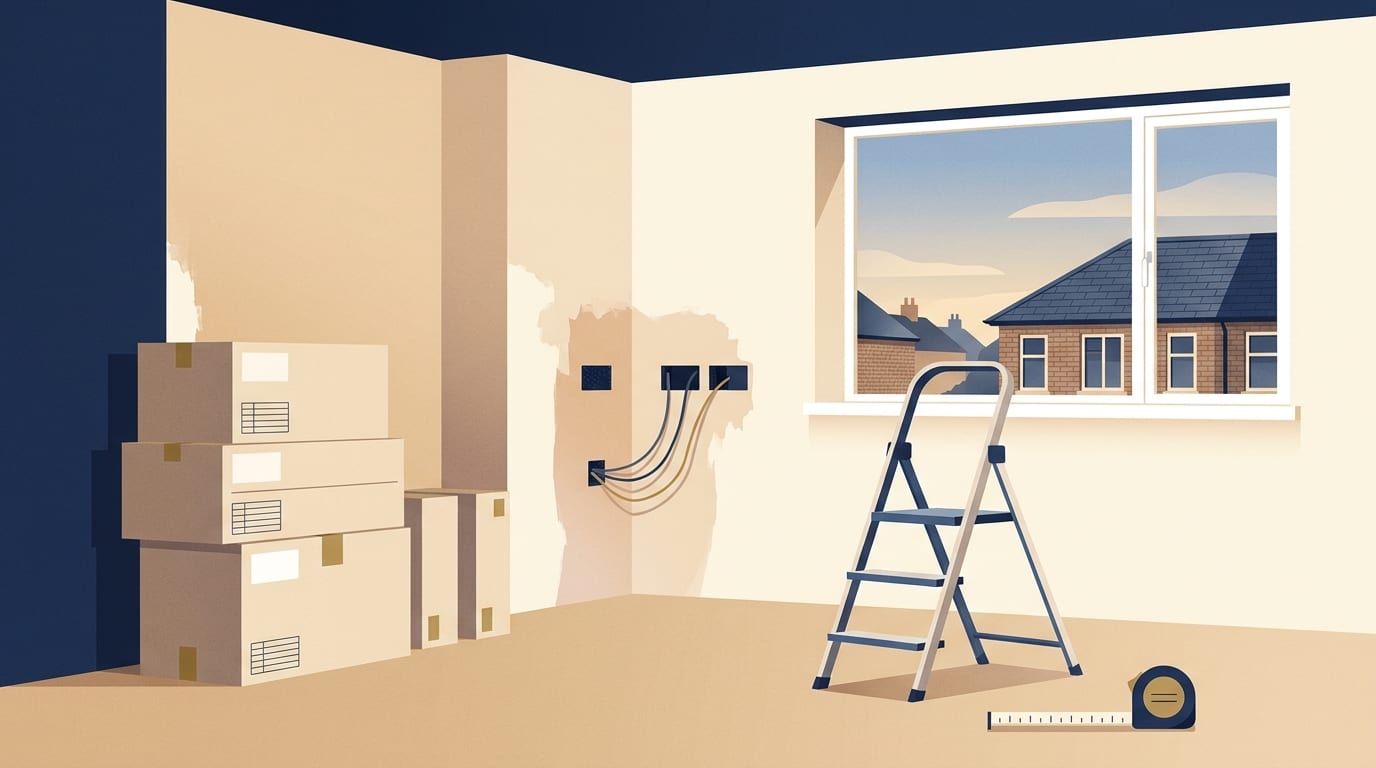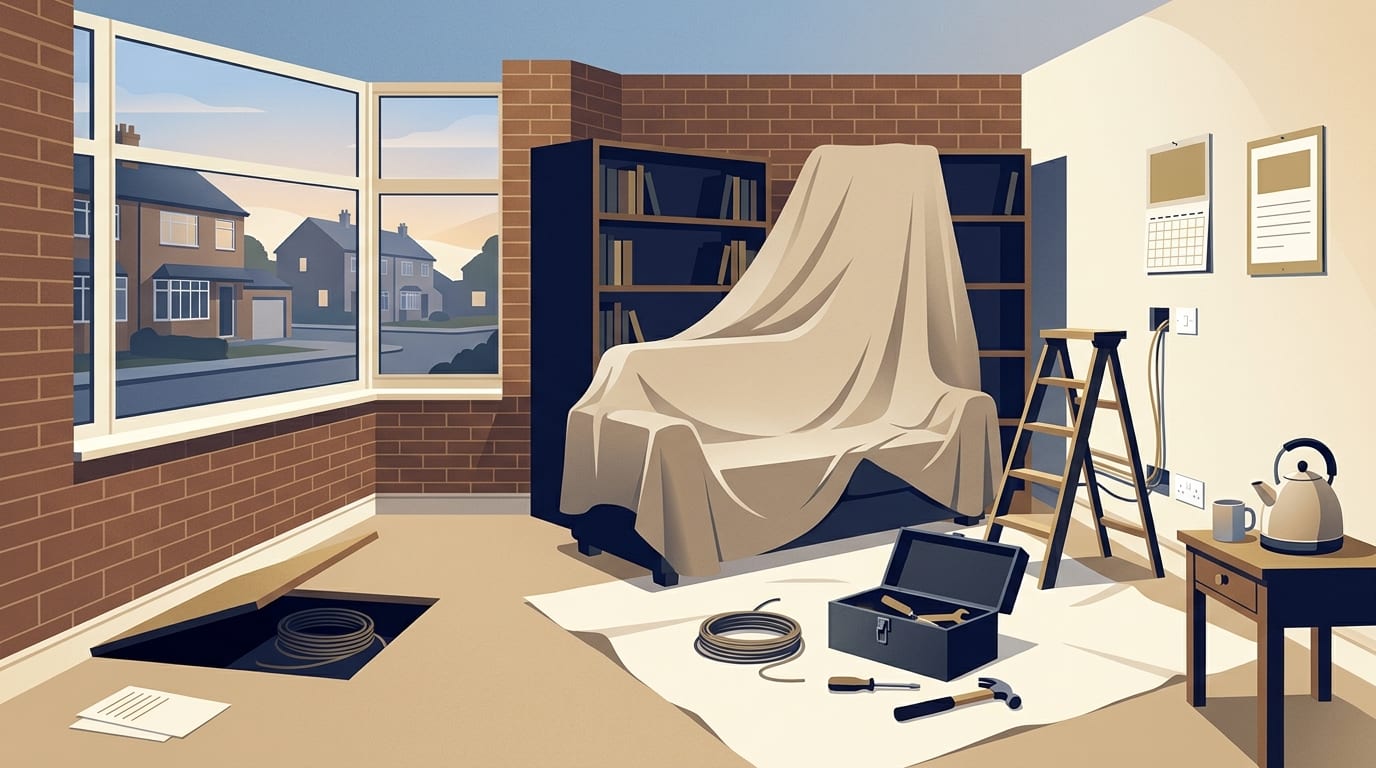
Many people do manage living in a house during a rewire, but it depends heavily on the property and how much work is being done at once. Electricians usually work methodically room by room so the whole house is not torn up at once, though some rooms will definitely be out of use. A standard rewire typically takes around five to nine days if nothing unexpected turns up. An occupied home often takes longer because tradespeople must work around your daily life.
How long a full house rewire actually takes
A rewire is a substantial project that requires a significant amount of time. If your property is empty and there are no unexpected problems, you can expect the work to take around five to nine days to complete. The exact time always depends on the size of your property, the condition of the building and the specific work involved. A small terrace will naturally take less time than a large detached home.
When a house is occupied, the timeline usually stretches considerably. Tradespeople have to work around your furniture and daily routine. Older trade answers to the same question ranged from five to six days or up to a week, right through to two to three weeks or around a fortnight, and several said an occupied house can take longer than an empty one.
Because the electricians work methodically room by room, the whole house is not torn up at once. This phased approach allows you to stay in the property, but it does mean the overall project takes longer. You should prepare for an extended period of disruption rather than a quick fix.
The two stages of rewiring explained
Rewiring a property happens in two distinct phases, known in the electrical trade as the first fix and the second fix. The first fix is the big, messy stage of the installation. This is when the heavy physical work takes place to install the new electrical infrastructure before any cosmetic work begins.
During the first fix, cables are run through walls, across ceilings and under floorboards. To get the cables exactly where they need to be, electricians will spend a lot of time lifting floorboards and cutting channels into your plasterwork. This part of the job creates the most noise and dust.
The second fix happens later in the project and is much cleaner. This stage involves fitting the visible components, such as your sockets, switches, light fittings and faceplates. The second fix only takes place once any plastering and making good is done.
What the disruption looks like
A rewire is a large job that is quite disruptive to the fabric of your building, so it helps to know exactly what the process involves. The table below outlines the four main stages of the work.
|
Stage |
What happens |
What it means for you |
|---|---|---|
|
Before work starts |
Furniture is moved and floor space is cleared |
You must clear floor space and empty rooms as agreed |
|
First fix |
Floorboards are lifted and walls are cut |
Dust, noise and rooms out of use |
|
Plastering and making good |
Channels in walls are filled and smoothed |
Waiting for plaster to dry before the final fittings |
|
Second fix and testing |
Sockets, switches and lights are fitted |
The system is tested and signed off ready to use |
The table above shows the usual sequence for rewiring a home. Your electrician may adapt it to suit the layout of your property.
What happens to your power and appliances
You must plan for the fact that there will be no power to your home during most of the installation. Expect lighting, plug sockets, the electric shower and the electric cooker to be unavailable while the electricians are working on the system.
You should ask your electrician well in advance how they plan to handle the power. Find out exactly how many rooms will stay usable at any one time and when the power will be switched off entirely. Ask whether any temporary supply can be arranged, for example for a fridge, and do not assume one is included.
Living without power makes everyday tasks difficult. If you work from home, the lack of electricity for your computer and internet router, combined with the constant noise of drills and saws, will make it very hard to do your job. You will need to make alternative arrangements for cooking, washing and working during the core hours of the project.
Dust, floorboards and making good
The first fix stage creates a significant amount of dust that will settle throughout the house. Electricians need to access the hidden spaces behind your walls and under your floors to route the new cables safely. This involves cutting into walls and pulling up the flooring to access underneath the floorboards.
In many older properties, walls and skirting boards may need cutting to hide the new wiring completely. This leaves deep channels in the plaster that must be filled in afterwards, a process known as making good. You should ask your electrician whether making good is included in their quoted price.
You will need to clear furniture and floor space before the work starts in each room. Electricians cannot do their job if the floor space is blocked by heavy wardrobes or beds. If you cannot move the furniture yourself, you must discuss this with the electrician beforehand so they can factor the extra time and labour into their fixed price quote.
Moving out versus staying in the property
Moving out can be the easier option if you have somewhere else to stay. A rewire can be quicker when the house is empty, because the electricians do not have to work around your furniture and daily routine.
Staying in the property means living with dust, noise and sections of the house being completely out of bounds. You will be confined to one or two rooms while the main work happens elsewhere. Because the tradespeople work methodically room by room, you can usually keep your family in a safe, finished area, but it requires careful daily management.
If you decide to stay, you must accept that your daily routine will be heavily disrupted. Cooking meals, washing clothes and relaxing in the evening will all be harder. For many homeowners, arranging a short stay with family or friends while the messy first fix is done is a sensible compromise.
Managing children, pets and daily life
If you stay in the house, you must think carefully about the safety of children and pets. Lifted floorboards expose the wooden joists and the deep gaps between ceilings, creating an obvious trip and fall hazard. Dust from cutting plaster can irritate breathing, and the sudden noise of power tools can be highly stressful for animals.
You will need to keep children and pets completely away from the rooms being worked on. Because the site conditions change every day, you must speak to the electricians each morning to find out which areas are safe to walk through. You should also ensure that any doors leading to unfinished rooms are kept firmly shut.
It is completely normal to live in a property during a rewire, but you have to be highly organised. Pack away your valuables, cover your soft furnishings with dust sheets and keep your essential items in the one room that remains untouched. Preparing your home properly reduces the stress for both you and the people doing the work.
Knowing when a rewire is actually needed
Before you commit to the disruption of a rewire, you should be absolutely certain that your home requires one. Electrical Safety First notes that there are no set guidelines as to when a property should be rewired. Whether a house needs rewiring depends entirely on its condition rather than its age.
Just because your wiring is old, it does not mean it is unsafe. A formal inspection, known as an Electrical Installation Condition Report, will tell you the true state of your circuits. You might find that looking for warning signs your house needs rewiring helps you decide if an inspection is overdue.
Sometimes, upgrading the consumer unit (also called a fuse box or fuse board) to include modern circuit breakers and RCD protection is enough to make the system safe without pulling up your floorboards. An RCD is a life saving device designed to prevent you from getting a fatal electric shock if you touch something live. You should never agree to a full rewire simply because a tradesperson says the wiring looks old. Always ask to see the test evidence that proves the circuits have failed.
Your rights and using a registered electrician
Electrical work in homes in England and Wales is covered by Part P of the Building Regulations. Scotland and Northern Ireland have their own distinct building standards. If you use an electrician registered with a government-authorised competent person scheme in England or Wales, they can self-certify their notifiable work. If an unregistered person does notifiable work, building control must be told before it starts.
You should always use a registered tradesperson for a major project. Electrical Safety First recommends using a registered electrician because you can complain to their scheme operator if you are unhappy with the work. You can read more about how to check an electrician is registered before you hire them.
Under the Consumer Rights Act 2015, any service you pay for must be carried out with reasonable care and skill. If the work is poor, you can ask for it to be put right at no extra cost. Furthermore, services arranged at home, by phone or online usually carry a 14-day cooling-off period, allowing you to cancel the contract, though this does not automatically apply to urgent repairs you have requested.
Questions to ask before you agree a start date
A rewire is usually quoted as a fixed price based on your property size, the number of circuits, access and the required specification. Small jobs and fault finding are usually charged by the hour, often with a call-out fee, while a full rewire is usually quoted as a fixed price. London and the South East cost noticeably more, and out-of-hours work carries a premium.
Electrical Safety First advises that you should get at least three quotes from different electricians before you go ahead with any major electrical work. A quote is a fixed price, whereas an estimate is not. When you gather your quotes, you should ask a series of practical questions to understand exactly what you are paying for. Use this checklist before you agree a start date:
- How many days do you expect to be on site?
- Which rooms will you work on first and in what order?
- How will the power be handled while we are living here?
- Who is responsible for clearing the furniture and floor space?
- Who does the making good and decorating once the wiring is in?
- Does the quote include VAT, materials and the final certification?
Getting these answers in writing prevents misunderstandings later. Quotes that leave out making good, certification or VAT are a common problem that can leave you with unexpected bills at the end of the project.
Paperwork you should get at the end
A full rewire involves installing entirely new circuits and usually a new consumer unit, which means the work must be properly certified. You should receive an Electrical Installation Certificate to prove the new circuits or the new consumer unit meet the national BS 7671 wiring standard.
Because replacing consumer units and installing new circuits in a home is notifiable work under the Building Regulations in England and Wales, you should also receive a Building Regulation Certificate of Compliance. This is often called a Part P certificate. The official scheme body NICEIC notes that they would generally expect you to receive a fully completed certificate shortly after your electrician finishes the job.
You should keep both of these documents safe. You may need to show them to solicitors and surveyors if you ever sell the property to prove the electrical work was done legally and safely.
Common questions
Why do electricians lift floorboards during a rewire?
Cables are typically routed under the floors and above the ceilings to keep them hidden and safe from damage. Electricians pull up the flooring to access underneath the floorboards so they can run these new cables between rooms without leaving wiring exposed on your walls.
Do I have to empty every room completely?
You do not usually need to empty the entire house at once. Because the work is done methodically room by room, you only need to clear the furniture and floor space in the specific rooms the electricians are working on that day.
Will my internet router work while the wiring is being replaced?
There will be no power to your home during most of the installation. Unless your electrician has specifically agreed to set up a safe temporary power supply for your router, your internet will be off while the mains power is disconnected at the consumer unit.
Who fixes the holes in the walls after a rewire?
Walls and skirting boards often need cutting to hide the new wiring, leaving channels that must be filled. You must ask your electrician if plastering and making good is included in their quote.
Next steps for planning your rewire
If you are preparing for a rewire and plan to stay in your home, getting organised early will make the process much smoother. Follow these steps to prepare for the work:
- Have an inspection to confirm the true condition of your wiring.
- Get at least three fixed price quotes from registered electricians.
- Ask exactly what is included, especially regarding plastering and making good.
- Plan which rooms you will live in while the messy first fix takes place.
- Make sure you know when the power will be off so you can prepare.
TopRatedElectricians.co.uk is a directory that helps you compare local tradespeople based on customer reviews. We list local electricians but we do not employ, vet, certify or guarantee anyone, so you must always check their registration and ask for a detailed quote in writing. When you are ready to start gathering quotes, you can use our directory to find an electrician near you.
Find a top rated electrician near you
4,987 electricians across the UK, each ranked on their Google rating and the number of reviews behind it. Start with your county: