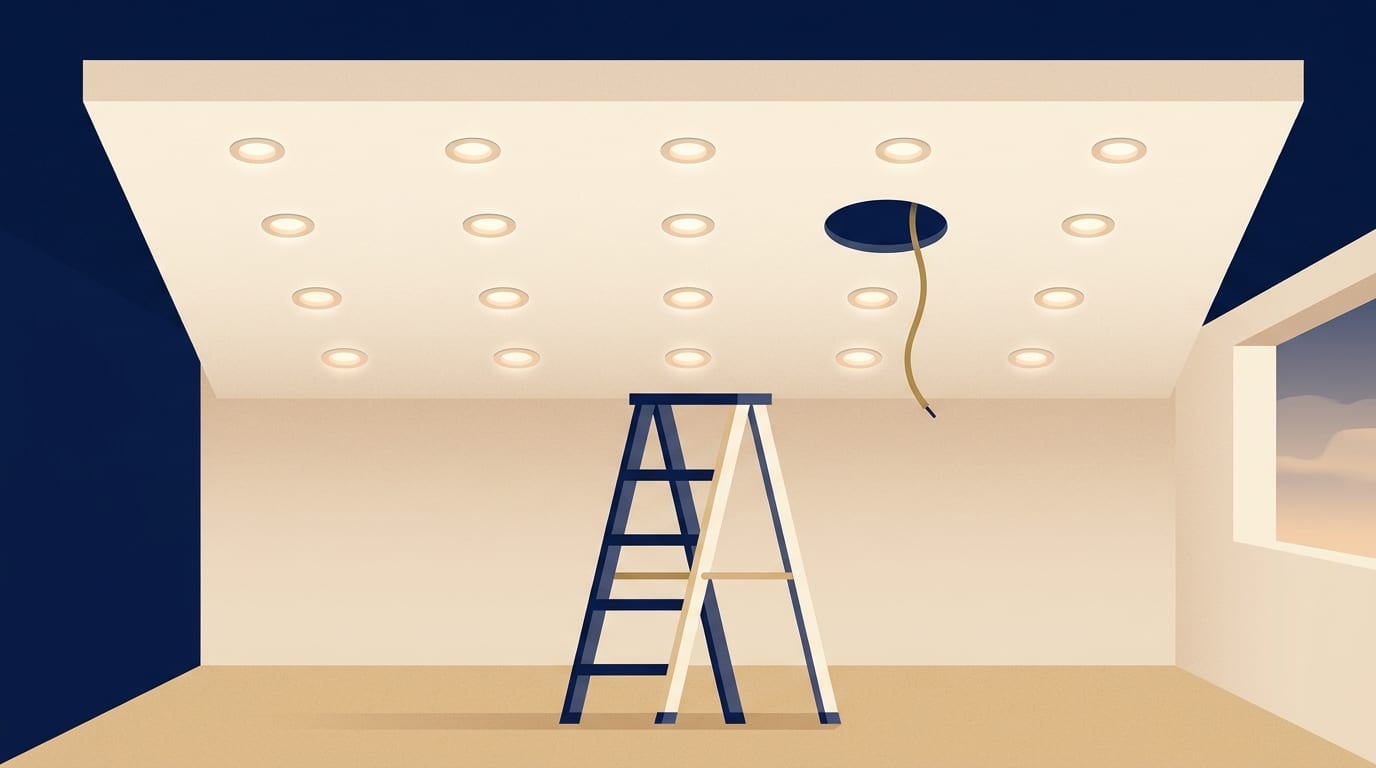
Fitting downlights in a single room of six to eight lights typically costs £300 to £500 supplied and fitted. The average cost of installing spotlights across various jobs is £400, based on 2026 prices. This guide explains what you can expect to pay for different rooms, how the building rules affect the work and what you should ask an electrician before you hire them.
What downlights typically cost in 2026
This table shows typical published prices for fitting downlights and spotlights in different situations.
|
Job |
Typical price |
|---|---|
|
One room of 6 to 8 lights |
£300 to £500 |
|
Whole house |
£1,000 to £4,000 |
|
Single added light |
Around £60 to £90 per light |
|
Full room |
About £50 to £75 per point |
|
Replacing an existing light (labour only) |
£40 to £80 per light |
|
Integrated units with difficult access |
Up to about £120 per light |
|
Fittings supplied only |
£20 to £75 per light |
These figures are typical published prices for 2026. Your local quotes will differ based on your property, the condition of your ceilings and the exact fittings you choose.
Price per light and per room
Electricians normally quote a fixed price for installing downlights in a full room or a whole house. When you break a full room quote down, it works out at about £50 to £75 per point for the supply and fitting. Adding a single extra light to a completed room is less efficient for the electrician, so you should expect to pay around £60 to £90 per light for smaller additions.
Fitting downlights usually takes between two and four hours per room. The average cost to hire an electrician is around £150 to £200 per day. Small jobs and fault finding are usually charged by the hour, often with a call-out fee or minimum charge that covers the first hour. This is why adding a single light costs proportionately more than fitting a full ceiling.
Defined jobs such as fitting a whole house with downlights, a consumer unit replacement or installing an EV charger are usually quoted as a fixed price based on property size, the number of circuits and access. Larger jobs are more cost effective because the electrician can work steadily through the house.
Buying the fittings yourself is an option, with supply only prices ranging from £20 to £75 per light. You must check with your electrician first to ensure the units you buy are suitable for your wiring and ceiling. Ask whether the electrician will still stand behind the work if you supply the fittings.
What changes the price
No two ceilings are exactly the same, so an electrician will look at several details before giving you a fixed quote. A quote is a fixed price, whereas an estimate is only a rough guess and can change. Always ask for a written quote that breaks down the cost of materials and labour.
These factors will influence the final price you pay:
- The number of lights you want installed in the room.
- How easily the electrician can access the ceiling void to run cables.
- Whether your existing wiring is safe and can be used for the new lights.
- The condition of your current ceiling and whether it will need extra support.
- The exact style and brand of fittings you choose to have installed.
- Where you live in the country.
Prices in London and the South East cost noticeably more than the national average. Out-of-hours work or weekend installations will also carry a premium. You should always ask if a quote includes VAT.
Replacing existing lights compared with new ones
If you already have downlights and simply want to update the fittings, the job is much quicker. Replacing existing lights is normally charged as labour only at around £40 to £80 per light. The electrician will turn off the power at the main switch in your consumer unit, which is also known as a fuse box or fuse board, before disconnecting the old units and wiring in the new ones.
This lower price assumes the existing holes in the ceiling are the right size for the new lights. If the new fittings are smaller, the ceiling will need patching before they can be secured. If they are larger, the electrician will have to cut wider holes, which adds time to the job and creates more dust.
Some older ceiling lights are integrated units where the bulb and the fitting are built as one sealed piece. These can sometimes be difficult to remove without damaging the surrounding plasterboard. Replacing integrated units with difficult access can cost up to about £120 per light because of the extra care and time required to extract them safely.
Ceilings, insulation and fire-rated fittings
Cutting holes in a ceiling removes a barrier that naturally slows down the spread of a fire. To restore this protection, fire-rated downlights are used.
Fire-rated downlights need clearance for heat to escape safely. They should not be covered with insulation, unless they are specifically rated for it. If your loft insulation sits directly over the lights, ask the electrician to confirm the fittings are rated for it. Do not move insulation around the lights yourself.
If you live in an older home and have a textured ceiling that might be affected by asbestos, ask the electrician and follow professional advice before any drilling takes place.
Making good and decorating
Running new cables across a ceiling often means lifting floorboards in the room above or cutting small access holes in the plasterboard below. Electricians call the process of repairing these holes making good. Patching after the work is done is normal, so ask who will do it and whether decorating is included.
If a ceiling is in poor condition before the work starts, cutting multiple holes for spotlights can weaken it further. In these cases, you might need to hire a plasterer after the electrician has finished their first fix wiring, which is the stage where cables are hidden in the walls and ceilings. Re-plastering a room costs roughly £400 to £1,500.
Occasionally, an old ceiling will need to be taken down entirely. Replacing a ceiling costs around £400 to £1,000, but this is only necessary if the ceiling is already failing or if access for the new wiring is completely blocked. You should agree who is responsible for repairing the plaster before the electrical work begins.
Is the work notifiable
Part P of the Building Regulations covers electrical work in homes in England and Wales. Scotland has its own building standards system and Northern Ireland differs, so the exact rules depend on where you live. In England, adding downlights to an existing circuit is not deemed notifiable. This means you do not have to involve your local authority building control department if the electrician is simply extending the current lighting circuit in a standard room.
According to Approved Document P (2013 edition, for use in England), electrical work is notifiable in these specific situations:
- The installation of a new electrical circuit anywhere in the property.
- The replacement of a consumer unit.
- Any addition or alteration to existing circuits in the space around a bath tap or shower head, up to 2.25 metres high and 0.6 metres horizontally from the edge of a bath or shower tray.
- Any addition or alteration to existing circuits in a room containing a swimming pool or sauna heater.
All other electrical installation work is not notifiable, namely additions and alterations to existing installations outside special locations, and replacements, repairs and maintenance anywhere. Wales has its own version of the building regulations, so the rules there may differ.
If your job is notifiable, using an electrician registered with a government-authorised competent person scheme means they can self-certify the work. If an unregistered person does notifiable work, building control must be told before it starts. After notifiable work is completed, the customer should receive the electrical certificate and a Building Regulations compliance certificate. You should keep both for when the property is sold.
Even non-notifiable electrical installation work should be designed, installed, inspected, tested and certificated in accordance with the national wiring standard, BS 7671. The installer should give you a Minor Works Certificate for small jobs, or an Electrical Installation Certificate for new circuits. If local authorities find non-notifiable work is unsafe and non-compliant, they can take enforcement action. Always ask for the electrical certificate.
LED, dimmers and running costs
Modern downlights use LED technology because it is much cheaper to run and better for the environment. LED bulbs use 80 per cent less electricity than older halogen bulbs. They also have a lifespan that is 20 times longer, meaning they need changing far less often.
Halogen bulbs have not been sold in Great Britain since September 2021. If you have old halogen spotlights, replacing them with modern LED versions will noticeably reduce your electricity bills.
If you want to adjust the brightness of your new lights, you must tell the electrician before they buy the parts. Dimmable lights need compatible bulbs and dimmer switches. Mismatches can cause flickering, buzzing or a shorter lifespan for the bulbs. If you notice your lights behaving strangely after an installation, it is worth reading about why your lights are flickering to understand if the dimmer switch is to blame.
Bathrooms and kitchens
Water and electricity are a dangerous combination, so installing downlights in a bathroom or a kitchen requires careful planning. As mentioned earlier, adding or altering circuits in the space around a bath or a shower is notifiable work. Because of the clear safety risks, an electrician is recommended for any bathroom lighting job.
Bathrooms have special rules governing what electrical equipment can be installed and where it can go. The room is divided into zones based on how close the fittings are to water sources. Fittings near water need to be suitable for where they are used, so leave the choice to a registered electrician. You can find more detail on these specific rules in our guide to bathroom electrical zones.
Kitchens are not classed as special locations under the building regulations in England, so adding lights to an existing kitchen circuit is not notifiable. The fittings should still be placed a sensible distance from sinks and hobs to avoid steam damage and splashes.
Common questions
Do I need a full rewire to have downlights fitted?
You do not normally need a full rewire just to add downlights. The electrician will test your existing lighting circuit to make sure the wiring is safe and has enough capacity for the new fittings. If the cables are very old or damaged, they will tell you what remedial work needs doing before they start.
Will installing spotlights ruin my ceiling?
Cutting holes in plasterboard creates dust and requires the electrician to pull cables through the ceiling void. Some minor damage to the plaster is normal and the electrician will usually patch these small access holes. You will only need to replace the entire ceiling if the plaster is already crumbling or if the joists block the cable routes entirely.
Can I change a halogen downlight to an LED myself?
Changing a bulb is different from changing the fitting. Check that the new LED bulb suits your existing fitting and any dimmer. If the whole fitting needs replacing or any wiring needs altering, hire a registered electrician.
Why is my dimmer switch buzzing with new LED lights?
A buzzing dimmer switch usually means the switch is not compatible with the LED bulbs. Dimmable lights need compatible bulbs and dimmer switches, and mismatches can cause flickering, buzzing or a shorter lifespan. Ask your electrician to check the dimmer suits the lights.
What happens if the power cuts out during testing?
If you experience a power cut while your new lights are being tested, the electrician will check your consumer unit to see if a circuit breaker or RCD has tripped. If the issue is a wider problem with the local network rather than your home wiring, you can call 105 for free to report the power cut.
Questions to ask before you book
When you invite an electrician to quote for your downlights, asking the right questions helps you avoid unexpected costs later. Under the Consumer Rights Act 2015, a service must be carried out with reasonable care and skill, and the customer can ask for poor work to be put right at no extra cost. A good tradesperson will be happy to explain their process and put the details in writing.
- Exactly how many lights are included in the final quoted price.
- Whether the fittings are fire-rated and compatible with your chosen dimmer switches.
- Who is responsible for patching and making good any holes cut in the ceiling.
- Whether the work requires a completely new circuit or just an addition to the existing one.
- When you will receive the electrical certificate to prove the work meets the safety standards.
If you have arranged the service at home, by phone or online, you usually have a 14-day cooling-off period, though this does not automatically apply to urgent repairs you have asked for. If you are ready to get quotes for your home, you can find an electrician near you to discuss the job and check their availability.