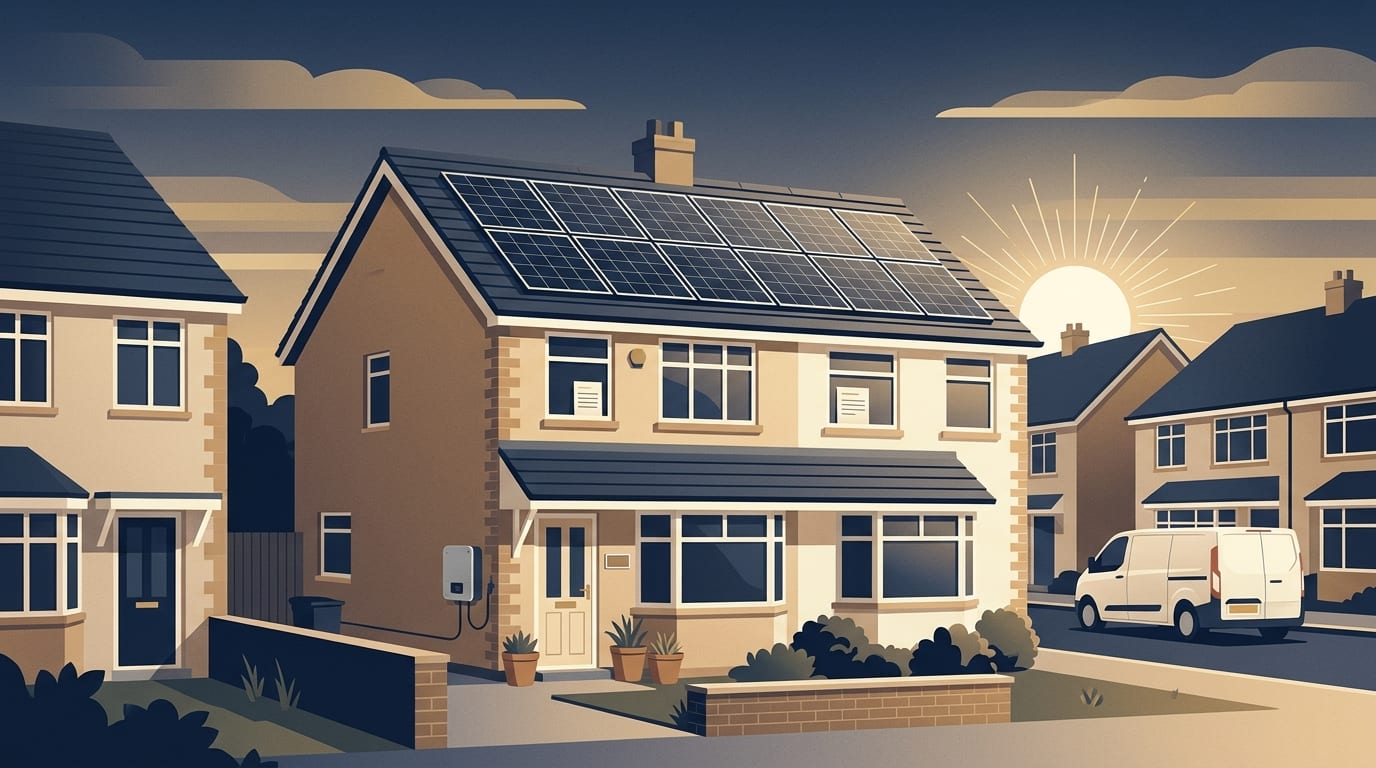
A typical UK solar panel installation averages around £7,250. Total costs typically run from £3,000 to £9,500 depending on the size of the system you need. These are typical published prices last updated on 25 August 2026.
System size and typical prices
Solar panels are priced by their power output, which is measured in kilowatts. A larger house with higher electricity usage will need a larger kilowatt system, which takes up more roof space and requires more panels. The table below shows typical fully installed costs based on system size.
|
System size |
Typical installed cost |
|---|---|
|
1kW (2 to 3 panels) |
£3,000 to £4,000 |
|
2kW (4 to 5 panels) |
£4,000 to £5,000 |
|
3kW (6 to 7 panels) |
£5,500 to £6,500 |
|
4kW (8 to 10 panels) |
£6,500 to £8,000 |
|
5kW (11 to 12 panels) |
£8,000 to £9,500 |
These are typical published prices for 2026, and your local quotes will differ based on your property and location. A 4kW system is listed at £6,500 to £8,000. The cost of labour makes up a significant part of these totals.
For a small 1kW system, labour runs from £1,200 to £1,600. For a larger 4kW setup, labour typically costs £2,000 to £2,500, rising to £2,500 to £3,000 for a 5kW system. London and the South East cost noticeably more for labour, so quotes in those areas will naturally sit at the higher end of the scale.
What a standard quote covers
When you price up a solar installation, you will normally be given a fixed price for the whole job. A quote is a fixed price that cannot change once agreed, whereas an estimate is just a rough guess that can increase later. A proper supply-and-fit quote should be comprehensive.
A typical quote will include the following elements:
- The solar panels and the inverter unit
- Mounting hardware, roof fixings and all external cabling
- Labour costs for the physical installation on the roof and inside the house
- The official certification from the Microgeneration Certification Scheme
- The formal application to your network operator for a grid connection
- Full electrical testing and commissioning of the finished system
A standard installation usually takes one to two days on site. This covers both the external work on the roof and the internal electrical connections. The quote should clearly state that all of this labour is included, along with any transport costs for delivering the heavy panels and equipment to your home.
Hidden costs and extra upgrades
While a good quote covers the main system, there are several things that are not always included. Scaffolding is a major one. If scaffolding is not included in your initial price, it will cost an extra £800 to £1,000 to hire safely. You may also need to pay for roof repairs or professional roof cleaning before the panels can be mounted securely.
Electrical upgrades are another common extra. Connecting solar panels to an older electrical system often requires modernisation to handle the new loads safely. Electrical upgrades cost £150 to £1,000 or more depending on what is needed. For example, replacing an old fuse box with a modern consumer unit averages about £525.
A consumer unit is the main control board that houses your circuit breakers and safety switches. If your home lacks proper earthing and bonding, the installer may flag that too. Earthing and bonding are safety measures that connect metal pipes and the electrical system to the ground, preventing electric shocks in a fault. Where the existing electrics are not up to the job, these upgrades are a matter of safety rather than a luxury.
Adding a battery or replacing the inverter
The panels themselves are highly durable, but the electrical components inside the house have a shorter lifespan. The inverter is the device that converts the direct current generated by the panels into the alternating current your home appliances use. An inverter will typically need replacing after about 10 to 15 years. This replacement costs £800 to £1,500.
Many homeowners also look at adding a battery to store the energy they generate during the day for use at night. Battery storage is an optional extra and is not included in a standard solar quote. Adding a home battery costs £4,500 to £6,500 on top of the solar panel installation. You can learn more about these specific costs in our guide to home battery storage.
The electrical side of a solar installation
Installing solar panels is a major electrical job that involves both first fix and second fix work. First fix involves running the concealed cables from the roof down to the location of the inverter and the consumer unit. Second fix is the final connection of the equipment, testing the circuits and making the system live.
Because electricity is dangerous, the electrical side must be handled by a competent professional. The national wiring standard is BS 7671, often called the Wiring Regulations. Your installer will need to run new circuits directly to your consumer unit. A circuit is a loop of cable that carries electricity to specific devices.
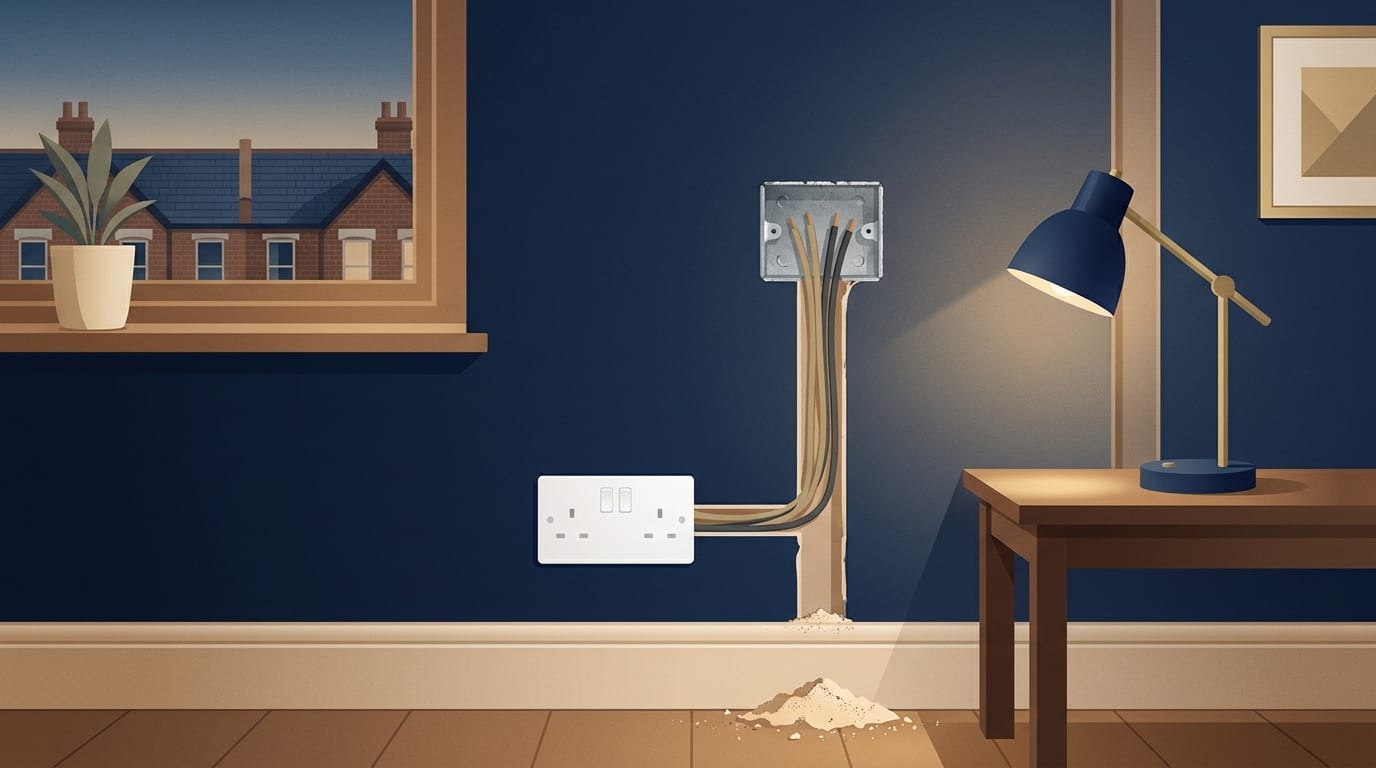
Your installer may also fit or check safety devices such as an RCD, which switches off the power instantly if it detects a fault, and a surge protection device, which protects sensitive electronics from voltage spikes. Running new cables through finished rooms will cause some disruption at home. Floorboards may need to be lifted and walls may need to be chased out to hide the wiring.
Making good is the trade term for repairing the plaster and decoration after this destructive work. Quotes may or may not include making good, so you should check whether you will need to hire a separate plasterer once the electrician has finished.
Grid notification and registration rules
When you generate your own electricity, the local network operator must be informed. The network operator is the company that owns the physical power lines and infrastructure in your region. The rules depend on the size of the system you are installing.
For common smaller systems that are fully type tested micro-generators up to and including 16A per phase, the work falls under a rule known as G98. Under G98, the network operator must be notified within 28 days of the system being commissioned. This is known as a connect and notify process.
Larger solar systems above 16A per phase fall under a different rule known as G99. For a G99 installation, prior permission to connect must be granted before any installation work begins. You cannot simply install a large system and tell them later.
Installation contractors usually examine the device and submit the relevant forms on your behalf. However, it is the energy device owner's responsibility to ensure that the network operator has received this notification. Always ask your installer for proof that the paperwork has been submitted and accepted.
Electrical certificates and building regulations
Any new circuit added to a home in England and Wales falls under Part P of the Building Regulations. This law exists to keep households safe from electrical fires and shocks. Scotland has its own building standards system and Northern Ireland differs entirely.
Electricians who are registered with a government-authorised competent person scheme, for example NICEIC or NAPIT, can self-certify their own notifiable work. If you hire an unregistered person to do notifiable work, building control must be told before the work starts.
After the notifiable work is complete, you should receive two vital pieces of paperwork. The first is an Electrical Installation Certificate, which proves the new solar circuits have been tested and meet the national safety standard. The second is a Building Regulations compliance certificate, which you should keep safe for when the property is sold.
VAT rules until 31 March 2027
The government currently offers a tax incentive to encourage homeowners to generate their own renewable energy. Solar panels installed in residential accommodation are currently zero rated for VAT.
These energy saving materials are subject to VAT relief at 0% until 31 March 2027. Ask your installer how the zero rate applies to your quote.
If you are planning an installation, you should ask what VAT is on the quote if the work might finish after that date. The rules on taxation can change, so it is important to clarify the exact final price you will pay based on your proposed installation schedule.
Selling power back to the grid
When your panels generate more electricity than you are using at home, the excess is sent back into the national grid. Under the Smart Export Guarantee, some electricity suppliers must pay small-scale generators for this low-carbon electricity. These suppliers are known as SEG Licensees.
To be eligible, your technology must meet certain criteria and the installation must be located in Great Britain. SEG Licensees determine the rate, contract length and other terms for the power they buy from you. The only strict rule on pricing is that the SEG tariff rates must always be above zero.
Typical estimates suggest that solar panels will provide annual bill savings of £400 to £800 a year, alongside Smart Export Guarantee earnings of £50 to £150 a year. This results in an estimated break-even period of 8 to 12 years against a system lifespan of 25 to 30 years or more. These figures are estimates, not promises, because they vary greatly depending on the direction of your roof, your daily electricity usage and the specific tariff you choose.
Planning permission basics
Adding solar panels to a roof alters the external appearance of your home. However, rooftop panels on houses in England are generally subject to permitted development limits, meaning you do not usually need to apply for full planning permission.
For a standard house, panels on a sloping roof should project no more than 0.2 metres out from the roof surface. They also cannot be installed above the highest part of the roof, excluding the chimney. If you are installing them on a flat roof, they can project no more than 0.6 metres.
These permitted development rights do not apply to listed buildings. You should always check with your local council before proceeding. Councils offer pre-application advice, and applying for a Lawful Development Certificate can formally confirm that your proposal is legal before you spend any money.
Common problems to watch out for
Because you cannot judge electrical work yourself, it is easy to worry about being overcharged or paying for work that is not needed. The solar industry has many excellent installers, but there are poor practices to avoid.
Some companies use very cheap initial inspections as a way to sell a long list of remedial work. You might be told that a full house rewire is compulsory before solar can be fitted. This is not true unless there is clear test evidence showing your existing wiring is dangerous.
An Electrical Installation Condition Report, known as an EICR, will provide this evidence. If you are told you need an extensive upgrade, you can read our guide to the warning signs your house needs rewiring for a second opinion. Other common issues in the trade include advisory items on a test report being presented as strict failures.
Always be cautious of these warning signs:
- Very cheap initial inspections that are used to sell a long list of remedial work
- Advisory items on a test report being wrongly presented as compulsory failures
- Installers claiming a full house rewire is legally required without any test evidence
- Unregistered electrical work that leaves you with no certificate and no building control notification
- Vague quotes that leave out the cost of making good your plaster and decoration
- Being asked for a large cash deposit upfront with no formal paperwork provided
- Choosing a contractor based on price alone rather than checking their registration and reviews
Under the Consumer Rights Act 2015, any service must be carried out with reasonable care and skill. If the work is poor, you can ask for it to be put right at no extra cost. Services arranged at home, by phone or online usually carry a 14-day cooling-off period, giving you time to change your mind after signing a contract. This does not automatically apply to urgent repairs you have asked for, so ask the installer to confirm in writing whether a cooling-off period applies to your contract.
Common questions
Do landlords have different rules for electrical safety?
Yes, landlords have strict legal duties to have electrical installations inspected and tested at least every five years. There are nation specific rules and substantial penalties in England for failing to do this. For owner-occupiers, this periodic inspection is a strong recommendation for safety, but it is not a legal duty.
What should you do in an electrical emergency?
If your solar equipment or consumer unit is damaged, keep away from the equipment entirely. Never remove covers, open a consumer unit or touch wiring. You can switch off the power at the main switch only if it is safe to reach. If you experience a power cut, call 105. For a fire or a serious electric shock, call 999 immediately.
Are out of hours electrical repairs more expensive?
If your solar inverter trips your power at the weekend and you need immediate help, it will cost more, because out-of-hours work carries a premium. Fault finding and small repairs are usually charged by the hour, often with a call-out fee or a minimum charge that covers the first hour of the electrician's time.
Can you check an installer's registration yourself?
Yes, you can check if an electrician is registered with a competent person scheme by searching the scheme's official website, such as the NICEIC or NAPIT registers. This shows they belong to a scheme that lets them self-certify notifiable work.
Questions to ask before you sign
Before you accept a quote and book your installation, you should verify exactly what you are paying for and who is responsible for the paperwork. Taking the time to ask these questions prevents unexpected bills and ensures your home remains safe and legal.
Make sure you ask your chosen installer:
- What exactly is included in the final price and what might cost extra
- Whether the cost of scaffolding is fully covered in the agreed quote
- Who is responsible for submitting the network notification to the grid
- Who will provide the final electrical certificate and building control compliance document
- What the system warranty covers and how long it lasts for both panels and inverter
Finding a reliable professional is the most important step in the process. Take your time to compare detailed, fixed price quotes from registered installers who have a proven track record. You can use our directory to find an electrician near you who can safely manage the electrical side of your new solar panel system.