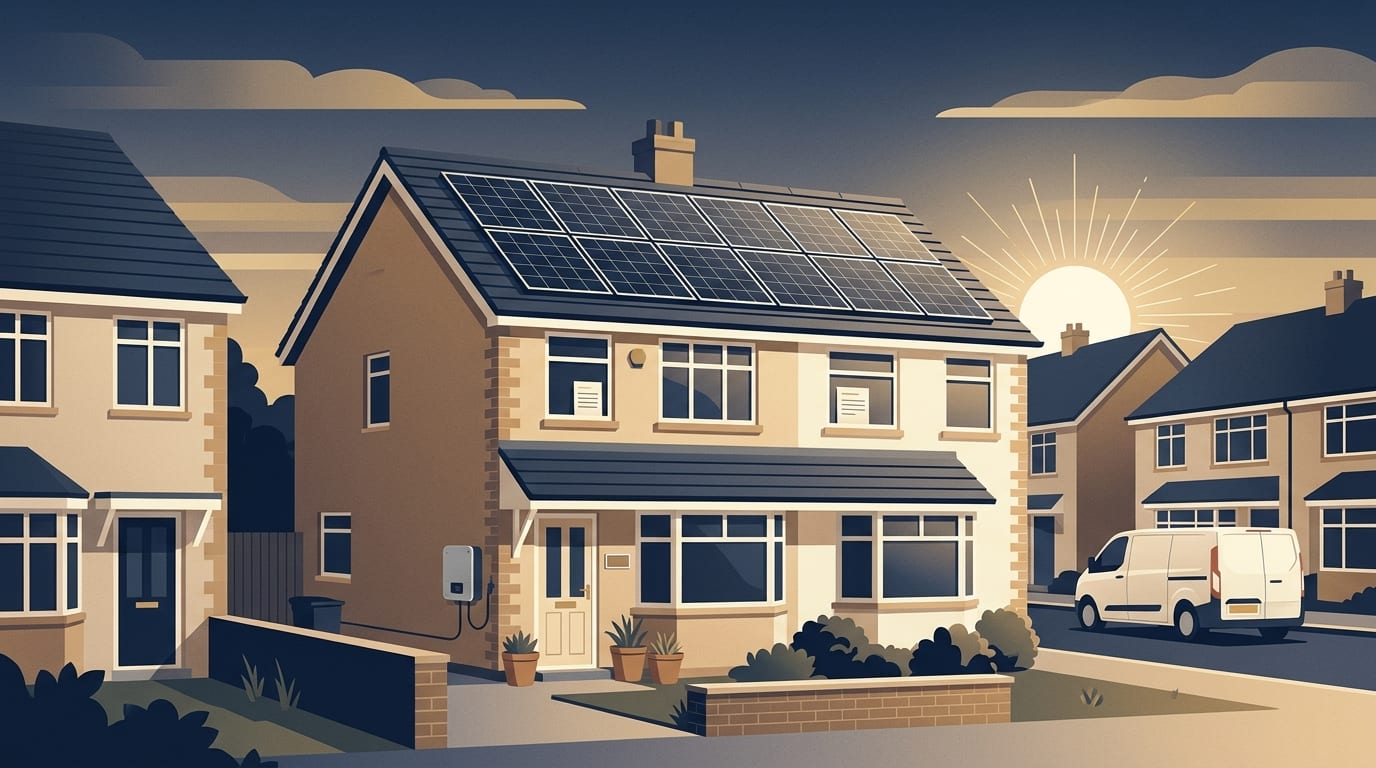
A home battery stores electricity so you can use it when you actually need it, rather than only at the exact moment it is generated. Most people look into battery storage when they install solar panels on their roof. During the middle of the day, solar panels often generate more power than an empty house uses. Without a battery, that extra electricity flows straight out to the national grid. With a battery, you capture that power and keep it to run your lights, appliances and heating in the evening when your panels are no longer generating.
You do not strictly need solar panels to benefit from a battery. Standalone batteries can charge from the grid overnight when electricity is cheaper. You can then use that stored energy later instead of buying it at a higher price.
Whether you capture solar power or buy cheap night time electricity, the goal is to reduce the amount of expensive daytime electricity you buy from your energy supplier. Using stored energy often saves more money than selling extra electricity back to the grid. The main decision is whether those savings are large enough to cover the high initial cost of buying and fitting the equipment.
What a battery typically costs in 2026
The average cost of a solar battery storage system is £6,500. This figure includes both the battery itself and the labour to fit it. However, because systems vary so widely in size and complexity, the actual quotes you receive will cover a broad spectrum. Battery storage costs can range from less than £2,000 up to £10,000 depending on your home and your energy needs.
Independent consumer guides offer a closer look at the averages. MoneySavingExpert notes that you will typically pay around £5,000 for a standard 5kWh battery system, with the installation and any required inverter costs added on top. An inverter is the device that changes the direct current generated by solar panels or stored in a battery into the alternating current your home appliances use.
The labour part of the job typically ranges from £400 to £1,200. Fitting a battery involves running cables back to your consumer unit (also called a fuse box or fuse board) and protecting the new circuit. A longer or harder cable route is likely to push the labour cost towards the top of that range.
Price by battery size
The size of the battery will be the biggest driver of the final price you pay. New lithium-ion solar batteries typically range from around 5kWh to 15kWh in storage capacity. The table below shows how the total price increases as the battery gets larger.
|
Battery size |
Typical installed cost |
|---|---|
|
3 to 5 kWh |
£3,500 to £5,000 |
|
6 to 9 kWh |
£5,000 to £7,500 |
|
10 to 15 kWh |
£7,000 to £10,500 or more |
These figures represent typical published prices for 2026, including the battery and the installation labour. Your local quotes will differ based on the brand you choose and the layout of your property.
What affects the price
Capacity is the main reason one quote will be much higher than another. The average home uses between 8kWh and 10kWh of electricity per day. If you want to store enough energy to cover your entire daily usage without drawing anything from the grid, you will need a larger, more expensive battery. If you only want to cover your evening lighting and television, a smaller, cheaper unit will do the job.
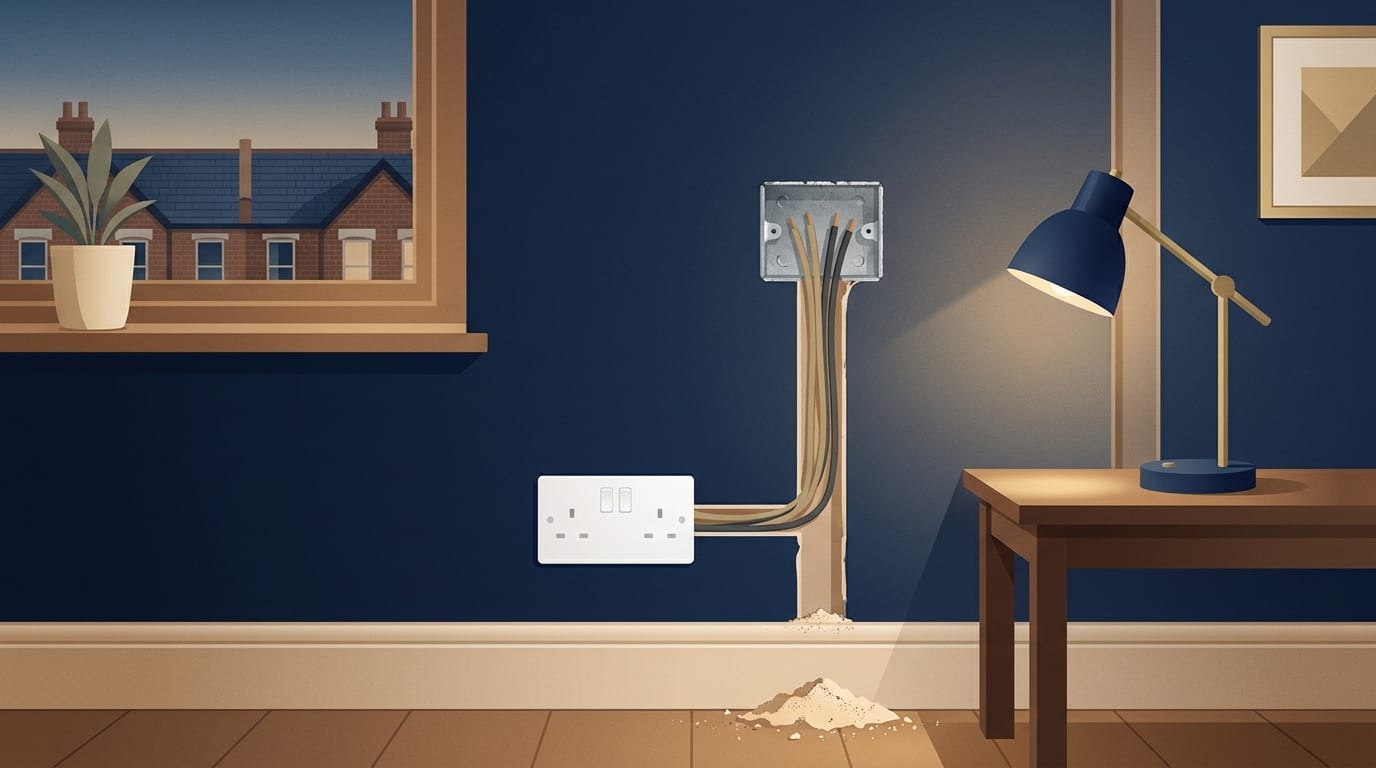
Labour and access also change the price. A longer or more awkward cable route takes more time, and the installer should explain this in the quote. If they have to chase cables into the plasterwork, you must ask if the quote includes making good, which means filling and smoothing the plaster ready for you to decorate.
Upgrading your existing electrical system can also add to the bill. Before connecting a new device, the electrician will check whether your existing installation suits the national wiring rules, known as BS 7671. Any upgrades they find necessary would be extra, so ask for them to be listed in the quote.
What it might save and how long it takes to pay back
For some households, the upfront cost may outweigh the savings available. Estimates disagree on exactly how long a battery takes to pay for itself, so you must look closely at your own habits before buying.
Which? states that payback times are improving. However, they warn that if you already use most of your solar output at home during the day, the savings from adding a battery may not justify the up-front costs. If you run your washing machine, dishwasher and electric heating while the sun is shining, there is very little spare energy left to store.
MoneySavingExpert offers a more cautious view. Their calculations estimate a simple payback of 29 to 44 years on the price cap. This estimate relies on several stated assumptions. It assumes you are paying for grid electricity at the October 2026 price cap, that any exported solar energy is valued at 15p per kWh, and that battery costs sit between £3,500 and £5,500. It also excludes the benefits of cheap overnight grid charging, and does not factor in maintenance or battery degradation over time. Based on these figures, MoneySavingExpert concludes that even with a 50 per cent discount, the typical user will still struggle to pay the battery off within its 15ish-year lifespan.
Because the independent views differ so much, you should never rely on a generic sales brochure. You must ask any installer to show you the payback sums using your exact daily usage, your specific energy tariff, and the real price they are quoting for the job.
How long a battery lasts
Batteries lose a small amount of their storage capacity every time they are fully charged and discharged. MoneySavingExpert notes that home batteries are typically lasting between 12 and 15 years.
Which? points out that battery systems often come with a 10-year warranty. Because solar panels usually last for 25 years or more, batteries will usually need replacing sooner than the solar panels. Which? advises that you should expect to replace the battery at least once over the life of your solar panels. You must factor this replacement cost into your long term budgeting when deciding if the initial investment makes sense.
When a battery makes most sense
A home battery is not a guaranteed money saver for every property. It offers the best financial return when your daily routine and your energy tariff match up perfectly with how the technology works.
Which? suggests that a battery is most useful if you are out during the day and would otherwise export surplus power to the grid for a low price. By storing it, you can use that free energy when you return home in the evening.
MoneySavingExpert adds that a battery is more worthwhile if you:
- Use off-peak electricity to charge it overnight, particularly on an Economy 7 style tariff.
- Need extra stored power to run your home during the darker winter months.
- Own an electric vehicle and want to charge it using your own stored power.
- Want to use more of your own solar generation to become less reliant on grid electricity.
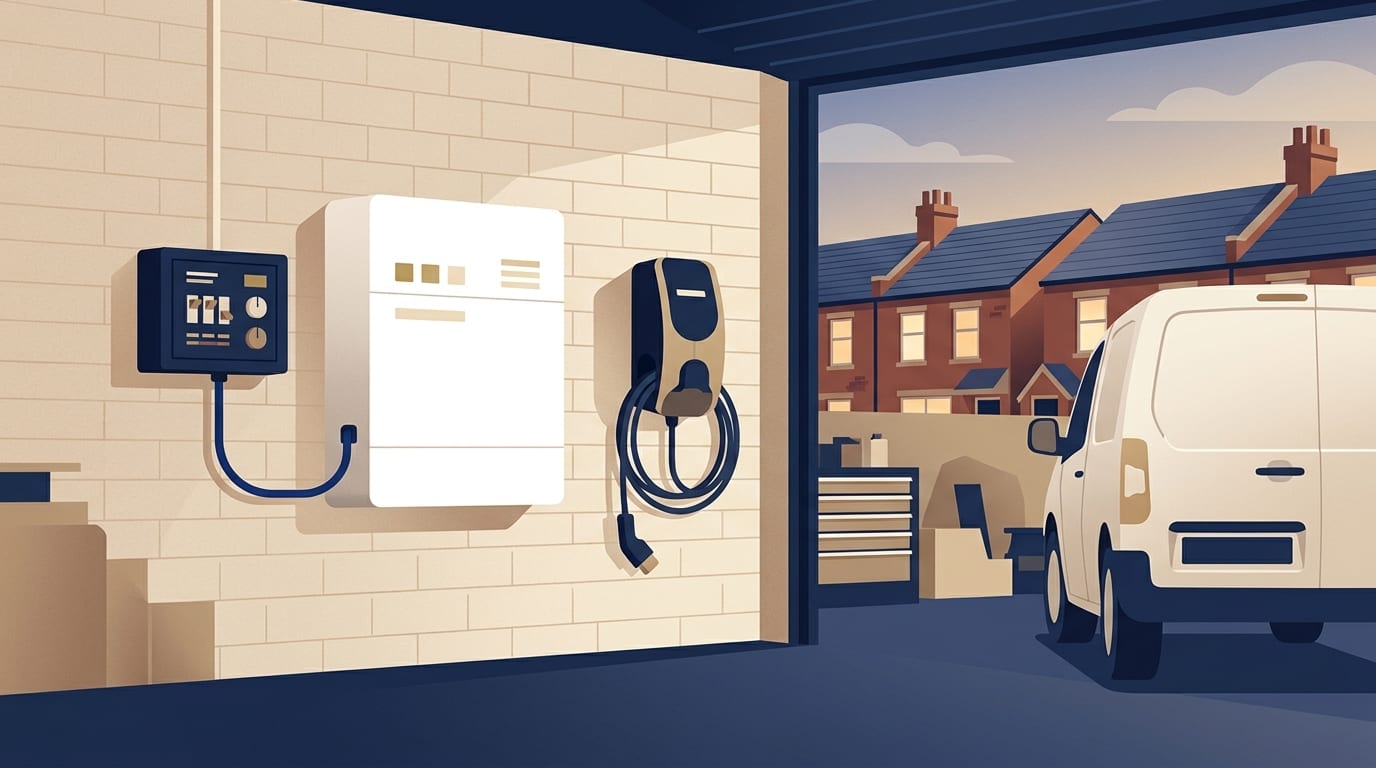
If you are planning an electric car charger installation at home, tell your electrician early on. They will need to calculate if your home's main fuse can handle the combined load of the car charger, the battery, and your normal appliances running at the same time.
The electrical work and telling the network operator
Installing a home battery involves serious electrical work. In England and Wales, electrical work in homes is covered by Part P of the Building Regulations. You should always use an electrician who is registered with a government-authorised competent person scheme, such as NICEIC or NAPIT. They can self-certify their work and issue the correct Electrical Installation Certificate when the job is done.
Battery storage is one of the energy devices that must be notified to your local network operator. This is the company that owns the cables in your street, not the company that sends your electricity bills. It is the energy device owner's responsibility to ensure that the DNO has received this notification.
The rules for notifying the network operator depend on the size of your system. For smaller battery storage setups that fall under the G98 standard, the installer can submit a Form B within 28 days of the installation being completed. For larger systems over 3.68kW with storage that fall under the G99 standard, a Form A1.1 application must be submitted before installation. Your installer should handle all of this paperwork for you, but you must check that they have done it, because the owner is responsible for making sure the network operator has been told.
VAT and the 31 March 2027 date
There is currently a government tax incentive designed to lower the cost of green energy improvements. Home battery installations are exempt from VAT until 31 March 2027. Ask your installer to show how this applies to your quote.
When you compare quotes from different electricians, check the breakdown carefully to see how VAT has been applied.
Questions to ask before you buy
To avoid unexpected costs and ensure the system does what you want it to do, ask your chosen electrician these questions before you accept their quote:
- What is the usable capacity of the battery, rather than just the total capacity?
- How long is the manufacturer warranty and what level of capacity degradation does it cover?
- Will you handle the G98 or G99 network operator notification, and will you give me a copy of the approval?
- Will the quote include an Electrical Installation Certificate and a Building Regulations compliance certificate?
- Does the price include making good any damaged plasterwork where cables are run?
- What happens in a power cut?
Common questions
Can I add a battery to my existing solar panels?
Often, but it depends on your existing system. Depending on how your original system was wired, the electrician may need to fit an additional inverter to manage the charging and discharging of the new battery. This extra equipment will increase the total solar panel installation cost and the required labour time.
Will a home battery keep my house running during a power cut?
You should not assume that a battery will automatically keep your lights on during a power cut. Whether a battery can power your home in a power cut depends on the system, so ask the installer to explain exactly what happens and to put it in writing.
Do I need planning permission for a home battery?
This guide does not cover planning rules for batteries. You should always check your local council website before starting any external installation work.
Where is the safest place to install a home battery?
The right location depends on the battery model and the manufacturer's instructions. Ask the installer where they recommend it goes and why, and do not move or connect a battery yourself.
Next steps
If you are thinking about adding battery storage to your home, follow these steps to make sure you get the right system for your needs.
- Find your most recent energy bills and note down exactly how many kWh of electricity you use on an average day.
- Check your current energy tariff to see if you have access to cheaper off-peak electricity rates overnight.
- Ask at least three registered electricians to provide a fixed price quote that includes the battery, the labour, the certification and the network operator notification.
- Ask each installer to calculate a realistic payback time based on your actual daily usage, rather than relying on national averages.
Once you have your usage figures ready and understand how the system will work with your daily routine, you can find an electrician near you to discuss your options and request a detailed quote.